MercoPress. South Atlantic News Agency
Economy
-
Thursday, May 24th 2012 - 05:40 UTC
Uninspired EU summit pledges support for Greece, but prepares for “Grexit”

European Union leaders pledged support for Greece on Thursday, vowing to keep the debt-wracked country in the Euro zone as officials prepared behind the scenes for a possible doomsday scenario of exit.
-
Thursday, May 24th 2012 - 05:35 UTC
“Blue” dollar in Argentina reaches 6.15 Pesos; 36% gap over official exchange

Wednesday was another day of intense trading for the money exchange market in Buenos Aires with the “blue” or black market dollar reaching a new record, 6.15 Argentine Pesos, which for the first time was higher than the system used for getting dollars out of the country.
-
Thursday, May 24th 2012 - 05:13 UTC
Glut of pigs in the US and China posed to halt four-year rally in prices

The heaviest and most numerous US pig population on record and rebounding Chinese output are creating a surplus that is poised to halt a four-year rally in prices, reports Meat Trade News daily.
-
Wednesday, May 23rd 2012 - 19:27 UTC
Falklands’ economy “booming” in spite of Argentina’s efforts of a blockade

Despite desperate attempts from Argentina to deter potential investors and increased interference in Falkland Islands’ activities the objective of an economic blockade has not been achieved, said Governor Nigel Haywood on Wednesday in his ‘state of the nation’ annual speech to the Legislative Assembly.
-
Wednesday, May 23rd 2012 - 18:38 UTC
Euro-zone tells members to prepare contingency plans for a possible Greek exit

Euro zone officials have told members of the currency area to prepare contingency plans in case Greece quits the bloc, an eventuality which Germany's central bank said would be testing but “manageable”.
-
Wednesday, May 23rd 2012 - 06:59 UTC
Brazilian Real falls to a new three-year low, “positive” for exporters says minister

The Brazilian Real fell to a new three-year low after briefly erasing its decline as the central bank sold currency swap contracts for the second time in three trading sessions, holding two auctions on Tuesday.
-
Wednesday, May 23rd 2012 - 06:56 UTC
The US dollar stronger than the Euro in Argentina’s parallel market
For the second day running the Argentine Peso weakened against the US dollar climbing half a cent from Monday and closing at 4.43 and 4.48 on the local foreign exchange market.
-
Wednesday, May 23rd 2012 - 03:56 UTC
Spain, on the edge of a financial cliff, cancels all development aid to Latin America
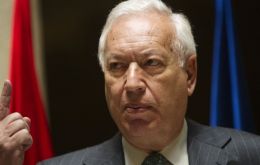
The Spanish government announced this week it was cancelling all development aid to Latin American countries as a direct consequence of the financial strains the EU member is suffering, which is the worst in decades with record unemployment of 24%.
-
Wednesday, May 23rd 2012 - 01:44 UTC
Fitch downgrades Japan’s credit rating fearful of political stalemate and snowballing debt
Fitch cut Japan's sovereign credit status on Tuesday to the lowest level among global ratings agencies as a political stalemate dims the chance that the country can curb its snowballing debt.
-
Wednesday, May 23rd 2012 - 01:22 UTC
Spain anticipated the economy will continue to slump in the second quarter

Spain said it would meet its deficit targets this year despite a new slippage in its regions' accounts and a further contraction of the economy in the second quarter.