MercoPress. South Atlantic News Agency
Economy
-
Tuesday, November 29th 2011 - 06:10 UTC
Venezuela and Colombia agree to boost trade by reducing tariffs on 3.500 items
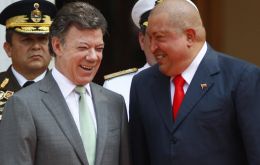
Venezuelan president Hugo Chavez and his visiting Colombian counterpart Juan Manuel Santos subscribed Monday a trade understanding covering 3.500 items, based on the most exchanged products in recent years, and agreed on an ambitious energy projects that include neighbouring Ecuador and Panama.
-
Tuesday, November 29th 2011 - 06:04 UTC
US and EU agree to begin talks on a trans-Atlantic economic and trade pact
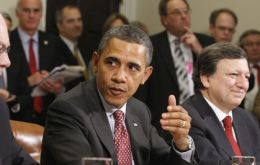
The United States and European Union agreed on Monday to develop a plan to capitalize on already strong economic ties to create more jobs and fuel economic growth on both sides of the Atlantic.
-
Tuesday, November 29th 2011 - 06:01 UTC
Spain no longer wonderland: in 2011 more people are leaving than arriving

For the first time since data is recorded the number of people leaving Spain in search of better opportunities will be higher in 2011 than those incoming, according to the country’s stats office, INE.
-
Tuesday, November 29th 2011 - 05:56 UTC
Private sector will gradually replace Cuban government services beginning 2012

The Cuban government will begin contracting out some services to the private sector next year in a break from the state-dominated past aimed at helping small business develop, government insiders said on Monday.
-
Tuesday, November 29th 2011 - 05:53 UTC
Markets react positively to talks for speeding the EU decision making process

Germany and France stepped up a drive on Monday for intrusive powers to reject national budgets in the Euro zone that breach EU rules, as a market rout of European debt eased temporarily on hopes of outside help for Italy and Spain.
-
Tuesday, November 29th 2011 - 02:09 UTC
Fitch warns of US triple A rating downgrade if policy makers fail on budget cuts
Fitch Ratings on Monday warned it may cut the United States' AAA rating if policymakers fail to agree in 2013 on a plan to reduce the country's ballooning budget deficits.
-
Monday, November 28th 2011 - 21:10 UTC
Argentina’s Techint moves strongly into Brazil steel business
The Techint Group agreed to pay 5.03 billion Reais (2.7 billion dollars) for a 27.7% voting stake in Brazil’s Usinas Siderurgicas de Minas Gerais to boost access to the largest market for steel in Latin America.
-
Monday, November 28th 2011 - 21:04 UTC
Brazil preparing stimuli plan to boost manufacturing and create jobs

Brazilian president Dilma Rousseff said that the country’s economy which slowed down in the last quarter will retake growth and generate more jobs based on government plans to expand manufacturing.
-
Monday, November 28th 2011 - 17:06 UTC
Argentina confirms high seas boarding of Spanish fleet fishing in Falklands

The Argentine government has stepped up its official blockade policy against the Falkland Islands warning Spanish fishing vessels are operating ‘illegally’ in the South Atlantic, since they have not requested licences from the Argentine government, and controls over those activities will continue.
-
Sunday, November 27th 2011 - 08:11 UTC
IMF chief praises Latinamerica, which can provide ‘some lessons to the advanced world’
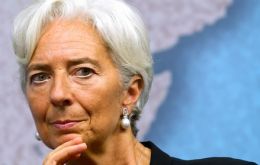
IMF chief Christine Lagarde who this week will be visiting Latinamerica said that Brazil, Mexico and Peru, like to many other countries in the region have done remarkably well over the past few years and can provide some lessons to the advanced countries.

