MercoPress. South Atlantic News Agency
Economy
-
Monday, April 25th 2011 - 07:42 UTC
Coffee prices at highest since 1977 pushed by poor harvest and weak dollar

Coffee prices topped 3 US dollars a pound in New York for the first time since 1977, as prospects of another production deficit combined with a sliding dollar to encourage fund buying.
-
Monday, April 25th 2011 - 07:31 UTC
India working to “upgrade” tariffs agreement with Mercosur

India is working on “upgrading” the tariffs agreement with Mercosur, which could translate in more items of trade being included in the Preferential Trade Agreement (PTA) or move to free trade agreement with the LATAM countries.
-
Monday, April 25th 2011 - 07:07 UTC
Gold and silver soar to new highs pushed by weak dollar and inflation

Gold advanced to a record, set for the best run since November 2006 after rising for nine days, as investors sought to protect their wealth against a weaker dollar, faster inflation and geopolitical tension in the Middle East. Silver climbed to a 31-year high.
-
Monday, April 25th 2011 - 06:59 UTC
Chavez, with eyes on his 2012 re-election bid, hikes oil windfall tax

Venezuelan President Hugo Chavez hiked an oil windfall tax in a move that raises government income ahead of the 2012 presidential election, but puts a heavy load on oil companies.
-
Monday, April 25th 2011 - 06:43 UTC
WTO warns Doha Round talks are at ‘serious risk’: crucial meeting 29 April

The head of the World Trade Organization warned the decade-old Doha Round talks on a new global commerce deal involving billions of dollars are at “serious risk” because of differences over cutting tariffs on industrial goods.
-
Monday, April 25th 2011 - 06:38 UTC
Santiago, Lima and Monterrey, top three Latin American cities of the future

New York City followed by Chicago and Houston rank top in the first ever 'American Cities of the Future' ranking compiled by fDi Magazine, belonging to the Financial Times group. Santiago de Chile, Lima (Peru) and Monterrey (Mexico) snatched the top three positions in the Latin America city ranking.
-
Monday, April 25th 2011 - 06:28 UTC
Mexico antitrust commission slaps 1 billion USD fine on mobile phone operator

Mexico's antitrust commission confirmed Sunday that it has fined the country's biggest mobile phone operator over 1 billion US dollars on grounds that it used its market weight and interconnection fees to displace competitors.
-
Monday, April 25th 2011 - 06:07 UTC
Mining and energy concentrate most investments in Chile in record year 2010

Estimated investment in Chile reached a total of US$130 billion during 2010, including US$42.7 billion in potential investments. This total marks a rise of 16% from 2009, according to Sofofa. Last year’s figures are the highest in five years.
-
Friday, April 22nd 2011 - 05:10 UTC
EU increases Argentine prime beef Hilton quota by 1.500 tons
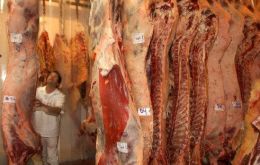
The European Union and Argentina agreed to increase Argentina's lucrative Hilton Quota of high-end beef exports by 1,500 metric tons annually, according to a release in Buenos Aires from the Foreign Ministry late Wednesday.
-
Friday, April 22nd 2011 - 04:48 UTC
Car companies comply with Argentina’s import/export balance policy

Argentina reached an agreement with the French conglomerate Peugeot-Citroen and the importers of Italy’s Alfa Romeo, to balance imports-exports value, following on Argentina’s latest regulations for the country’s auto industry.