MercoPress. South Atlantic News Agency
Economy
-
Thursday, September 10th 2020 - 08:21 UTC
Brazil's supermarkets “committed” to lowering food prices announced Bolsonaro
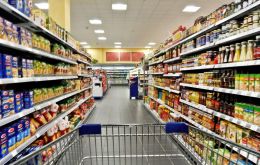
Brazil’s supermarkets are “committed” to lowering the prices of basic foodstuffs, President Jair Bolsonaro said on Wednesday, hours after the Justice Ministry said it would ask supermarkets to explain recent price increases for some products.
-
Wednesday, September 9th 2020 - 09:50 UTC
S&P lifts Argentina's credit rating to CCC+ with a stable outlook after concluding private debt restructuring
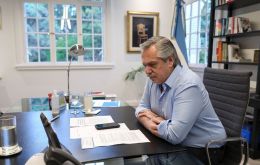
Argentina's credit rating was lifted up from default 'SD' to 'CCC+' with a stable outlook after the country concluded restructuring its foreign currency debt, S&P Global Ratings said in a statement on Monday.
-
Tuesday, September 8th 2020 - 09:50 UTC
Chile post trade surplus in August but exports fell 10.8% and imports 22.4%

Chile posted a trade surplus of US$ 904 million in August, the central bank said on Monday, with a drop in levels versus a year earlier of both exports and imports for the month.
-
Tuesday, September 8th 2020 - 08:48 UTC
Johnson calls for “more realism”, ahead of a new round of EU/UK post Brexit trade talks

Britain demanded “more realism” from the European Union on Monday ahead of crucial post-Brexit trade talks, but the mood was soured by reports that London was looking to rewrite an agreement the two sides had already signed.
-
Monday, September 7th 2020 - 08:59 UTC
France to UK: Brexit negotiator Barnier is not stepping down or being sidelined
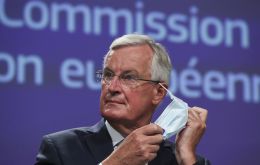
France denied the European Union's Brexit negotiator Michel Barnier was about to be sidelined by EU leaders in a bid to break the deadlock in trade talks, as reported by British newspaper the Daily Telegraph.
-
Monday, September 7th 2020 - 07:43 UTC
Johnson promoting the idea that if UK/EU talks don't advance, “both sides should accept it and move on”, says FT
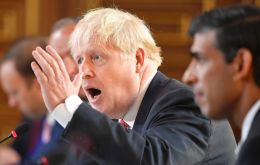
The British government is planning legislation that will override key parts of the Brexit withdrawal agreement, risking the collapse of trade negotiations with Brussels, the Financial Times reported on Sunday.
-
Saturday, September 5th 2020 - 07:29 UTC
Francis blast the “shaky pillars” of an economic model built on money idolatry
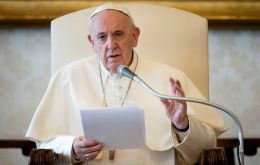
Pope Francis said on Friday that the coronavirus pandemic had “toppled the shaky pillars” of a world economic model built on the idolatry of money and domination by the rich and powerful.
-
Friday, September 4th 2020 - 08:50 UTC
Brazilian court annuls one of Lula da Silva's nine criminal cases for alleged corruption
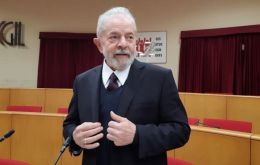
A Brazilian court annulled one of nine criminal cases opened for alleged corruption against former President Lula da Silva because there was “insufficient evidence” to continue the process.
-
Thursday, September 3rd 2020 - 08:56 UTC
Bolsonaro's popularity soars as he extends payments for low income Brazilians until 2021

Brazil’s President Jair Bolsonaro extended until the end of the year payments for low-income Brazilians hit by the economic fallout from the COVID-19 pandemic, a program that has boosted his popularity but created tension with his finance team.
-
Thursday, September 3rd 2020 - 08:51 UTC
Truckers end seven day strike in Chile following deal with government

Chilean truckers said on Wednesday they would lift a seven-day strike that has damaged supply chains and raised fears for food and commodities exports, following a deal with the government. Jose Villagran, vice president of the National Confederation of the Chilean Cargo Transport (CNTC), said the strike would end at 3 p.m. local time.

