MercoPress. South Atlantic News Agency
Economy
-
Saturday, September 19th 2020 - 09:50 UTC
Argos Resources plans to request extension of North Falkland Basin license
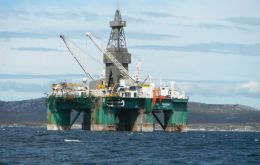
Falkland Islands' based Argos Resources Ltd said on Friday its interim loss widened on foreign exchange movements, but it has enough cash to continue for another year as some costs have been delayed.
-
Saturday, September 19th 2020 - 09:18 UTC
Egypt becomes one of the main suppliers of garlic to the Brazilian market
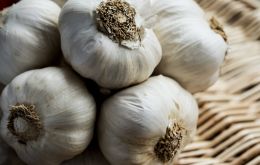
Egypt has become one of the main suppliers of garlic to Brazil, with data this year showing that in the first eight months the product sales have already exceeded US$ 5 million, according to SECEX, Brazil's foreign trade secretariat.
-
Friday, September 18th 2020 - 08:55 UTC
Falklands new port: contractors unveil details of the major infrastructure project

The planned new port for the Falkland Islands to be constructed at Stanley Harbor was analyzed during a presentation this week to members of the public in the Town Hall, by a team from BAM Nuttall and Royal Haskoning, the companies responsible for the planning and construction of the project.
-
Friday, September 18th 2020 - 08:55 UTC
World Bank chief economist estimates five years for economic recovery from the pandemic

The global economic recovery from the crisis originated by the coronavirus pandemic may take as much as five years, the World Bank's chief economist Carmen Reinhart said on Thursday.
-
Friday, September 18th 2020 - 08:32 UTC
UN food chief calls on billionaires to save 30 million people at risk of dying
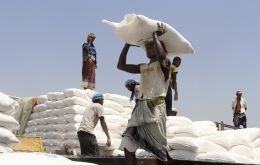
United Nations food chief David Beasley called on the world's billionaires on Thursday to step up to help save about 30 million people he said are at risk of dying if they don't receive help from the World Food Programme.
-
Thursday, September 17th 2020 - 09:30 UTC
Argentina tightens currency controls, helping the US dollar climb to a new record
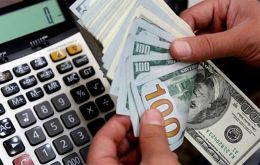
Argentina's peso currency plunged further into record low territory after the central bank tightened currency controls. The peso opened almost 0.1% weaker at 75.25 per U.S. dollar, traders said, and the country risk rose 38 basis points to 1,157. The black market peso or blue dollar plummeted 9.7% to open at a new all-time low 145 per U.S. dollar.
-
Thursday, September 17th 2020 - 09:29 UTC
Brazil keeps key interest rate at record low 2%; anticipates “forward guidance” instead of further cuts
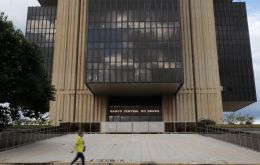
Brazil’s central bank kept its key interest rate at a record-low 2.00% on Wednesday, pledging to stimulate the coronavirus-hit economy with “forward guidance” rather than more rate cuts because of the risk to financial market stability that they could pose.
-
Thursday, September 17th 2020 - 09:01 UTC
Brazil's agribusiness exports in August reached US$ 8,9bn: China main client
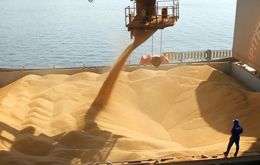
Brazil's agribusiness exports during August 2020, reached US$ 8.91 billion, an increase of 7.8% in relation to the same month in 2019 (US$ 8.26 billion). Between August 2019 and 2020, agribusiness product exports grew by 16.5% in absolute values.
-
Wednesday, September 16th 2020 - 07:56 UTC
New IDB president pledges to help Argentina with the “long arduous” IMF negotiations
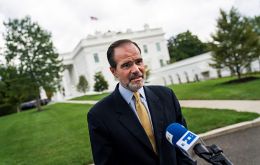
Mauricio Claver-Carone, the White House official elected to lead Latin America’s regional development bank, said he aims to play a constructive role in Argentina’s negotiations with the International Monetary Fund.
-
Wednesday, September 16th 2020 - 07:50 UTC
US tariffs on Chinese goods breach trade rules, says WTO; Trump suggests he will abandon the organization
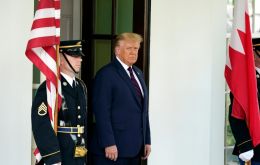
The World Trade Organization found on Tuesday that the United States breached global trading rules by imposing multibillion-dollar tariffs in President Donald Trump’s trade war with China, a ruling that drew anger from Washington.