MercoPress. South Atlantic News Agency
Economy
-
Thursday, November 14th 2019 - 09:50 UTC
Fed chief Powell urged Congress to take action on rising US debt and deficit
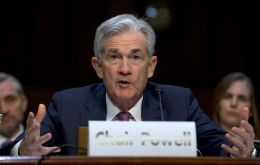
Federal Reserve chief Jerome Powell urged Congress on Wednesday to take action on the rising US debt and deficit to ensure the continued growth of the American economy. Called before the Joint Economic Committee to discuss the economic outlook, the central bank chief stressed that it was not his role to give policy advice, before he gave diplomatically-worded policy advice.
-
Thursday, November 14th 2019 - 08:50 UTC
Tusk forecasts UK will become “a second-rate player” after it leaves the EU
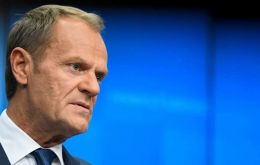
Britain will lose influence in international affairs and become a “second-rate player” after it leaves the European Union, European Council President Donald Tusk said on Wednesday.
-
Wednesday, November 13th 2019 - 09:49 UTC
Protests continue in Chile as economy faces “grave consequences” and Peso plunges to a historic low

Chile’s finance minister warned on Tuesday of the “grave consequences” for the nation’s economy of three weeks of often violent unrest after the peso slid 4% to hit a historic low against the dollar. Ignacio Briones said the weakening of the peso was a “sign of worry” that he and his colleagues were watching very carefully.
-
Wednesday, November 13th 2019 - 09:48 UTC
Bolsonaro hosts BRICS summit: his heart with Trump but Brazil's economy in need of Beijing
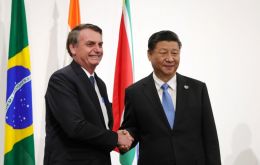
Brazil's President Jair Bolsonaro will walk a diplomatic tightrope on Wednesday when he hosts his Chinese counterpart, as he seeks to boost ties with Beijing and avoid upsetting key ally Donald Trump.
-
Wednesday, November 13th 2019 - 09:10 UTC
UK unemployment at a 45-year low, but jobs' market softening

British unemployment has hit a fresh 45-year low, official data showed on Tuesday in a mixed labor market snapshot before a UK general election and Brexit.
-
Wednesday, November 13th 2019 - 08:37 UTC
Some 1.5 million jobs threatened by US/China trade war, warns port of Los Angeles

President Donald Trump on Tuesday took credit for an American economic renaissance but was greeted by another salvo from US industries that blame his trade wars for jeopardizing employment, wounding business and burdening consumers with higher costs.
-
Saturday, November 9th 2019 - 10:55 UTC
Chilean popular discontent spills over to the country's elite

Chile's long-untouchable elite is now bearing the brunt of popular anger spilling onto the country's streets, and analysts say the signals have been there for years. Resource-rich Chile has long been seen as a stable democracy with South America's highest per-capita income, but economic and political power has rested in the hands of the relative few
-
Saturday, November 9th 2019 - 10:45 UTC
Brexit-era paralysis: Moody's downgrades UK's debt to negative

Moody's on Friday downgraded the outlook for Britain's debt, citing mounting policy challenges amid the Brexit debate. The agency cut the outlook to negative from stable but kept the debt at the investment-grade Aa2.
-
Friday, November 8th 2019 - 09:22 UTC
UN Assembly condemns “anachronistic” and “inhumane” US embargo on Cuba
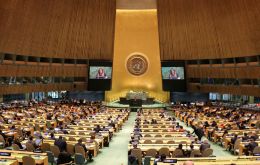
The UN General Assembly condemned the nearly 60-year-old US embargo on Cuba on Thursday for the 28th year in a row, calling for an end to it by a vote of 187 to three. Only Israel and Brazil voted with the US against the resolution. Two other US allies -Ukraine and Colombia - abstained.
-
Friday, November 8th 2019 - 08:52 UTC
China and US agree to roll back tariffs in phases, both sides confirmed

China and the United States have agreed to roll back tariffs on each others' goods as part of the first phase of a trade deal, officials from both sides said on Thursday offering a new sign of progress despite ongoing divisions about the months-long dispute.