MercoPress. South Atlantic News Agency
Energy & Oil
-
Thursday, April 2nd 2015 - 07:31 UTC
Brazil oil industry wants new auction rights rules and more efficient sourcing requirements
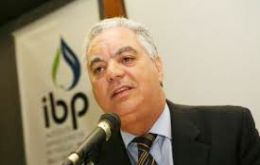
The Brazilian Petroleum Institute, or IBP, has called on the government to change the regulatory framework to deal with the crisis caused by the collapse of oil prices and the corruption scandal at state-controlled oil giant Petrobras.
-
Wednesday, April 1st 2015 - 08:26 UTC
Driverless cars poised to transform automotive industry

The newest Mercedes autonomous car looks like a car on the outside but like a lounge on the inside, with four swivel seats facing each other in a multimedia bubble of padded leather and walnut veneer.
-
Monday, March 30th 2015 - 06:58 UTC
Falklands' oil industry advances despite the fall in oil prices, according to FT

A recent piece from the Financial Times points to the fact that despite the remoteness of the Falkland Islands, the fall of international oil prices and the ongoing conflict with Argentina, this has not impeded small oil and gas companies from going ahead with exploration, and hopefully before 2020 production, in the Islands waters.
-
Friday, March 27th 2015 - 08:07 UTC
Petrobras engineering firm contractor files for bankruptcy
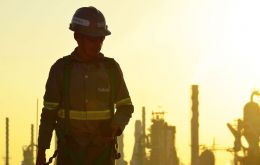
Brazilian engineering firm Galvao Engenharia said on Wednesday it filed for bankruptcy protection, as state-run oil company Petrobras cut off payments due to a broad corruption scandal in which it had been implicated.
-
Friday, March 27th 2015 - 07:52 UTC
International summit on oil and gas potential in Uruguay next June

Uruguay's oil and gas Government owned company, ANCAP, will join senior level delegation from international oil and gas operators on 11-12 June 2015 in Montevideo to analyze the potential of a region that has experienced significant advances since 2009.
-
Wednesday, March 25th 2015 - 07:07 UTC
Falklands' economy performance impressive, although volatile and vulnerable
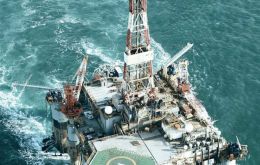
The Falkland Islands economy has witnessed impressive, although volatile, growth in recent years with unemployment rates low enough to be the envy of most countries in the world and the government is free of debt, according to the latest “State of the Economy” released by the Falklands Policy Unit.
-
Monday, March 23rd 2015 - 17:13 UTC
Petrobras corruption scandal reaches New York court: banks will have to explain sale of bonds to US investors

Fifteen banks will join Petrobras next week, April 3, in a New York court to explain how they did nothing wrong when selling 98 billion dollars worth of the Brazilian state oil company’s bonds to American investors. Of the 15, lawyers representing the investment banking divisions of Itau and Bradesco will appear before New York judge Jed Rakoff in hopes to escape the scandal.
-
Monday, March 23rd 2015 - 17:05 UTC
Petrobras suspends operations in major offshore rig for safety reasons

Brazilian state-controlled oil giant Petrobras on Saturday said it has suspended operations at a major offshore platform, citing safety concerns. The P-58 platform, which extracts 106,000 barrels per day, was taken out of service for unscheduled maintenance and to improve its operational efficiency, the company said in a statement Friday.
-
Friday, March 13th 2015 - 13:24 UTC
Brazil's meats giant JBS plans no further acquisitions; about 80% of debts in dollars

Brazilian meats giant JBS SA plans to focus on Australia, U.S. pork operations and its processed foods division under a 2015 strategy focused on “organic expansion” rather than acquisitions, CEO Wesley Batista said on Thursday, and estimated that between 2.5 billion to 3 billion reais (806 million/967 million dollars) in capital investment will be needed this year to support the strategy.
-
Thursday, March 12th 2015 - 11:45 UTC
Everyone is guessing when it comes to oil prices
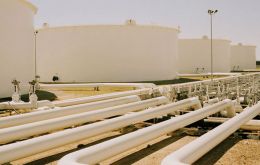
Predicting and diagnosing the trajectory of oil prices has become something of a cottage industry in the past year. But along with all of the excess crude flowing from the oil patch, there is also an abundance of market indicators that while important, tend to produce a lot of noise that makes any accurate estimate nearly impossible.

