MercoPress. South Atlantic News Agency
Energy & Oil
-
Wednesday, December 31st 2014 - 05:18 UTC
Blackout for Paraguay's hydrocarbons hopes in Chaco drillings

President Energy slumped by as much as a third on Monday following an update on testing of the Silurian Santa Rosa and Devonian Icla reservoirs in the Lapacho well in Paraguay's Chaco. A test of Santa Rosa was cut short, although management reckons that it can be commercialized, and a test of Icla recovered only gas and no oil.
-
Wednesday, December 31st 2014 - 02:54 UTC
Russia's Gazprom takes 100% control of major international gas pipeline

Russia’s gas giant Gazprom said in a release on Monday it had signed a deal with Eni, Wintershall and EDF on the purchase of 50% of shares in South Stream Transport BV. Thus, Gazprom will be a 100% owner of the company.
-
Monday, December 29th 2014 - 20:09 UTC
Did The Saudis And The US Collude In Dropping Oil Prices?
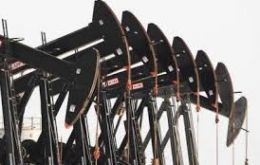
The oil price drop that has dominated the headlines in recent weeks has been framed almost exclusively in terms of oil market economics, with most media outlets blaming Saudi Arabia, through its OPEC Trojan horse, for driving down the price, thus causing serious damage to the world's major oil exporters – most notably Russia.
-
Monday, December 29th 2014 - 08:33 UTC
FIG approves Code of Practice for Procurement by Oil & Gas Companies
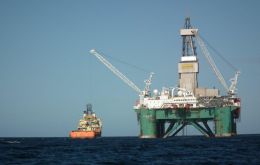
Its acceptance is voluntary at this stage. It provides for formation of Local Content Board, among other steps towards maximising local benefits and opportunities.
-
Monday, December 29th 2014 - 07:57 UTC
YPFB-Andina awarded exploration rights in Santa Cruz areas
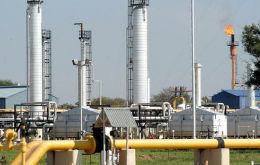
Bolivia's export 6.3 % higher than despite drop in gas volumes. Economic growth, foreign investment continue
-
Friday, December 26th 2014 - 07:43 UTC
Bolivian Oil Company CEO on sick leave, has cancer

President Evo Morales to coordinate operations with company executive in the meantime. Vice President Garcia Linera makes the announcement regarding 'Comrade' Villegas
-
Friday, December 26th 2014 - 06:17 UTC
Exceptional year 2014 for Argentina's YPF

The CEO of the state-owned oil company YPF Miguel Galuccio has assured that 2014 “was an exceptional year” in terms of growth and investment. He pointed out that every goal for the year had been achieved.
-
Friday, December 26th 2014 - 00:59 UTC
Uruguay's Economy Minister skeptical on ARU study
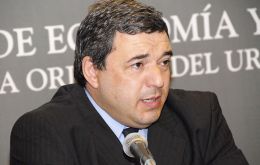
Consumers could have saved as much as US$ 167 million had fuel been imported directly instead of oil being refined by ANCAP. Mario Bergara deems it to be “overblown”
-
Monday, December 22nd 2014 - 08:48 UTC
Oil price may slump to US$ 20... or then again maybe not

Market analysts describes two possible international scenarios. Whichever one prevails will be decisive. But it is not happenning soon.
-
Saturday, December 20th 2014 - 06:33 UTC
Power cuts hit Buenos Aires as temperature rises

Sweltering heat props up use of air conditioning. 'Specific failures' along the distribution line spark street, social media protests

