MercoPress. South Atlantic News Agency
Environment
-
Friday, December 11th 2020 - 08:35 UTC
The “Last Shark” and the Amazon dolphin in the endangered species list
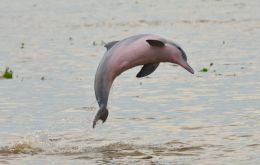
A shark only just formally discovered might already be extinct - a fate no shark has yet suffered in the human era - while an Amazon river dolphin has become endangered, a Red List of species in trouble showed on Thursday.
-
Thursday, December 10th 2020 - 09:29 UTC
A new beaked whale species discovered off Mexico's western coast?
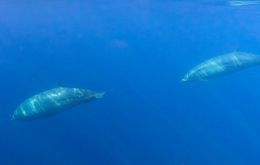
Researchers believe they have found a previously unknown species of beaked whale in waters off Mexico's western coast. If confirmed, the new species would mark a significant discovery among giant mammals.
-
Wednesday, December 9th 2020 - 08:05 UTC
Panda diplomacy survives current US/China confrontation

Giant pandas will remain at the Smithsonian's National Zoo in Washington for another three years under an agreement reached with Chinese wildlife officials, the zoo said on Monday.
-
Wednesday, December 9th 2020 - 08:01 UTC
Venice off guard and under water as flood gates did not function on time
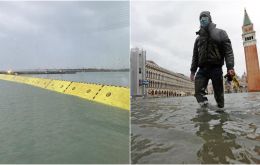
Venice was underwater on Tuesday as heavy rain and strong winds pushed into the lagoon city, catching the authorities off guard before they could activate the huge flood barriers that were rolled out two months ago.
-
Tuesday, December 8th 2020 - 14:26 UTC
Nepal and China agree that Mount Everest is 86cm higher: 8,848.86m
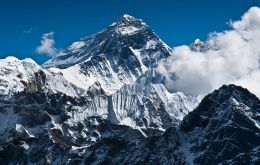
The highest point on Earth got a bit higher on Tuesday as China and Nepal finally agreed on a precise elevation for Mount Everest after decades of debate. The agreed height unveiled at a joint news conference in Kathmandu of 8,848.86m is 86cm higher than the measurement previously recognized by Nepal, and more than 4m above China's official figure.
-
Tuesday, December 8th 2020 - 09:41 UTC
Curbing Amazon deforestation conditions EU/Mercosur trade deal
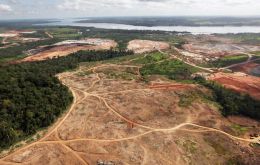
Until Brazil makes a political commitment to curb deforestation in the Amazon rainforest, the trade deal between the European Union and South America’s Mercosur trade bloc will not advance toward ratification in Europe, the EU’s envoy in Brasilia said.
-
Monday, December 7th 2020 - 09:20 UTC
World's largest iceberg approaching South Georgia: concerns it could get stuck in shallow waters
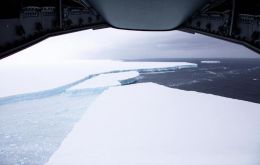
The world’s largest iceberg has been captured on camera drifting through the Southern Antarctic Front near the overseas British territory of South Georgia. British Forces South Atlantic Islands (BFSAI) used high-speed digital cameras attached to a military transport aircraft to capture rare images of the iceberg as it travelled towards the island.
-
Monday, December 7th 2020 - 09:06 UTC
Argentina launches the 2020/21 limited Antarctica campaign, with special care o no possible coronavirus contagion
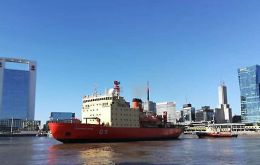
The official Argentine 2020/21 Antarctic season was launched last Friday with a ceremony at the Buenos Aires Navy pier where the icebreaker “ARA Almirante Irizar” was docked, but with no authorities boarding the vessel to avoid any possible coronavirus contagion.
-
Monday, December 7th 2020 - 09:06 UTC
Intermediate earthquake felt Sunday noon in northern Chile
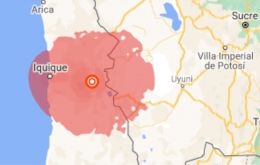
An intermediate magnitude 6.0 earthquake was reported around Sunday noon near Iquique, Provincia de Iquique, Tarapaca, Chile. According to the German Research Centre for Geosciences (GFZ), the quake hit on Sunday 6 December 2020 at 1.47 pm local time at an intermediate depth of 114 km.
-
Friday, December 4th 2020 - 09:28 UTC
Almost 40% of Scotland's seas are now covered by Marine Protected Areas
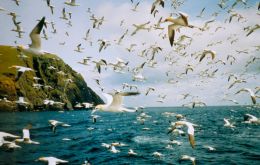
New sites have been designated as Marine Protected Areas (MPAs) to give extra security to some of Scotland's most vulnerable species and habitats. Minke whale, basking sharks and Risso's dolphins will be among a range of animals to be safeguarded.

