MercoPress. South Atlantic News Agency
Health & Science
-
Tuesday, April 27th 2021 - 09:01 UTC
Argentina: Buenos Aires prepares for stricter measures against Covid-19
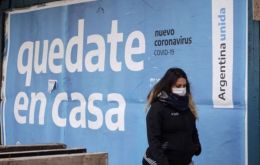
A group of advisers to the Argentine President assessed the coronavirus situation Monday, after which further restrictive measures to be announced shortly appear inevitable.
-
Tuesday, April 27th 2021 - 08:53 UTC
Chile's borders to remain closed in light of little progress fighting covid-19
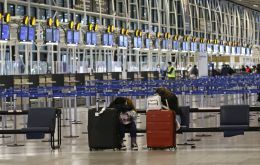
Chilean authorities decided Monday not to reopen the borders throughout May to try to prevent the entry into the country of new strains of the SARS-CoV-2 coronavirus, Health Undersecretary Paula Daza announced.
-
Monday, April 26th 2021 - 08:41 UTC
Anvisa expected to decide Monday on fate of Sputnik V vaccine in Brazil

Brazil's National Health Surveillance Agency (Anvisa) will evaluate this coming week the feasibility of importing the Russian-manufactured Sputnik V vaccine against covid-19.
-
Monday, April 26th 2021 - 03:52 UTC
Paraguay takes starker approach at Covid-19 with further restrictions
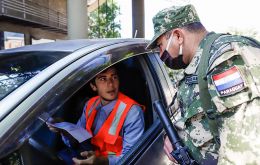
The government of Paraguay decided this weekend to impose tighter restrictions effective April 27 through May 10 in an attempt to slow down the spread of the coronavirus pandemic, which is reportedly reaching unprecedented records.
-
Saturday, April 24th 2021 - 07:37 UTC
Canada bans air traffic to and from India, Pakistan as covid-19 cases soar
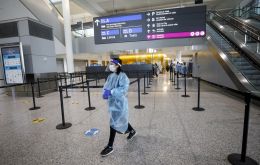
Canada has banned all flights arriving from Pakistan and also from India, where the spread of the coronavirus pandemic seems to have to ceil.
-
Friday, April 23rd 2021 - 09:40 UTC
City of Buenos Aires bans all non-urgent surgical procedures to free up hospitals for covid-19 patients

Buenos Aires City Mayor Horacio Rodríguez Larreta Thursday ordered all health care facilities regardless of whether public or private to cancel every non-urgent surgical procedure or treatment scheduled for the coming days to make room for the increasing number of covid-19 patients who need hospitalization, it was announced.
-
Friday, April 23rd 2021 - 09:30 UTC
UNWTO enhances Green Pass to rebuild confidence in international air travel
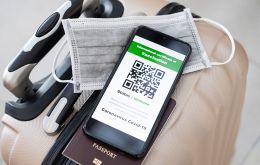
The United Nations World Tourism Organization (UNWTO) Wednesday took advantage of the Ibero-American Summit held in Andorra in a dual-mode with some leaders present and the others delivering speeches online to highlight its new Destination Tracker, an app produced jointly with the International Air Transport Association (IATA), as a tool to guarantee safe international travel throughout the coronavirus pandemic.
-
Friday, April 23rd 2021 - 04:38 UTC
Brazil, Judge orders beaches and bars of Rio de Janeiro must go back to business as usual
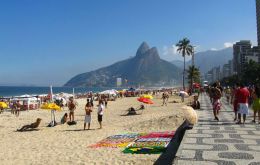
The beaches of Rio de Janeiro were allowed to start welcoming visitors again since Wednesday, following a court order which found Mayor Eduardo Paes' ban was unconstitutional.
-
Thursday, April 22nd 2021 - 09:40 UTC
Argentine President calls for international treaty on pandemics to boost WHO's role
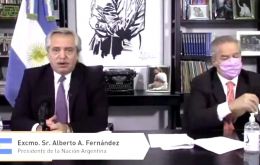
Argentine President Alberto Fernández Wednesday called all countries to ”reinforce the role of the World Health Organization (WHO)“ through ”an international treaty on pandemics.”
-
Thursday, April 22nd 2021 - 09:39 UTC
Vaccine passport reportedly coming up in Uruguay soon but no official announcement yet

Uruguay's Tourism Minister Germán Cardoso Wednesday raised again the issue of vaccination certificates for foreign travellers to “guarantee the sanitary status” of the country.
