MercoPress. South Atlantic News Agency
Health & Science
-
Wednesday, May 27th 2020 - 07:19 UTC
Donald Tusk quips about Brexit mastermind Cummings and his trip
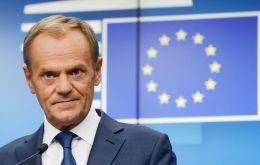
A senior European Union politician couldn't help a Brexit quip as he waded into Britain's row over Dominic Cummings, Prime Minister Boris Johnson's top adviser and mastermind of leaving the bloc who is accused of violating coronavirus travel curbs.
-
Tuesday, May 26th 2020 - 07:55 UTC
Street demonstrations in Ecuador to protests drastic economic measures
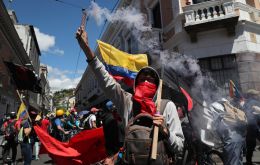
Demonstrators defied coronavirus restrictions to march in cities across Ecuador on Monday in protest against President Lenin Moreno's drastic economic measures to tackle the crisis.
-
Tuesday, May 26th 2020 - 07:51 UTC
White House brings forward two days restrictions on travel to the US from Brazil
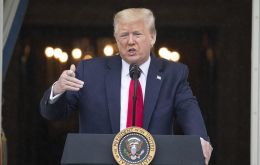
The White House on Monday brought forward by two days restrictions on travel to the United States from Brazil that were announced after the Latin American country became the world's No 2 coronavirus hotspot.
-
Tuesday, May 26th 2020 - 07:50 UTC
WHO warns about an “immediate second peak” of the coronavirus infection
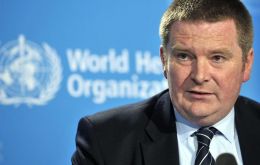
Countries where coronavirus infections are declining, could still face an “immediate second peak” if they let up too soon on measures to halt the outbreak, the World Health Organization said on Monday.
-
Tuesday, May 26th 2020 - 07:45 UTC
Scientists organize to combat “info medic”; mal-information which spreads as fast as the virus

With cat photos and sometimes scathing irony, Mathieu Rebeaud, a Swiss-based researcher in biochemistry, has nearly tripled his Twitter following since the coronavirus pandemic began. With 14,000 followers, he posts almost daily, giving explanations on the latest scientific research and, in particular, aims to fight misinformation that spreads as fast as the virus itself.
-
Tuesday, May 26th 2020 - 07:44 UTC
China central bank will further lower interest rates to help revive the economy
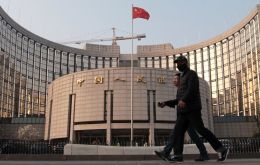
China will strengthen its economic policy and continue efforts to lower interest rates on loans, central bank Governor Yi Gang said, reinforcing expectations of further support measures to revive an economy ravaged by the coronavirus pandemic.
-
Tuesday, May 26th 2020 - 07:22 UTC
Mink to human Covid-19 infection reported in Netherlands by Agriculture minister

Mink with the coronavirus has infected two people in the Netherlands in what are probably the first such cases of transmission during the epidemic, government and health authorities said on Monday.
-
Monday, May 25th 2020 - 20:59 UTC
Mexico anticipates the loss of a million jobs because of the Covid-19 pandemic
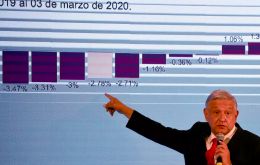
Mexican President Andres Manuel Lopez Obrador said on Sunday that the novel coronavirus could cost as many as a million jobs in the country as many industries considered not essential remain shut.
-
Monday, May 25th 2020 - 20:52 UTC
China open to the identification of the source of coronavirus, but “free of political interference”
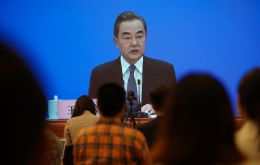
China is “open” to international cooperation to identify the source of the novel coronavirus but any investigation must be “free of political interference”, China's foreign minister said on Sunday. Wang Yi blasted what he called efforts by US politicians to “fabricate rumors” about the pathogen's origins and “stigmatize China”.
-
Monday, May 25th 2020 - 08:55 UTC
Argentina extends mandatory lockdown in metropolitan Buenos Aires until 7 June

Argentina extended until June 7 a mandatory lockdown in metropolitan Buenos Aires on Saturday and tightened some movement restrictions, after a steady increase in the city's confirmed coronavirus cases in recent days.
