MercoPress. South Atlantic News Agency
Health & Science
-
Saturday, January 23rd 2016 - 08:28 UTC
Argentina now denies dengue outbreak is an 'epidemic'.
Even as the number of new cases of dengue fever continued to rise in Argentina, the Health Ministry performed a rapid about-face and disavowed a statement made on Wednesday that the outbreak constituted “an epidemic.”
-
Friday, January 22nd 2016 - 07:17 UTC
Argentina admits ”epidemic of (mosquito-borne) dengue fever”, including Buenos Aires city
The first cases of Dengue fever struck Buenos Aires City this week as a spate of outbreaks in Greater Buenos Aires and across Argentina’s northeast were labeled “an epidemic” by Health Minister Jorge Lemus.
-
Friday, January 22nd 2016 - 06:58 UTC
Zika virus epidemic spreads in the region; women advised to delay pregnancy
The mosquito-borne Zika virus has already infected more than 13,500 people in Colombia and could hit as many as 700,000, the health minister said on Wednesday. According to Pan-American Health Organization figures, the country is second only to Brazil in infection rates, health minister Alejandro Gaviria told journalists.
-
Tuesday, January 19th 2016 - 07:51 UTC
Fourteen countries in a US travel alert for pregnant women because of Zika virus
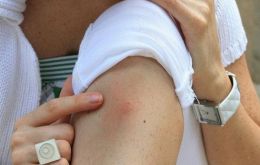
The Centers for Disease Control and Prevention (CDC) has issued travel alert for people traveling to the Caribbean and other areas that have confirmed transmission of the mosquito-borne Zika virus.
-
Tuesday, January 19th 2016 - 07:04 UTC
Ice Patrol HMS Protector concludes historic five week patrol to East Antarctica and Ross Sea
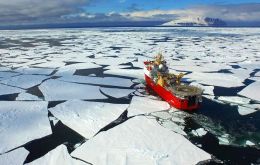
The Royal Navy’s Ice Patrol ship has just completed a historic five week patrol to the East Antarctic and Ross Sea. HMS Protector is the first Royal Navy, or UK Government, vessel to have visited the region in 80 years or to have travelled so far south having dipped below 77 degrees latitude.
-
Friday, January 15th 2016 - 08:06 UTC
Strong hints of a vast canyon system hidden under the Antarctic ice sheet
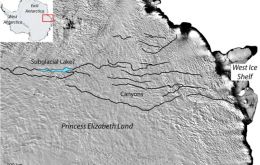
A vast, previously unrecognized canyon system could be hidden under the Antarctic ice sheet. Hints of its presence are seen in the shape of the white continent's surface, in a largely unexplored region called Princess Elizabeth Land. If confirmed by a proper geophysical survey - now under way - the winding canyon network would be over 1,000km long and in places as much as 1km deep.
-
Tuesday, January 12th 2016 - 06:30 UTC
Five cups of coffee a day good for the heart and to combat diabetes, says 10-year study

A major US study has found that people who drink up to five cups of coffee daily are less likely to die from health issues such as heart disease and diabetes compared to those who don’t drink coffee at all. The 10-year study found that the more coffee people drank, the less likely they were to die early. The results were similar with people who drank decaffeinated coffee.
-
Thursday, January 7th 2016 - 09:27 UTC
Uruguay's 2016 Antarctic campaign takes off; ship to deliver 250 tons of fuel and 40 tons of supplies
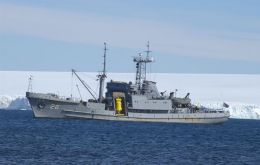
Uruguayan navy rescue vessel ROU 26 “Vanguardia” left this week from Montevideo for Antarctica loaded with fuel and provisions for the country's scientific base “General Artigas” at King George Island.
-
Monday, January 4th 2016 - 09:27 UTC
Lifestyles have a greater impact on cancer suggest latest findings; likewise they might be more preventable

Earlier this year, researchers sparked a debate by suggesting that random cell mutations, rather than lifestyle choices, played a significant role in the development of tumors, a finding dubbed the “bad luck hypothesis.” A new study has nevertheless led scientists to believe that external influences have a far greater impact, implying that many cancers may be more preventable than previously thought.
-
Friday, December 4th 2015 - 04:44 UTC
UK embassy sponsors three workshops in Uruguay on science and innovation
The British Embassy, the British Council and Uruguayan National Research and Innovation Agency (ANII) have announced the three workshops selected under the recent Researcher Links call for proposals, part of the Embassy’s cooperation funding for science and innovation in Uruguay.
