MercoPress. South Atlantic News Agency
Health & Science
-
Wednesday, December 19th 2012 - 04:06 UTC
Europe opens state of the art satellite tracking station in Argentina
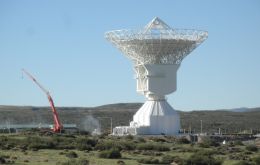
A new satellite tracking station at Malargue, Mendoza, Argentina, was formally inaugurated on Tuesday, completing the trio of deep-space stations and confirming ESA, European Space Agency, as one of the world's most technologically advanced space organisations.
-
Wednesday, December 19th 2012 - 01:38 UTC
Saudi Arabia joins Japan and China, suspends imports of Brazilian beef

Saudi Arabia has suspended imports of Brazilian beef, Brazil’s agriculture ministry said Tuesday, and became the largest country to stop purchases after confirmation of a 2010 case of atypical mad cow disease.
-
Wednesday, December 19th 2012 - 01:33 UTC
Schmallenberg disease hitting lambs and calves spreads to all England and Wales
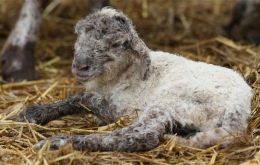
A disease that can lead to lambs and calves being stillborn or deformed has spread to every county in England and Wales. Some farmers are expected to lose livestock during the lambing season, which is just getting underway.
-
Wednesday, December 12th 2012 - 20:49 UTC
HMS Protector inspecting Antarctic Treaty sites; first visit to Brazil’s Comandante Ferraz station
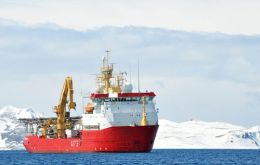
Royal Navy Ice patrol HMS Protector has arrived in Antarctica for the first time this season after her long sail south from Portsmouth. She will spend this, the first of her four work periods in the ice this Austral Summer, supporting an international team conducting formal Antarctic Treaty inspections of sites across the Peninsula.
-
Tuesday, December 11th 2012 - 19:04 UTC
Atypical BSE case detected among grass fed cattle in south Brazil

A scientific commission from the World Organization for Animal Health, OIE, will commence in February to study the case of atypical Bovine Spongiform Encephalopathy, BSE, reported in the south of Brazil among a herd of animals fed on grassland.
-
Monday, December 10th 2012 - 05:44 UTC
Norovirus attacks cruise ship on the Rhine: 183 pax quarantined

Many passengers aboard a River Rhine cruise ship have fallen ill. The cruise liner, the MS Bellriva, had been on the river when around 70 people complained of symptoms linked to the highly contagious Norovirus.
-
Thursday, December 6th 2012 - 22:52 UTC
Terrible Thursday for Buenos Aires: toxic gas cloud scare and flash floods
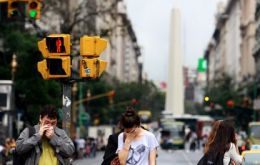
Terrible Thursday for the city of Buenos Aires: toxic gas scare in the morning with almost panic situations and flooding mid afternoon by the same rains that helped clear the cloud hovering over residents with sore throats and irritated eyes.
-
Wednesday, December 5th 2012 - 19:50 UTC
Polar ice sheets melting have added 11mm to global sea levels since 1992
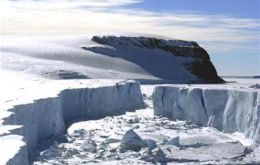
Nearly two dozen research teams collaborated to study polar ice sheets in Greenland and Antarctica and discovered definitively that they have added 11mm to global sea levels since 1992, melting ever more quickly.
-
Wednesday, December 5th 2012 - 18:32 UTC
WHO sponsored research helps identify heavy lead contaminated areas in Peru
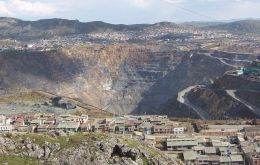
Countries – especially those with a long mining history -- can substantially reduce lead poisoning in children by mapping contamination levels in the soil to identify high-risk areas and by taking measures to keep children away from those areas, according to a study published this month in the public health journal, the Bulletin of the World Health Organization.
-
Thursday, November 29th 2012 - 18:28 UTC
Ocean acidification taking toll of Antarctica marine snails, shows BAS research

The shells of marine snails – known as pteropods – living in the seas around Antarctica are being dissolved by ocean acidification according to a new study published this week in the journal Nature Geoscience. These tiny animals are a valuable food source for fish and birds and play an important role in the oceanic carbon cycle.
