MercoPress. South Atlantic News Agency
International
-
Thursday, May 30th 2013 - 02:29 UTC
Insulza announced he will complete his term mandate as OAS head.
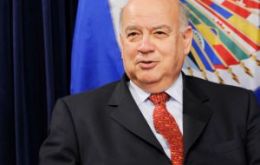
The secretary general of the Organization of American States (OAS), José Miguel Insulza, plans to finish his term as head of the organisation. In an interview with El Pais (Madrid), the Chilean socialist political veteran has said that he still has two more years as head of the OAS thus quelling rumours about his resignation.
-
Tuesday, May 28th 2013 - 22:05 UTC
Uruguay’s Mujica: Integration with Asia is our “Strategy for the Future”

On Tuesday Uruguayan President Jose Mujica said that the policy of integrating the economies of Asia and his country is a necessary “strategy for the future.”
-
Tuesday, May 28th 2013 - 21:58 UTC
OAS Participates in 3rd Level Meeting of the Inter-Regional Dialogue on Democracy

The Assistant Secretary General of the Organization of American States (OAS), Ambassador Albert R. Ramdin, represented the organisation in the Third High Level Meeting of the Inter-Regional Dialogue on Democracy, held in Brussels, Belgium: “Upholding and Strengthening the Rule of Law in our Regions.”
-
Tuesday, May 28th 2013 - 21:52 UTC
EU imposes duties on Argentine biodiesel

The European Union is imposing punitive duties on imports of biodiesel from Argentina and Indonesia, charging them with selling the product into the bloc at unfairly low prices, setting provisional tariffs ranging from 6.8 to 10.6 % for imports from Argentina and between zero and 9.6 % for those from Indonesia.
-
Tuesday, May 28th 2013 - 21:49 UTC
Frenchman dies of SARS-like virus, 23rd victim of this outbreak.

France's first victim of a new coronavirus, a 65-year-old man who had been travelling in Dubai, has died, while the second man who shared the same hospital room is stable, health officials said.
-
Tuesday, May 28th 2013 - 06:20 UTC
St Helena airport to open February 2016; on line survey to assess travel potential

As from 2016 the British Overseas Territory of St Helena in the mid Atlantic will have regular flight connections when the island’s first airport opens which opens a magnificent opportunity for promoting tourism and for Saints living overseas to visit their homeland.
-
Tuesday, May 28th 2013 - 06:06 UTC
Royal Caribbean “Grandeur of the Seas” suffers accident, cancels cruise
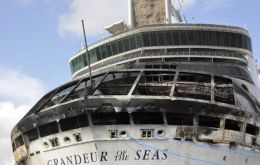
Royal Caribbean International announced on Monday that the 31 May 2013 sailing of Grandeur of the Seas from Baltimore, Maryland, will be cancelled to allow for repairs to damages sustained as a result of a fire.
-
Tuesday, May 28th 2013 - 03:07 UTC
Argentina and Brazil ‘fear’ a greater integration with China, says Mujica

Uruguayan president Jose Mujica currently in Beijing on an official visit, underlined the significance of China in trade and investments fro South America, but also admitted there is some ‘fear’ mainly from Argentina and Brazil about a greater integration and dependency from the Asian giant.
-
Monday, May 27th 2013 - 07:11 UTC
Falklands’ dispute expert named Argentine ambassador in Dublin

An expert in the Falklands/Malvinas Islands dispute and professional diplomat has been accepted as the new Argentine ambassador in Ireland. Silvia Maria Merega has held important posts at the Organization of American States in Washington, before the European Union and at the Argentine embassy in the US.
-
Monday, May 27th 2013 - 05:10 UTC
Millions take to the streets world-wide to protest against Monsanto and GM

The United States biotech giant Monsanto says it respects people’s rights to express themselves, but that its genetically-modified seeds improve farm productivity and food quality.

