MercoPress. South Atlantic News Agency
Latin America
-
Tuesday, September 10th 2013 - 02:04 UTC
Special Mercosur parliament committee to help decide on Paraguay/Venezuela controversy
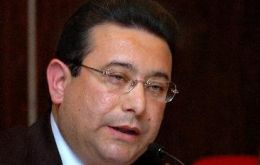
Mercosur parliament, Parlasur, resumed activities on Monday and the first thing it agreed on was to name a committee to help find a way out to the controversy between Paraguay and Venezuela. Although Venezuela holds the rotating chair of Mercosur, Paraguay refuses to acknowledge even its status as full member of the regional group.
-
Tuesday, September 10th 2013 - 01:14 UTC
Steady advance of Cristina Fernandez leadership’s contender in latest polls
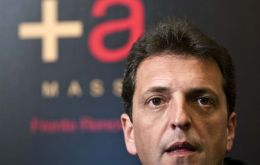
Sergio Massa, mayor of Tigre in suburban Buenos Aires who is disputing Argentine President Cristina Fernandez leadership of the ruling movement by running for the Lower House in representation of the province of Buenos Aires, leads comfortably with 40% of vote intention according to the latest public opinion released on Sunday.
-
Tuesday, September 10th 2013 - 01:11 UTC
Brazil’s 124 billionaires own 12.3% of GDP and half the population lives on 130 dollars per month
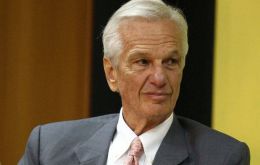
The 124 richest people in Brazil hold assets totalling 544 billion Reais equivalent to 238.6bn dollars or 12.3% of the country’s GDP, which is considered one of the most unequal in the world. The 124 are included in Forbes magazine latest publication that brings together all those Brazilians with fortunes over a billion Reais (approx 438 million dollars).
-
Tuesday, September 10th 2013 - 00:37 UTC
Paraguayan president Cartes visits Cristina Fernandez in Buenos Aires
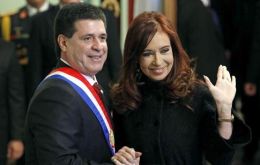
Paraguayan president Horacio Cartes is expected in Buenos Aires on Tuesday, following an invitation from his Argentine peer Cristina Fernandez, which will be his first overseas bilateral trip since taking office 15 August.
-
Tuesday, September 10th 2013 - 00:29 UTC
The figure of Pinochet forty years later still divides Chile
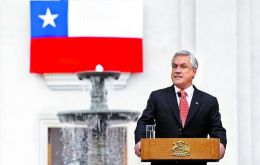
Chile's conservative government and center-left opposition held separate events on Monday in the capital Santiago to mark the 40th anniversary of the bloody coup that ushered in 17 years of harsh military rule under the late Gen. Augusto Pinochet.
-
Monday, September 9th 2013 - 02:42 UTC
Does Cristina Fernandez have time to combat the scourges of insecurity and inflation?
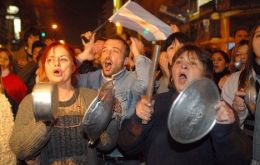
In 2006 a year before Cristina Fernandez took office as president for the first time, Argentine public opinion was concerned with unemployment (25%) and insecurity (25%) while corruption stood at 5% and inflation 1%. However seven years later insecurity and inflation are paramount with 34% and 13%, corruption 8% and employment concern is down to 7%.
-
Monday, September 9th 2013 - 02:36 UTC
Argentina, Uruguay and Venezuela fall dramatically in WEF Competitiveness ranking
The World Economic Forum Competitiveness report published last week shows Latinamerica is loosing ground in the world economy and the three countries which most plunged in the ranking in the last twelve months were: Venezuela, Argentina and Uruguay.
-
Sunday, September 8th 2013 - 00:42 UTC
Round of protest against corruption on Brazil’s Independence Day celebrations

Police in Brazil used tear gas, dogs and rubber bullets to scatter protesters against corruption who tried to interrupt Saturday’s Independence Day celebrations including military parades in Rio de Janeiro, Brasilia and in dozens of other cities which led to scuffles between marchers and police.
-
Sunday, September 8th 2013 - 00:35 UTC
Santos names new cabinet; says nothing about re-election bid and admits an ‘agrarian reform’ is needed
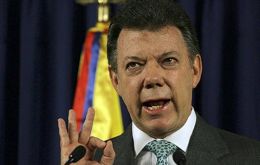
Colombia's President Juan Manuel Santos named this week five new ministers to his cabinet of ‘peace and unity’ strengthen his government ahead of presidential elections next year and after heavy criticism of his handling of a protest in the farming sector that turned violent last week.
-
Sunday, September 8th 2013 - 00:29 UTC
Paraguay insists it does recognize Venezuela as a full member of Mercosur
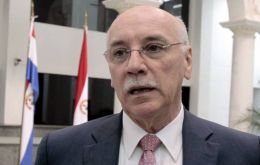
Paraguay as full member and in full exercise of that condition does not recognize Venezuela as president or full member of the group, according to a communiqué sent to all of Paraguay’s ministries and overseas representations.