MercoPress. South Atlantic News Agency
Mercosur
-
Friday, July 24th 2009 - 13:51 UTC
Uruguay takes Mercosur chair for the next six months

Uruguay officially takes the pro-tempore chair of Mercosur from Paraguay on Friday during the main ceremony of the group’s presidential summit in the capital of Paraguay, Asuncion. Originally the meeting was to receive eight presidents but al last moment Ecuador and Venezuela turned back.
-
Wednesday, July 22nd 2009 - 21:57 UTC
Trade in local currencies instead of US dollar, Mercosur proposal
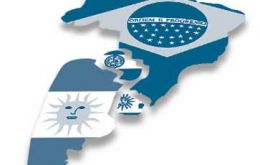
Mercosur presidents will consider this week during the summit in Paraguay, the possibility of using local currencies to finance inter-region trade, revealed the host country’s president Fernando Lugo.
-
Wednesday, July 22nd 2009 - 07:18 UTC
Uruguay rejects proposal to grant Mercosur more powers

Uruguay will reject a Brazilian proposal to create a Mercosur High Court of Justice and grant more powers to the regional parliament when the Mercosur summit meets next Thursday and Friday in Paraguay. Uruguay also anticipated it would make a strong claim regarding the trade barriers imposed by Mercosur senior members, Argentina and Brazil.
-
Tuesday, July 21st 2009 - 22:44 UTC
Brazilian Senate supports Venezuela in Mercosur, but watchful of Chavez
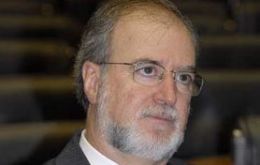
“Respect for democracy is a very important principle for those who are or want to become members of Mercosur”, said Eduardo Azeredo president of the Brazilian Senate Foreign Affairs and Defence committee.
-
Tuesday, July 21st 2009 - 11:23 UTC
Mercosur stalled development and Honduras in Friday’s summit agenda
Bureaucratic problems stalling the development of Mercosur is the main issue to be addressed at the presidential summit of the trade block next Friday in Asuncion, Paraguay, according to regional press reports.
-
Tuesday, July 21st 2009 - 10:43 UTC
EU/Mercosur talks expected to resume in 2010
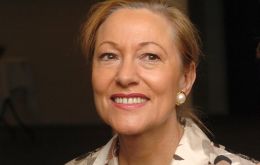
European Union Foreign Relations Commissar, Benita Ferrero-Waldner said on Monday that the Spanish presidency of the European Union in 2010 “should be a good moment and opportunity” to resume the stalled discussions of the European block with Mercosur.
-
Sunday, July 19th 2009 - 18:46 UTC
Eight presidents expected at this week’s Mercosur summit
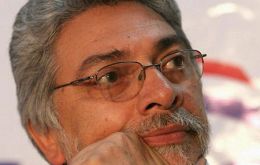
This coming week’s Mercosur presidential summit in Paraguay will convene eight South American leaders, announced Paraguayan Foreign Affairs minister Hector Lacognata during a press conference Saturday in Asuncion.
-
Thursday, July 16th 2009 - 07:20 UTC
The supra-national issue surfaces in the coming Mercosur summit agenda

The approval of the new composition for the Mercosur Parliament scheduled to be agreed later this month at the group’s presidential summit in Paraguay could be postponed given conflicting interests on supra-national decisions.
-
Thursday, July 16th 2009 - 07:15 UTC
Latam forecasted to contract 1.9% this year and expand 3.1% in 2010
The Latinamerican and Caribbean economy is forecasted to contract 1.9% this year following six years of sustained growth, but is expected to expand 3.1% in 2010, according to the latest estimates released Wednesday by the United Nations Latinamerican and Caribbean Economic Commission, Cepal in Santiago de Chile.
-
Monday, July 13th 2009 - 11:33 UTC
Mercosur is an “empty architecture” with rhetoric support
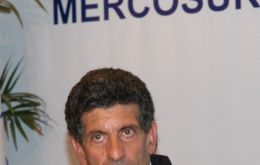
Mercosur can’t find its social and political dimension, political parties don’t discuss the issue and as it stands it is an empty architecture, and sentenced, according to former Argentine vice-president Carlos Alvarez. He also warned about possible changes in regional agreements as Brazil becomes a full player in world politics.