MercoPress. South Atlantic News Agency
Politics
-
Wednesday, June 30th 2010 - 05:19 UTC
UK Pavilion has won Royal Institute of British Architects’ Lubetkin Prize
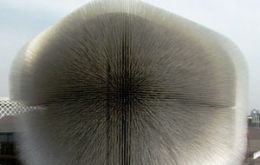
The UK Pavilion at the Shanghai Expo 2010 has scooped the prestigious RIBA (Royal Institute of British Architects’) Lubetkin Prize for the most outstanding work of architecture outside the European Union by a RIBA member.
-
Tuesday, June 29th 2010 - 05:38 UTC
Obama to host 18 African nations’ 50th independence celebration
US president Barack Obama whose father was from Kenya will be hosting next August a major event to celebrate the 50 years of independence of eighteen African countries, according to US sources.
-
Tuesday, June 29th 2010 - 05:09 UTC
Lion’s share of the drugs business goes to final distributors, says UN expert
The lion’s share (85%) of the gross profits from the cocaine business between South America and the United States ends in the wholesale and retail distribution network in the US according to Antonio Luigi Mazzitelli, head of the UN office on Drugs and Crime for Mexico and Central America.
-
Tuesday, June 29th 2010 - 05:04 UTC
European crisis ‘key risk’ for UK banking sector, warns Bank of England
The European debt crisis is a “key risk” to the UK's banking sector and banks should build up their cash reserves in response, the Bank of England has warned. In its latest financial stability report, the central bank welcomed recent measures taken by the EU to stem the crisis.
-
Monday, June 28th 2010 - 22:56 UTC
Brazil willing to support Argentina and Uruguay in joint river monitoring
Brazil is willing to help Argentina and Uruguay with the joint monitoring of the River Uruguay which is at the heart of a pulp mill standing dispute between both countries. Argentina and Uruguay Foreign Affairs ministers are scheduled to meet Tuesday in Montevideo to address the issue.
-
Monday, June 28th 2010 - 22:19 UTC
Greece wants Mercosur/EU talks conditioned to end of Argentine trade barriers
On the eve of the resumption of European Union/Mercosur trade talks, the EU has again complained about Argentina’s ‘protectionist’ measures on some EU agriculture produce and Greece is demanding discussions be conditioned to an end to barriers.
-
Monday, June 28th 2010 - 22:02 UTC
Soccer first played by the Guarani (Paraguay) according to the Vatican
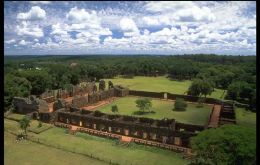
Soccer or football was first played by the indigenous Guaranies in what is today Paraguay, the heartland of South America and one of the sixteen best teams of the current World Cup currently been disputed in South Africa.
-
Monday, June 28th 2010 - 05:58 UTC
Mrs. Kirchner does not challenge Cameron on Falklands; ‘issue belongs to UN’
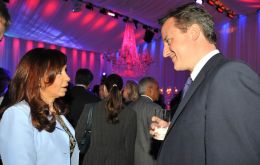
Argentine president Cristina Fernandez de Kirchner met with PM David Cameron in the framework of G-20 events in Toronto, Canada, but avoided talking about the Falkland Islands sovereignty dispute, according to Argentine media sources.
-
Monday, June 28th 2010 - 05:57 UTC
Missing jet engines returned to Malaysia from Uruguay, where they were found
The Royal Malaysian Air Force's (RMAF) F-5E jet engines reported stolen two years ago have been brought back to the country from Uruguay.
-
Monday, June 28th 2010 - 05:45 UTC
Netherlands and Uruguay to sign treaty for exchange of fiscal data

The Netherlands is planning to exchange fiscal data in future with Uruguay, Mauritius and Brunei, reports the Dutch press.