MercoPress. South Atlantic News Agency
Politics
-
Sunday, June 14th 2026 - 20:32 UTC
Adorni's admission deepens divisions in Milei's cabinet as the opposition seeks a censure vote

The admission by Argentine Cabinet Chief Manuel Adorni that he kept undeclared savings deepened divisions within Javier Milei's government and accelerated an opposition attempt to remove him through a censure motion. Despite the controversy, Adorni remains at the head of the cabinet.
-
Sunday, June 14th 2026 - 20:30 UTC
Uruguay to add AI to environmental controls and seeks a new environmental-crimes law
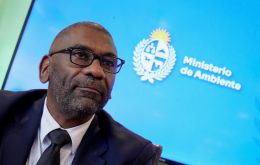
Uruguay's Environment Minister, Edgardo Ortuño, said the ministry will incorporate artificial intelligence (AI) into environmental controls and push for a new environmental-crimes law, among the priorities he outlined ahead of the budget review (Rendición de Cuentas) that the Executive will present to Parliament on June 30.
-
Sunday, June 14th 2026 - 12:35 UTC
'Honduras Gate' audios linking Milei to a disinformation network stir controversy, and denials
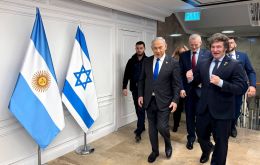
A set of leaked audios, released in late April by left-leaning Spanish media outlets and dubbed “Honduras Gate,” has stirred political controversy in Latin America by alleging a regional disinformation network and naming Argentine President Javier Milei as one of its financiers. The recordings' authenticity is in dispute: the main figure named called them false, and the others mentioned denied or did not respond to the accusations.
-
Saturday, June 13th 2026 - 19:02 UTC
Trump says a US strike killed Niño Guerrero, leader of Venezuela's Tren de Aragua gang

US President Donald Trump announced on Friday night that his country's Southern Command had killed, in a “swift and lethal” strike, Héctor Rusthenford Guerrero Flores, alias Niño Guerrero, whom he described as the leader of Tren de Aragua, “one of the most bloodthirsty terrorist organizations on the planet.” Venezuela's government confirmed hours later the death of the criminal boss, which occurred in Bolívar state, in the country's southeast.
-
Friday, June 12th 2026 - 21:27 UTC
Macri's party urges Milei to remove his cabinet chief over asset-declaration inconsistencies

The Propuesta Republicana (PRO) party, led by former president Mauricio Macri and an ally of the government since the start of Javier Milei's administration, on Friday called on the president to remove his Cabinet Chief, Manuel Adorni, amid growing controversy over inconsistencies in his sworn asset declarations. “President: those of us supporting change want you to defend change and not Adorni,” PRO said in a message on the social network X. Milei, for his part, has ratified his support for the official.
-
Friday, June 12th 2026 - 21:19 UTC
Colombia's far right eyes landslide amid fears Petro will reject runoff result

The campaign of Colombian presidential candidate Abelardo de la Espriella, of the far-right Defenders of the Homeland movement, is aiming for a decisive win in the June 21 runoff to shield the outcome from possible challenges, his campaign chief said.
-
Friday, June 12th 2026 - 19:35 UTC
Díaz-Canel unveils reforms to liberalize Cuba's economy amid an oil crisis and US sanctions
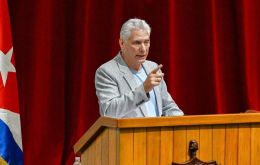
Cuba's President Miguel Díaz-Canel on Friday announced a broad package of economic reforms, under the so-called Economic and Social Program for 2026, to confront one of the most severe crises in the island's recent history, amid strong pressure from Donald Trump's government. “These are times when we have to change,” the president said, without specifying an entry-into-force date or the legal norms that will underpin each measure.
-
Friday, June 12th 2026 - 19:19 UTC
US Navy recues pilots from downed helicopter in the sea with an un-crewed surface vessel and AI

A US Army Apache crew has been rescued by a Navy sea drone after Iran downed their helicopter near the Strait of Hormuz. The two soldiers were picked up from the water by an un-crewed surface vessel operated by Task Force 59, the US Navy's Bahrain-based unit for un-crewed systems and artificial intelligence.
-
Friday, June 12th 2026 - 15:59 UTC
Falklands, Monday 15th June Public Holiday; Liberation Day celebrations on Sunday 14th June
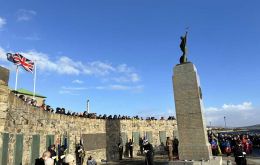
Falkland Islands Government has notified that Monday 15th June 2026 will be a Public Holiday in lieu of Liberation Day which this year falls on Sunday 14th June. Therefore all Government Departments (other than those providing essential services) will be closed.
-
Friday, June 12th 2026 - 15:50 UTC
Dan Jarvis appointed new UK Secretary of Defense; Healey resigns over military spending dispute

Dan Jarvis MBE MP was appointed as UK Secretary of State for Defense on Thursday 11 June 2026, following the resignation of John Healey amid months-long dispute over military spending, and accusing Prime Minister of failing to commit the resources needed to keep the country safe from mounting threats, especially Russia.