MercoPress. South Atlantic News Agency
Tag: Federal Reserve
-
Thursday, September 17th 2026 - 15:01 UTC
Trump still has confidence in his Fed’s chairman, despite the rate increase to 4%
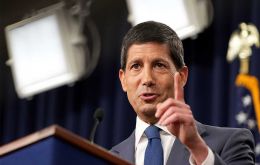
President Donald Trump said he has confidence in the recerntly appointed Federal Reserve chair Kevin Warsh and found a way to justify the central bank’s decision to increase the benchmark interest rate to 4%, the first since 2023.
-
Wednesday, July 29th 2026 - 20:24 UTC
Fed holds rates for fifth straight meeting as three officials push for a hike
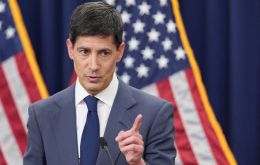
The US Federal Reserve left interest rates unchanged on Wednesday in a range of 3.5% to 3.75%, the fifth consecutive meeting without a move, in a decision that exposed an unusual internal split and left the door open to tightening in September.
-
Wednesday, May 13th 2026 - 20:00 UTC
Warsh to succeed Powell at the Fed with inflation at three-year high
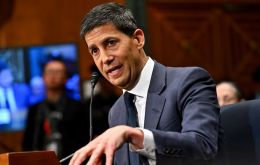
The US Senate on Wednesday confirmed economist Kevin Warsh as the 17th chair of the Federal Reserve in a 54-45 vote, in a transition that hands control of the world's most influential central bank to President Donald Trump's pick at a moment of strong inflationary pressure. Warsh, a former Fed governor during the 2008 financial crisis and a former Morgan Stanley banker, will formally take office on Friday 15 May, following the departure of Jerome Powell, whose eight-year term has been marked by successive economic crises and a prolonged clash with the White House over the central bank's political independence.
-
Wednesday, April 15th 2026 - 22:12 UTC
Trump says he will fire Powell if he stays past May as Senate stalls successor's confirmation
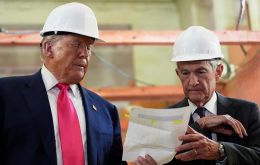
US President Donald Trump on Wednesday threatened to fire Federal Reserve Chair Jerome Powell if he does not leave when his term expires on May 15. “Well then, I'll have to fire him,” Trump said in an interview on Fox Business. “I've held back firing him. I've wanted to fire him, but I hate to be controversial. I want to be uncontroversial, but he will be fired.”
-
Monday, March 16th 2026 - 16:00 UTC
Fed and ECB face a pivotal week as the oil shock revives inflation risk
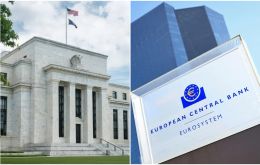
The U.S. Federal Reserve and the European Central Bank head into this week’s policy meetings in a far more uncertain environment than they faced just two weeks ago. The Fed meets on March 17-18, and the ECB on March 18-19, just after the Middle East war pushed oil prices above US$100 a barrel and forced markets to rethink the expected path of interest rates. Even so, neither institution is expected to change borrowing costs at these meetings.
-
Friday, January 30th 2026 - 18:50 UTC
Trump taps Kevin Warsh to lead the Federal Reserve, setting up a high-stakes confirmation fight

Donald Trump said on Friday he will nominate Kevin Warsh, a former Federal Reserve governor, to become the next chair of the U.S. central bank, replacing Jerome Powell when Powell’s term as chair expires in May. The announcement, delivered via Truth Social, follows months of speculation over who would inherit the world’s most consequential monetary-policy job.
-
Monday, January 19th 2026 - 18:45 UTC
Trump’s obsession: why central bankers came out in support of Fed’s chair Powell
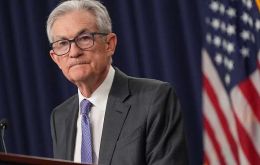
By John Hawkins (*) - Central bankers from around the world have issued a joint statement of support for US Federal Reserve Chair Jerome Powell, as he faces a criminal probe on top of mounting pressure from US President Donald Trump to resign early.
-
Thursday, January 30th 2025 - 11:29 UTC
Fed leaves rates unchanged with a message to Trump, “in no hurry to adjust policy stance”
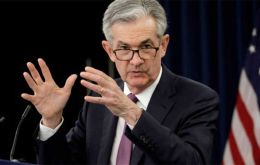
The United States Federal Reserve left interest rates unchanged following the two day meeting with Fed chair Jerome Powell emphasizing at the press conference that “the bank is in no hurry to adjust its policy stance, since the US economy remains strong”.
-
Friday, November 8th 2024 - 19:21 UTC
US Federal Reserve cuts rate by 25 basis points, but future decisions to be conditioned by Trump and Republicans dominance
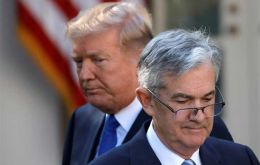
The US Federal Reserve’s Open Market Committee cut interest rates by a quarter percentage point, on Thursday, the same week in which Donald Trump was swept in as elected president with a Legislative and Judicial branch packed with his conservative populists.
-
Thursday, August 1st 2024 - 07:48 UTC
US Fed keeps rates unchanged; chair Powell believes a cut rate “could be on the table in September”
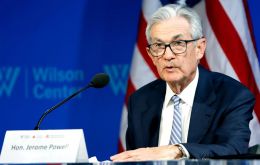
The Unites States Federal Reserve on Wednesday, following on a two day meeting (July 30/31) kept the key interest rate unchanged at a 23 year high of 5,3%, but chairman Jerome Powell said that the stage was set for the central bank's first rate cut in four years. With lower inflation and a cooler jobs market, this could happen at the next FOMC meeting in September.