MercoPress. South Atlantic News Agency
Tag: illegal fishing
-
Tuesday, July 21st 2026 - 20:18 UTC
Argentina joins FAO treaty against illegal fishing, tightening control in the South Atlantic
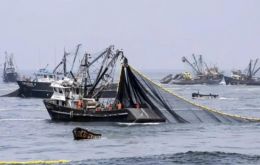
Argentina on July 17 enacted the law approving its accession to the Port State Measures Agreement (PSMA) of the United Nations Food and Agriculture Organization (FAO), a significant step for fisheries governance in the southwest Atlantic. The treaty, in force since 2016, is the only binding international instrument specifically designed to combat illegal, unreported and unregulated (IUU) fishing.
-
Thursday, July 2nd 2026 - 09:55 UTC
A Spanish investigation tracks how Asia's squid fleet is upending the South Atlantic market

An international investigation published by the Spanish newspaper El Confidencial, with an extensive interactive report, describes how the expansion of Asian fishing fleets in international waters —mainly Chinese— has transformed the global market for frozen squid, with a direct impact on the European fleet and consequences for fishing in the South Atlantic, one of the main sources of income for the Falklands.
-
Sunday, June 21st 2026 - 21:25 UTC
Report says Chinese firms control nearly two-thirds of the squid fleet in Argentina's waters
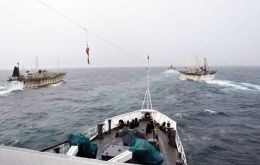
Companies of Chinese origin own 63.1% of the jigger fleet that, under the Argentine flag, fishes squid inside Argentina's Exclusive Economic Zone, according to a report by illegal-fishing and marine-conservation researcher Milko Schvartzman, published by the outlet Infobae. The study states that 53 of the 84 jigger vessels that catch the species under the national flag have Chinese companies as owners or “beneficial owners,” based on satellite observations from Global Fishing Watch and the translation of official Chinese documents.
-
Sunday, June 7th 2026 - 07:56 UTC
Report warns foreign fleets off Argentina catch up to four times the national industry's haul

Foreign fleets operating along the outer edge of Argentina's Exclusive Economic Zone (EEZ) —the so-called Mile 201— extract up to four times the volume caught by the entire national fishing industry, according to a report by the Latin American Foundation for Fisheries Sustainability (FULASP) released on the International Day for the Fight against Illegal, Unreported and Unregulated Fishing. The organization called the activity one of the main threats to the fishery resources of the South-West Atlantic.
-
Thursday, May 21st 2026 - 11:53 UTC
United States revokes visa of former Argentine official over role in illegal Patagonian toothfish case

The US Department of State on Wednesday revoked the visa of former Argentine official Pablo Ferrara Raisberg, former Foreign Ministry representative on the Federal Fisheries Council, over his alleged involvement in an illegal Patagonian toothfish episode that prompted his resignation in 2024. The measure is part of a new policy by the government of Donald Trump under which Washington has restricted the issuance of visas to 24 individuals linked to illegal, unreported, and unregulated fishing in exclusive zones, and also includes Mexican national José Ali Amado.
-
Saturday, February 7th 2026 - 23:24 UTC
Argentina tightens illegal fishing enforcement, elevating satellite tracking as evidence
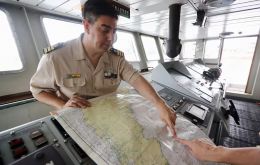
Argentina has tightened its enforcement framework against foreign vessels suspected of illegal fishing inside its Exclusive Economic Zone (EEZ), giving greater evidentiary weight to satellite records and other remote sensors to open proceedings and impose fines, under a new regulation published in the Official Gazette.
-
Monday, November 24th 2025 - 08:41 UTC
Chinese fishing fleet raises concerns in Chile
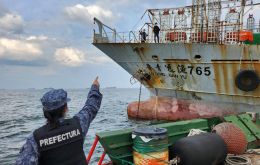
The presence of the Chinese fishing fleet off the Pacific coast of South America has evolved to a permanent event, its structural operation dramatically reshaping geopolitical and environmental balances in Chile.
-
Friday, October 24th 2025 - 10:10 UTC
Chinese fishing near Chilean waters on the rise?
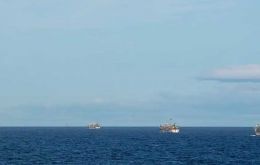
The Chilean Navy has detected a significant surge in activity by Chinese-flagged fishing vessels operating near the country's Exclusive Economic Zone (EEZ), prompting concerns about potential illegal, unreported, and unregulated (IUU) fishing.
-
Thursday, September 18th 2025 - 09:50 UTC
Unregulated overfishing in South Atlantic waters has predatory effects
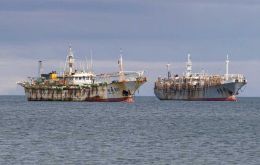
A large fleet of Asian fishing vessels, primarily from China, is overfishing squid in unregulated international waters off the coast of Argentina, according to the Environmental Justice Foundation (EJF).
-
Monday, September 8th 2025 - 09:52 UTC
Lib-Dems, ICCF.UK and Falklands sponsor Conference on Unregulated Fishing in the South Atlantic
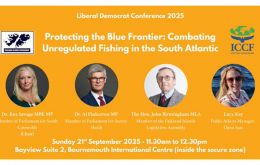
The vitally important issue of unregulated fishing in the South Atlantic will be addressed during a fringe meeting at the Liberal Democrat Conference next 21st September at the Bournemouth International Center. Full name of the presentation will be, “Protecting the Blue Frontier: Combating unregulated fishing in the South Atlantic.”

