MercoPress. South Atlantic News Agency
Tag: IMF
-
Saturday, July 14th 2012 - 07:17 UTC
Chile and Peru, best performing economies of the region leave rates unchanged
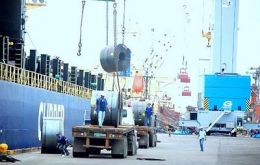
Chile and Peru opted this week against following the lead set by nations from Brazil to South Korea in cutting interest rates as economic growth and slowing inflation in the Pacific neighbors gave central bankers little reason to change monetary policy
-
Tuesday, July 3rd 2012 - 18:56 UTC
IMF praises Germany; suggests more stimuli to a tepid performing US economy
An IMF report revealed that the German economy’s performance has been remarkable despite facing considerable headwinds and that the US recovery “remains tepid and subject to elevated downside risks.”
-
Friday, June 22nd 2012 - 08:37 UTC
Euro area has reached a “critical stage” for the viability of the monetary union, warns the IMF

The Euro area crisis has reached a “critical stage” and member nations must make a “strong commitment” to the shared currency to stop the plunge in investor confidence, the IMF said in a report that recommends issuing common debt as one solution.
-
Wednesday, June 20th 2012 - 06:30 UTC
Countries boost IMF emergency funding to 456 billion dollars
Nations from around the world firmed up their commitments to provide emergency resources for the International Monetary Fund (IMF) designed to deter the spread of crises and increase the institution’s lending capacity to help countries in financial trouble.
-
Tuesday, June 19th 2012 - 06:16 UTC
Largest emerging-market nations will make additional contribution to IMF

The world’s largest emerging-market nations will announce contributions to the IMF’s financial firewall at the Group of 20 summit meeting in Mexico, Brazil’s Finance Minister Guido Mantega announced.
-
Wednesday, June 13th 2012 - 06:28 UTC
Stressed Lagarde’ faux pas: “more shortly than three months to save the Euro”
Action to save the Euro is required in “more shortly than three months,” International Monetary Fund Managing Director Christine Lagarde said in an interview to CNN. The IMF chief response came after a reporter pressured the official to access billionaire investor George Soros’ remarks that Euro leaders had three months to save the Euro.
-
Friday, June 1st 2012 - 02:20 UTC
Spain calls on US and IMF for political support in helping the banking system

The United States and Spain discussed the possibility that direct loans from Europe's emergency fund could be a solution for ailing European banks, Spanish Deputy Prime Minister Soraya Saenz de Santamaria said Thursday.
-
Friday, May 25th 2012 - 01:16 UTC
UK deeper in recession; IMF recommends more stimuli measures
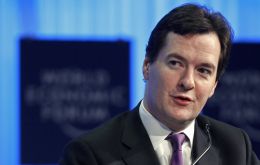
Britain fell deeper into recession than initially thought in the first quarter of 2012 due to a slump in construction output, raising the likelihood that the Bank will opt to inject more stimuli to protect the economy from the Euro zone debt crisis.
-
Thursday, May 3rd 2012 - 23:35 UTC
IMF does not see a ‘nationalization trend’ in South America; Bolivia in compensation talks
The International Monetary Fund (IMF) said it does not see a trend in South America toward state nationalization of private companies despite moves made by Bolivia and Argentina in recent weeks, a spokesman said on Thursday.
-
Thursday, April 26th 2012 - 06:18 UTC
IMF tells Latam good days are not forever and should rebuild ‘defence walls’
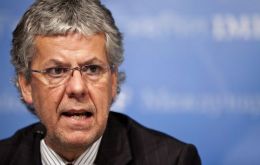
The IMF warned Latin America on Wednesday that favourable economic conditions are not for ever and called on the region’s countries to “rebuild defences” ahead of an uncertain economic future.