MercoPress. South Atlantic News Agency
Tag: oil
-
Thursday, June 18th 2020 - 20:10 UTC
Vatican urges Catholics to disinvest from fossil fuel industries

The Vatican urged Catholics on Thursday to disinvest from the armaments and fossil fuel industries and to closely monitor companies in sectors such as mining to check if they are damaging the environment.
-
Monday, May 25th 2020 - 07:54 UTC
Iranian petrol reaches Venezuela, despite US warnings

The first of five Iranian tankers carrying fuel for gasoline-starved Venezuela entered the country's exclusive economic zone on Saturday, despite a US official's warning that Washington was considering a response to the shipment. The tanker, named Fortune, reached the country’s waters at around 7:40 pm local time (1140 GMT) after passing north of the neighboring dual-island Caribbean nation of Trinidad and Tobago, according to vessel-tracking data from Refinitiv Eikon.
-
Wednesday, May 6th 2020 - 09:40 UTC
Petrobras record oil exports of one million barrels per day in April

Petrobras set a new oil exports record of 1 million BPD in April, as domestic demand plunged, the Brazilian state-controlled oil firm said on Monday, days after a large group of other oil producers, OPEC+, began a 9.7-million-BPD collective cut aimed at rebalancing the market.
-
Saturday, May 2nd 2020 - 07:20 UTC
Shell announced it was cutting its dividend for the first time since World War Two
Royal Dutch Shell cut its dividend for the first time since World War Two on Thursday as the energy company retrenched in the face of an unprecedented drop in oil demand due to the coronavirus pandemic.
-
Thursday, April 30th 2020 - 08:39 UTC
Argentina refineries running at minimum capacity because of lack of demand
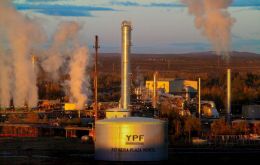
A Buenos Aires crude oil refinery operated by Argentine state-controlled energy firm YPF is running with a minimal level of workers due to a drop in consumption and a lack of storage space amid a crash in global oil prices during the coronavirus pandemic, a spokesman said on Wednesday.
-
Friday, April 24th 2020 - 08:25 UTC
With oil royalties plummeting, Rio state challenged by investment funds
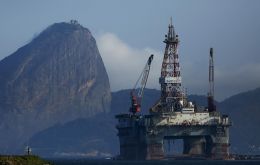
Already grappling with one of Brazil’s most severe outbreaks of the novel coronavirus and a budget deep in the red, Rio de Janeiro state faces a potential threat to its solvency at the hands of investment giants PIMCO and Dodge & Cox.
-
Wednesday, April 22nd 2020 - 08:56 UTC
Trump orders a plan to aid US struggling oil companies with massive supply glut

President Donald Trump on Tuesday ordered his administration to come up with a plan to aid US oil companies struggling with a massive supply glut and record low crude prices. “We will never let the great U.S. Oil & Gas Industry down,” Trump tweeted.
-
Tuesday, April 21st 2020 - 10:16 UTC
US oil price on Monday turned negative for the first time in history
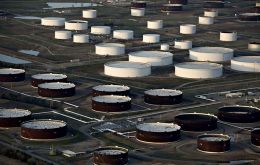
The price of US oil has turned negative for the first time in history. That means oil producers are paying buyers to take the commodity off their hands over fears that storage capacity could run out in May.
-
Monday, April 20th 2020 - 07:39 UTC
US oil falls to below US$ 15 a barrel and Brent dropped to US$ 27
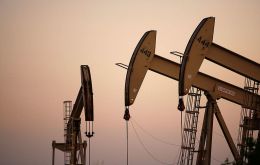
US crude fell about 20% to below US$15 a barrel on Monday, its lowest level in about two decades, as a coronavirus-triggered collapse in demand eclipsed a deal to cut output. West Texas Intermediate, the US benchmark, fell 18.7% to US$14.84 a barrel. Brent crude, the international benchmark, was off 1.5% at US$27.64 a barrel.
-
Tuesday, April 14th 2020 - 07:48 UTC
Exxon raises US$ 9,5bn to bolster its finances; shares have lost 38%

Exxon Mobil Corp on Monday raised US$ 9.5 billion in new debt, with the largest U.S. oil producer seeking to bolster its finances while debt markets remain open to new deals.