MercoPress. South Atlantic News Agency
Tag: Strait of Hormuz
-
Friday, March 13th 2026 - 11:24 UTC
Iran exploits its asymmetric edge in Hormuz, narrowing the U.S. Navy’s room to act
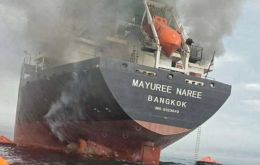
Iran is shifting a key part of the war to the sea, where its conventional naval power is far weaker than that of the United States but where it still retains enough tools to disrupt global energy traffic. In the Strait of Hormuz, a corridor that carries roughly a fifth of the world’s oil, attacks on merchant shipping, the threat of mines and the use of fast boats and coastal missiles have raised the cost and complexity of any escort operation.
-
Wednesday, March 11th 2026 - 03:07 UTC
US steps up strikes on Iran, destroys 16 mine-laying vessels and raises pressure in Hormuz
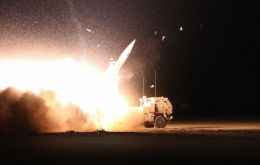
The United States and Israel launched what the Pentagon and witnesses in Iran described on Tuesday as the heaviest day of bombing since the war began, while Washington widened operations around the Strait of Hormuz and said it had destroyed 16 Iranian mine-laying vessels. The move further increased risks around the world’s most critical energy chokepoint, through which about a fifth of global oil and liquefied natural gas normally passes.
-
Monday, March 9th 2026 - 10:59 UTC
Oil rises above US$100 a barrel as Middle East war and Hormuz disruption hit supply
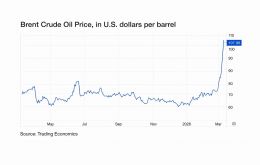
Oil prices climbed above US$100 a barrel on Sunday in futures trading, reaching their highest levels since 2022 as the war in the Middle East, the effective closure of the Strait of Hormuz and fresh production cuts among Gulf producers tightened supply expectations. Reuters reported Brent rose as high as US$111.04 a barrel while West Texas Intermediate (WTI) touched US$111.24 in early trading. AP later put Brent at US$107.97 and WTI at US$106.22, both more than 16% above the previous close.
-
Friday, March 6th 2026 - 15:41 UTC
Oil posts its biggest weekly jump since 2020 as the Iran war disrupts Hormuz

Oil became this week’s clearest barometer of the Middle East crisis, with Brent hovering near US$90 a barrel and WTI around US$87.5, putting both contracts on track for their biggest weekly advance since 2020. The same factor sits behind the surge: the de facto blockage of the Strait of Hormuz, through which roughly one-fifth of the world’s oil normally passes.
-
Thursday, March 5th 2026 - 16:02 UTC
Iran says it hit a US oil tanker in the Gulf and warns on transit through Hormuz
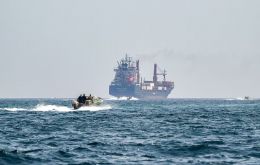
Iran’s Revolutionary Guards said on Thursday that their naval force struck a US oil tanker in the northern Gulf and that the vessel “is on fire,” raising fresh concerns about maritime security tied to the regional conflict and the safety of the Strait of Hormuz—one of the world’s most sensitive energy choke points.
-
Monday, March 2nd 2026 - 12:38 UTC
Oil jumps and shares fall as Iran warnings chill Strait of Hormuz traffic and shipping reroutes spread
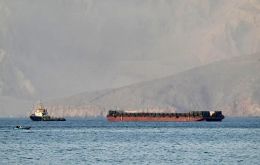
Global oil prices rose sharply on Monday and European equities fell as the regional conflict intensified, following attacks on vessels near the Strait of Hormuz and Iranian warnings to shipping in a chokepoint through which roughly a fifth of the world’s oil and gas trade moves.
-
Monday, June 23rd 2025 - 10:31 UTC
Will Iran block the Strait of Hormuz?
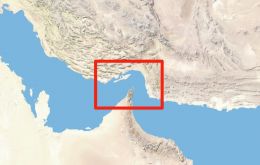
In response to the United States' attack on Saturday, the Iranian Parliament has approved closing the Strait of Hormuz. The decision, which could hinder international trade significantly, particularly that of oil, is awaiting approval from Iran's Supreme National Security Council.
-
Monday, January 6th 2020 - 08:46 UTC
Royal Navy to escort UK-flagged vessels through Strait of Hormuz
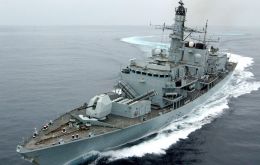
Britain's navy will accompany UK-flagged ships through the Strait of Hormuz to provide protection after the killing of Iranian military commander Qasem Soleimani by US forces.
-
Monday, September 23rd 2019 - 13:19 UTC
British oil tanker Stena Impero to be released from Iranian custody soon
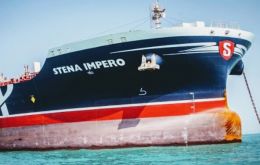
The British oil tanker Stena Impero, held by Iran in the Strait of Hormuz since July for alleged “maritime violations,” has been cleared to leave, according to local press reports published Sunday. The vessel is due to depart “soon.”
-
Friday, July 26th 2019 - 11:00 UTC
Royal Navy begins escorting UK flagged ships sailing the Strait of Hormuz
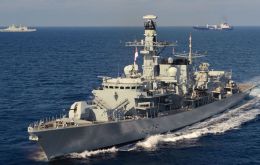
Great Britain’s Ministry of Defense announced that British Royal Navy will protect UK-flagged ships traveling through the Strait of Hormuz, as tensions soar in the Persian Gulf over tanker detentions.