MercoPress. South Atlantic News Agency
Tag: United Kingdom
-
Tuesday, July 23rd 2019 - 18:42 UTC
Boris Johnson promises to deliver Brexit, unite the country and defeat Jeremy Corbyn
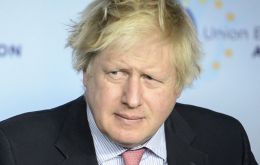
Boris Johnson has been elected new Conservative leader in a ballot of party members and will become the next UK prime minister. He beat Jeremy Hunt comfortably, winning 92,153 votes to his rival's 46,656. The former London mayor takes over from Theresa May on Wednesday.
-
Tuesday, July 23rd 2019 - 09:55 UTC
All ready for Boris Johnson to attempt to overcome the Brexit hurdle
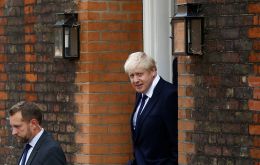
Ballots closed in the race to become Britain's next prime minister on Monday, with the favorite Boris Johnson facing more defections by ministers over his Brexit plan. The country's new leader will take the reins this week and have just three months to attempt to resolve a three-year Brexit crisis that could damage economies on both sides of the Channel and determine the fate of generations of Britons.
-
Tuesday, July 23rd 2019 - 09:40 UTC
UK pound down on fears of Johnson PM and a no deal exit from the EU
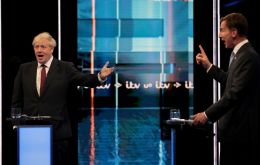
Expectations of policy easing by major central banks such as the Federal Reserve propped up global stocks on Tuesday, while the pound sagged as Britain braced for a new prime minister who could pave the way for a no-deal exit from the European Union.
-
Monday, July 22nd 2019 - 09:42 UTC
Hammond will resign if Boris Johnson becomes prime minister: he does not accept a no-deal Brexit
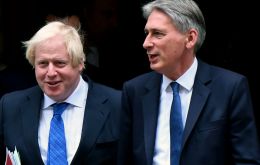
British finance minister Philip Hammond said on Sunday that he would resign if Boris Johnson became prime minister because he felt unable to support a leader happy to take the country out of the European Union without a deal.
-
Monday, July 22nd 2019 - 09:37 UTC
PM May last emergency meeting on Monday to address seizure of UK flagged oil tanker

Prime Minister Theresa May will hold a meeting of Britain's emergencies committee on Monday to discuss Iran's seizure of a UK-flagged oil tanker in the Gulf. In one of her final important acts as prime minister before resigning on Wednesday, May will chair a meeting of Britain's COBR emergencies committee at around 10.30am (0930 GMT), her Downing Street office said.
-
Monday, July 22nd 2019 - 09:25 UTC
IMO condemns tanker attacks in Strait of Hormuz and Sea of Oman
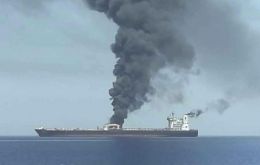
The Council of the International Maritime Organization (IMO) has condemned recent attacks on commercial shipping in the Strait of Hormuz and Sea of Oman at its meeting in London held from 15-19 July.
-
Saturday, July 20th 2019 - 18:02 UTC
Iran Guards seize British flagged tanker; foreign secretary Hunt warns of serious consequences
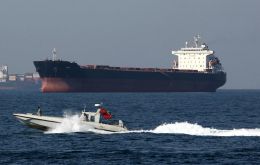
Iran's Revolutionary Guards said on Friday they had seized a British-flagged tanker in the Strait of Hormuz for breaking “international maritime rules” as tensions mount in the highly sensitive waterway.
-
Saturday, July 20th 2019 - 08:11 UTC
UK Full-blown recession in a no deal exit from the EU?
Britain might be entering a full-blown recession that a no-deal exit from the European Union would compound, blowing a 30 billion-pound hole in the public finances, a budget watchdog said. The Office for Budget Responsibility said the economy probably flat-lined or might have contracted in the second quarter.
-
Saturday, July 20th 2019 - 07:02 UTC
UK Armed Forces expected to receive a 2.9% increase before PM May steps down

Two million United Kingdom public service workers including the Armed Forces are reportedly set to be given a £2 billion pay rise. The Times reports that soldiers will receive an increase of 2.9%, while police officers and dentists/consultants will both receive a 2.5% pay rise.
-
Friday, July 19th 2019 - 09:57 UTC
Falklands' government and fishing industry reject MLA Spink's 'breezy' Brexit
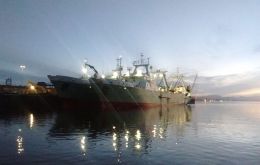
The impact of Brexit on the Falkland Islands' fishing industry could be “significant” according to the fishing industry, contradicting lawmaker MLA Roger Spink’s view in last week's Penguin News that there were measures that could be undertaken to mitigate the impact of potential tariffs.