MercoPress. South Atlantic News Agency
United States
-
Thursday, April 2nd 2026 - 03:01 UTC
US lifts sanctions on Delcy Rodríguez, clearing the way for her visit to Washington
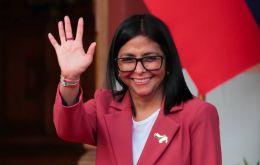
The U.S. Treasury Department on Wednesday removed Venezuela's interim president, Delcy Rodríguez, from the Specially Designated Nationals (SDN) list, the country's main financial sanctions registry managed by the Office of Foreign Assets Control (OFAC). The move allows her to access blocked assets, conduct transactions with U.S. entities, and travel to American territory.
-
Thursday, April 2nd 2026 - 03:00 UTC
Trump vows to send Iran “back to the Stone Age” as oil surges back above $100
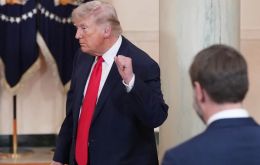
Oil prices surged on Wednesday after U.S. President Donald Trump vowed in a televised address to the nation to hit Iran “extremely hard” over the next two to three weeks. West Texas Intermediate (WTI) crude rose 4.1% to $104.21 per barrel, while Brent, the international benchmark, gained 5% to $106.42, according to CNBC data.
-
Wednesday, April 1st 2026 - 10:12 UTC
Trump running out of options in Iran, a US victory is possible?

By Gwynne Dyer - The Iranians know they have won, but President Trump doesn’t get it yet. He’s still at the stage of counting up the US and Israeli air-strikes and assuming that those numbers mean a US victory is possible. But five gets you ten that the Iranians are already thinking about nuclear weapons. Not their own, which don’t exist. America’s.
-
Wednesday, April 1st 2026 - 09:01 UTC
Another front for Trump, “pain in the pump”, gasoline above US$ 4 a gallon
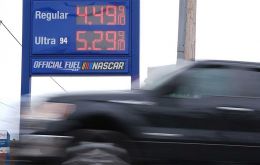
”If the (Iran) conflict is contained soon, the hit to confidence may be temporary, but a prolonged crisis could prompt more precautionary saving and further discretionary spending cuts,” warned Moody’s in a report on the current war in the Middle East, and the impact for US households.
-
Wednesday, April 1st 2026 - 02:07 UTC
Machado meets Rubio in Washington, says her return to Venezuela is near
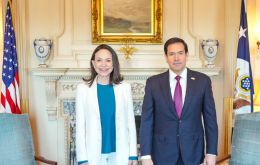
Venezuelan opposition leader and 2025 Nobel Peace Prize laureate María Corina Machado met Tuesday with U.S. Secretary of State Marco Rubio at the State Department in Washington. It was the second meeting between the two since the U.S. military operation that captured Nicolás Maduro in Caracas on January 3.
-
Wednesday, April 1st 2026 - 00:48 UTC
Trump says US will leave Iran in “two or three weeks,” claims regime change achieved
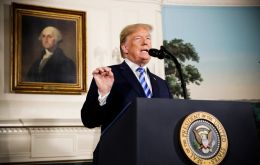
President Donald Trump said Tuesday from the Oval Office that U.S. forces will withdraw from Iran “in two or three weeks,” asserting that the military campaign has achieved its core objectives.
-
Tuesday, March 31st 2026 - 03:58 UTC
Oil tops $114 a barrel as Iran conflict drives record monthly surge
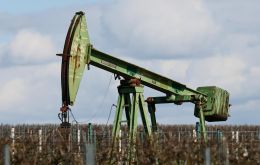
Brent crude, the European benchmark, closed Monday at $112.78 per barrel and continued climbing in the futures market past $114, its highest level since July 2022. Oil has surged roughly 55% in March, the largest monthly gain since the contract's inception in 1988.
-
Tuesday, March 31st 2026 - 01:16 UTC
Argentine microsatellite to fly on NASA's Artemis 2 Moon mission
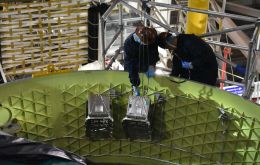
A microsatellite designed and built entirely in Argentina will travel as a secondary payload on the crewed Artemis 2 mission, which NASA plans to launch Wednesday from the Kennedy Space Center in Florida. Argentina is the only Latin American country selected to participate and one of four globally, alongside Germany, Saudi Arabia, and South Korea.
-
Tuesday, March 31st 2026 - 01:03 UTC
NASA begins countdown for first crewed Moon mission in over 50 years
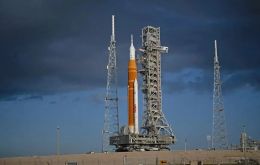
The countdown for the Artemis 2 mission began Monday at 4:44 p.m. local time at the Kennedy Space Center in Florida, with liftoff targeted for 6:24 p.m. on Wednesday, April 1. It will be the first time astronauts have traveled toward the Moon since the Apollo 17 mission in 1972.
-
Monday, March 30th 2026 - 15:01 UTC
Brazil hit hardest as Latin America adjusts to Trump tariffs after one year
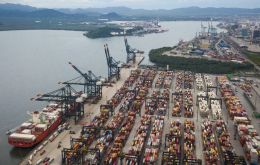
One year after the Trump administration launched its tariff offensive against more than 180 countries, Latin America presents a mixed picture: some economies lost competitiveness in the U.S. market, while others redirected exports or negotiated agreements to cushion the blow.