MercoPress. South Atlantic News Agency
United States
-
Monday, March 30th 2026 - 01:16 UTC
US allows Russian oil tanker to reach Cuba in easing of energy blockade

The United States authorized the passage of a Russian oil tanker loaded with crude bound for Cuba, in the first easing of the de facto energy blockade Washington has imposed on the island since the start of the year, The New York Times reported, citing a U.S. official.
-
Monday, March 30th 2026 - 01:13 UTC
Drug parcels from the US intercepted in Uruguay; two convicted on trafficking charges

Uruguay's National Customs Directorate reported the arrest and conviction of two people on drug trafficking charges following a series of operations at Carrasco International Airport, on the outskirts of Montevideo, involving the interception of international parcels and passenger screening.
-
Monday, March 30th 2026 - 00:53 UTC
Maduro calls from prison for “reconciliation, forgiveness, and reunion” in Venezuela

Ousted Venezuelan President Nicolás Maduro and his wife, Cilia Flores, issued their first public statement since being captured in Caracas on January 3 in a U.S. military operation, calling for national reconciliation and endorsing acting President Delcy Rodríguez's leadership.
-
Saturday, March 28th 2026 - 03:57 UTC
New York court overturns $16 billion ruling against Argentina in YPF expropriation case

The U.S. Court of Appeals for the Second Circuit in New York overturned on Thursday the ruling that required Argentina to pay over $16 billion in compensation to minority shareholders of YPF for the 2012 expropriation of the oil company. The decision, issued with one dissenting vote, represents Argentina's largest judicial victory abroad in over a decade of litigation.
-
Saturday, March 28th 2026 - 01:30 UTC
Trump demands Iran reopen Strait of Hormuz, slams NATO and warns: “Cuba is next”
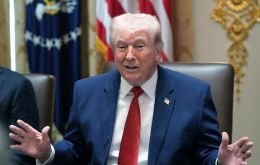
U.S. President Donald Trump said on Friday that the military operation against Iran is “two weeks ahead” of schedule, demanded the reopening of the Strait of Hormuz, and sharply criticized European NATO allies for refusing to join the campaign. “When these times come, you learn who your real friends are,” he told an audience of a thousand investors at the FII Priority forum in Miami.
-
Thursday, March 26th 2026 - 18:47 UTC
Judge refuses to dismiss Maduro case but questions blocking of funds for his defense

Federal Judge Alvin Hellerstein rejected on Thursday the defense's motion to dismiss the charges against former Venezuelan President Nicolás Maduro and his wife Cilia Flores, in a second hearing at the Southern District Court of New York that ran unusually long due to the debate over funding their legal representation.
-
Thursday, March 26th 2026 - 18:37 UTC
Uruguay: Economy Minister reveals daily U.S. pressure to break commercial ties with China

Uruguay's Economy Minister Gabriel Oddone disclosed to business leaders that the United States is exerting “unimaginable” and “unsustainable” pressure on the country to “break” its trade relationship with China, according to the weekly newspaper Búsqueda, citing several attendees at a private meeting with the Confederation of Business Chambers (CCE) held on Tuesday, March 24.
-
Thursday, March 26th 2026 - 10:59 UTC
Maduro faces New York court in key hearing over legal defense

Former Venezuelan President Nicolás Maduro and his wife, Cilia Flores, appear on Thursday, March 26, before the Southern District Court of New York in a second hearing in the criminal case they face in the United States following their capture in January during a U.S. military operation.
-
Thursday, March 26th 2026 - 01:57 UTC
Rodríguez promises “legal certainty” to investors while Machado competes for attention from Texas
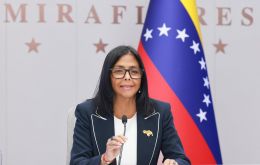
Venezuela's interim president, Delcy Rodríguez, participated via videoconference on Wednesday at the FII Priority investment forum in Miami, where she assured American, Saudi, and Latin American investors that her government is advancing reforms to guarantee “legal certainty” for investments in the country.
-
Wednesday, March 25th 2026 - 20:22 UTC
Iran rejects Trump's 15-point proposal and asserts sovereignty over the Strait of Hormuz

Iran rejected on Wednesday the 15-point proposal put forward by the Trump administration to end the war, calling its terms “excessive and detached from reality,” while international mediators scramble to arrange a direct meeting between representatives of both countries that could be, they warn, the last chance to prevent a broader escalation.

