MercoPress. South Atlantic News Agency
Stories for March 2026
-
Tuesday, March 17th 2026 - 10:28 UTC
Argentina opposition seeks prosecutor’s removal in $LIBRA case and warns of possible cover-up

Political pressure on the judicial investigation into the $LIBRA case intensified on Monday after opposition lawmakers said they would file a complaint against federal prosecutor Eduardo Taiano before the Discipline Tribunal of the Public Prosecutor’s Office and seek his removal from the case. The move followed new reports published by Argentine media on the forensic review of Mauricio Novelli’s phone, one of the central pieces of evidence in the investigation.
-
Tuesday, March 17th 2026 - 10:00 UTC
Saudi Arabia diverts more crude to the Red Sea to bypass Hormuz, but alternative capacity remains limited
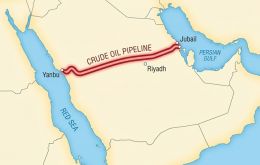
Saudi Arabia is stepping up the use of its pipeline network to the Red Sea to keep crude exports moving while the Strait of Hormuz remains heavily disrupted by the war with Iran. The key route is the Abqaiq-Yanbu system, also known as the East-West Pipeline or Petroline, which links Gulf oil fields with the Yanbu terminal on the Red Sea. That infrastructure has become the kingdom’s main escape route around Hormuz, the chokepoint that normally carries about a fifth of global oil and liquefied natural gas supply.
-
Tuesday, March 17th 2026 - 03:19 UTC
Trump says it would be “a great honor” to “take Cuba” as Washington presses Havana in talks
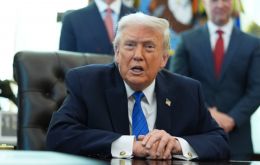
U.S. President Donald Trump sharply escalated his rhetoric toward Cuba on Monday, saying it would be “a great honor” for him to “take Cuba in some form” and that he can “do anything” he wants with the island. The comments came as Cuba was enduring a nationwide blackout and while bilateral contacts acknowledged by both governments since last week continued in the background.
-
Tuesday, March 17th 2026 - 03:00 UTC
Noboa imposes curfew in four provinces of Ecuador deploys 75,000 personnel in new anti-crime offensive
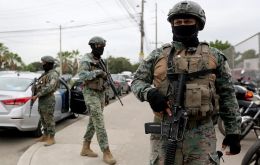
Ecuador’s President Daniel Noboa has launched a new security offensive with a nightly curfew in four violence-hit provinces and the deployment of 75,000 soldiers and police officers. The restriction runs from 11 p.m. to 5 a.m. in Guayas, El Oro, Los Ríos and Santo Domingo de los Tsáchilas, began on Sunday night and is expected to remain in force for two weeks. In the first hours of the operation, authorities reported 253 arrests for violating the measure.
-
Monday, March 16th 2026 - 21:08 UTC
Cuba suffers nationwide blackout after total collapse of national power grid
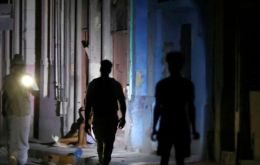
Cuba suffered a nationwide blackout on Monday after the Ministry of Energy and Mines reported a “complete disconnection” of the National Electric System, leaving virtually the entire island without power. The collapse hit a country of roughly 10 to 11 million people and came amid an energy crisis that had already been causing prolonged outages and severe generation deficits.
-
Monday, March 16th 2026 - 16:14 UTC
Germany rejects sending ships to Hormuz as the EU seeks a diplomatic and logistical way forward

Germany on Monday rejected U.S. President Donald Trump’s request for allies to send warships to the Strait of Hormuz to help reopen the shipping route. Defence Minister Boris Pistorius questioned what “a handful” of European frigates could do that the U.S. Navy could not already do, and summed up Berlin’s position bluntly: “This is not our war.” Chancellor Friedrich Merz’s spokesperson added that the conflict “is not NATO’s war” and that Germany had no plans to be drawn into it.
-
Monday, March 16th 2026 - 16:00 UTC
Fed and ECB face a pivotal week as the oil shock revives inflation risk

The U.S. Federal Reserve and the European Central Bank head into this week’s policy meetings in a far more uncertain environment than they faced just two weeks ago. The Fed meets on March 17-18, and the ECB on March 18-19, just after the Middle East war pushed oil prices above US$100 a barrel and forced markets to rethink the expected path of interest rates. Even so, neither institution is expected to change borrowing costs at these meetings.
-
Monday, March 16th 2026 - 15:56 UTC
‘One Battle after Another’ leads the Oscars with six wins in a ceremony with few direct references to war

The 98th Academy Awards crowned One Battle after Another as the night’s dominant winner, taking six Oscars including best picture, best director, best adapted screenplay, best supporting actor for Sean Penn, best film editing and the new award for casting. The ceremony was held Sunday in Los Angeles with Conan O’Brien as host.
-
Monday, March 16th 2026 - 05:17 UTC
Colombia and Venezuela will seek full Mercosur membership, Petro says
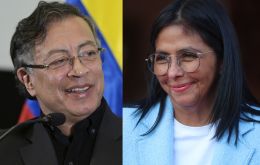
Colombian President Gustavo Petro said his country and Venezuela will seek admission to Mercosur as full members, one day after a ministerial meeting in Caracas that he described as “extremely successful,” according to EFE. In a message posted on X, Petro said: “We will ask for the moratorium to be lifted so Venezuela can enter Mercosur as a full member, and Colombia will submit its own request to join as a full member.”
-
Monday, March 16th 2026 - 05:15 UTC
Argentine court probe finds alleged US$5 million deal tied to Milei’s promotion of $LIBRA

Argentina’s judicial investigation into the collapse of the $LIBRA cryptocurrency has added a new and potentially damaging element for President Javier Milei. A draft recovered from businessman Mauricio Novelli’s phone describes an alleged US$5 million agreement in exchange for presidential backing for the project, based on forensic material incorporated into the case file. Investigators were able to restore the deleted note, although there is still no public proof that any such agreement was formally validated by the government.