MercoPress. South Atlantic News Agency
Stories for March 2026
-
Thursday, March 12th 2026 - 10:40 UTC
Argentina: Fuel price rises complicate March inflation and tighten the government’s peso strategy

Rising fuel prices have added new pressure to Argentina’s March inflation outlook, in a month already burdened by the start of the school year, utility adjustments and seasonal pressure on food prices. In the local market, gasoline prices have risen by roughly 7% to 8% so far in March, increasing the risk that monthly inflation could move back toward the 3% range.
-
Thursday, March 12th 2026 - 03:08 UTC
Adorni under pressure after taking his wife on Milei’s official U.S. trip

Argentina’s chief of staff, Manuel Adorni, has come under political pressure after it emerged that his wife accompanied him on the presidential aircraft during Javier Milei’s trip to the United States, triggering questions over the use of public resources and a possible contradiction with rules the government itself had set for official planes.
-
Thursday, March 12th 2026 - 03:00 UTC
Trump releases 172 million barrels from strategic reserve to curb fuel price surge
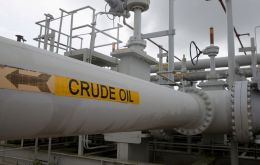
U.S. President Donald Trump has authorized the release of 172 million barrels of crude from the Strategic Petroleum Reserve as part of a coordinated action with the International Energy Agency, in a bid to contain rising fuel prices after market disruption caused by the war with Iran. The Department of Energy said deliveries will begin next week and will take about 120 days to complete.
-
Thursday, March 12th 2026 - 02:50 UTC
U.S. formalizes before court its recognition of Delcy Rodríguez as Venezuela’s state authority
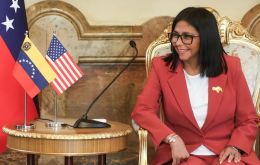
The U.S. government has formally recognized Delcy Rodríguez before a federal court in New York as the Venezuelan authority empowered to act on behalf of the state, giving legal effect to the diplomatic shift toward Caracas announced last week. The move appears in a “statement of interest” filed on March 10 in response to a court order on who legally represents Venezuela in ongoing litigation in U.S. courts.
-
Wednesday, March 11th 2026 - 22:33 UTC
Uruguayans see security as top national concern, cost of living as main personal problem
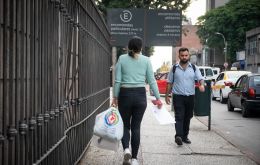
Uruguayans continue to identify security and crime as the country’s main problem, but when the question shifts to everyday life, the dominant concern becomes the cost of living, according to a new survey by University of the Republic academics analysed in a report by El Observador. The poll also found that about one-third of respondents believe such problems stem from “longer inheritances” or broader trends that no government has managed to solve.
-
Wednesday, March 11th 2026 - 20:19 UTC
Chile: José Antonio Kast sworn in as president in conservative shift after Boric
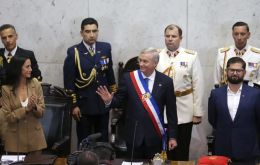
José Antonio Kast was sworn in as Chile’s president on Wednesday in a ceremony at the National Congress in Valparaíso, in a transfer of power that confirmed the country’s sharpest shift to the right since the return to democracy in 1990. Senate President Paulina Núñez administered the oath and placed the presidential sash on him, formalizing the handover from Gabriel Boric.
-
Wednesday, March 11th 2026 - 14:23 UTC
Venezuela opens mining sector to foreign capital as US authorizes Minerven gold dealings
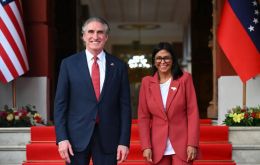
Venezuela this week took another step toward opening its extractive sector to foreign capital, while the United States authorized limited transactions involving Venezuelan gold. The National Assembly approved on first reading a mining reform pushed by Delcy Rodríguez’s interim government, as Washington issued a license allowing dealings with Minerven, Venezuela’s state gold company, just days after the two countries restored diplomatic and consular relations.
-
Wednesday, March 11th 2026 - 04:15 UTC
Boric leaves office defending his record and acknowledging mistakes
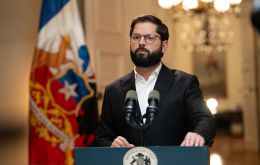
In his final national address before handing the presidential sash to José Antonio Kast on Wednesday, Chilean President Gabriel Boric defended his government’s record, highlighted progress in security, pensions and healthcare, and accepted political responsibility for two of the most damaging episodes of the final stretch of his administration: the handling of the Monsalve case and the failed purchase of former President Salvador Allende’s house.
-
Wednesday, March 11th 2026 - 04:03 UTC
Chile: Kast arrives at La Moneda with a 90-day plan focused on security, fiscal cuts and migration
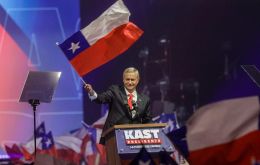
José Antonio Kast will be sworn in as Chile’s president on Wednesday with a pledge to lead an “emergency government” focused on security, the economy and migration control, as he seeks to turn his electoral mandate into early, visible action. His team has drafted a first 90-day roadmap combining administrative measures, regulatory changes and an initial batch of bills meant to show movement from the outset.
-
Wednesday, March 11th 2026 - 03:55 UTC
Lula withdraws from Kast inauguration amid presence of Flávio Bolsonaro
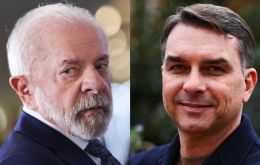
Brazilian President Luiz Inácio Lula da Silva has canceled a planned trip to Chile to attend José Antonio Kast’s inauguration on Wednesday and will instead be represented at the ceremony by Foreign Minister Mauro Vieira. Brazilian officials said the change was due to “scheduling reasons.”