MercoPress. South Atlantic News Agency
Stories for March 2026
-
Monday, March 16th 2026 - 01:10 UTC
Oil tops US$100 a barrel as Middle East war and Hormuz disruption rattle markets
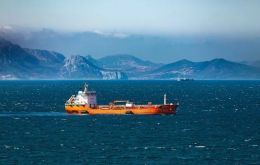
Oil prices moved back above US$100 a barrel on Monday as the conflict involving the United States, Israel and Iran intensified and shipping disruption in the Strait of Hormuz hit one of the world’s most critical energy chokepoints. Brent crude rose to US$105.15 a barrel and U.S. West Texas Intermediate climbed to US$100.32 in early Asian trading, according to market data.
-
Monday, March 16th 2026 - 00:50 UTC
Former Chevron executive told CIA the opposition would struggle to control Venezuela

Ali Moshiri, Chevron’s former top executive for Venezuela and a longtime Washington interlocutor on energy matters, warned the CIA before Nicolás Maduro’s ouster that a direct handover of power to the opposition led by María Corina Machado could produce an unstable transition because she lacked control over the security apparatus and the state’s real power centers, according to a report published on Sunday. In that assessment, Moshiri recommended that the United States back Delcy Rodríguez as the more viable figure to manage the immediate succession.
-
Monday, March 16th 2026 - 00:46 UTC
Protest in Morón turns into attack on Communist Party office amid Cuba blackouts

A protest over blackouts and shortages in the Cuban city of Morón turned into a partial attack on the local Communist Party headquarters early on Saturday, in one of the most unusual recent expressions of public unrest on the island. Authorities reported at least five arrests and said an investigation had been opened into the incident.
-
Monday, March 16th 2026 - 00:10 UTC
Fishing Tourism Set to Rise Globally as Angler Seek Exotic Locations to Cast a Line
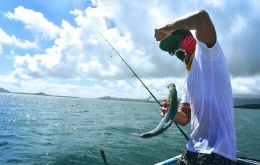
Just about every nation is home to anglers who like to venture out more locally to spend a day by the waterways. Increasingly, however, those anglers and newcomers are hoping to place themselves in new surroundings or take on new challenges in the form of exotic fish around the world.
-
Saturday, March 14th 2026 - 16:07 UTC
Experts say BR privatization weakened Brazil’s ability to contain fuel prices
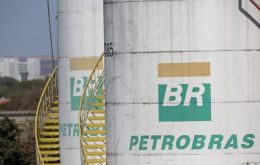
According to a report by Agência Brasil, industry specialists and oil-sector groups say what they describe as abusive fuel price increases in Brazil are not explained by international volatility alone. The report cites cases of gasoline being sold for R$9 a liter at some stations in São Paulo and links part of the distortion to the loss of state control over the distribution chain after the privatization of BR Distribuidora.
-
Saturday, March 14th 2026 - 16:03 UTC
U.S. again backs Argentina in YPF case, urging halt to “intrusive” discovery

The U.S. government has filed a new memorandum before the Second Circuit Court of Appeals in New York backing Argentina’s request to suspend post-judgment discovery in the YPF expropriation case. Argentina’s Treasury Solicitor’s Office said the filing supports the emergency motion submitted on March 6 seeking to pause document production, a sanctions request and an evidentiary hearing scheduled for April.
-
Saturday, March 14th 2026 - 03:45 UTC
Bolsonaro moved to intensive care with bronchopneumonia as family renews house arrest plea
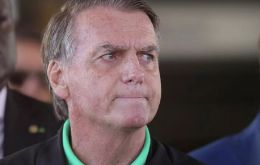
Former Brazilian President Jair Bolsonaro was admitted on Friday to the intensive care unit of Brasília’s DF Star hospital after being transferred from prison with high fever, low oxygen saturation, sweating and chills. The medical bulletin said tests confirmed bilateral bacterial bronchopneumonia and that the former president is receiving intravenous antibiotics and non-invasive clinical support.
-
Saturday, March 14th 2026 - 01:54 UTC
Global volatility hits Argentine assets as country risk edges back toward 600 points

Argentine assets ended the week under pressure, pulled lower by international volatility linked to the Middle East war, in a session marked by falling stocks and bonds, a higher country risk index and renewed oil-driven pressure on inflation and financial expectations. Brent crude settled at $103.14 a barrel, while Wall Street extended its weekly losses amid concern over global energy supply.
-
Friday, March 13th 2026 - 16:26 UTC
Cuba confirms talks with the United States amid its deepest energy crisis in years
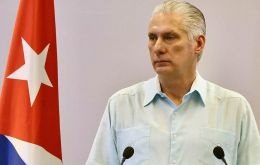
Cuban President Miguel Díaz-Canel said on Friday that his government has recently held talks with U.S. officials, the first public acknowledgment of such bilateral contacts in more than a decade, as the island faces a severe fuel and electricity crisis. He said the exchanges were aimed at seeking solutions to bilateral differences and exploring areas of cooperation based on equality, sovereignty and mutual respect.
-
Friday, March 13th 2026 - 16:03 UTC
Uruguayan fugitive Sebastián Marset captured in Bolivia and placed in U.S. custody

Suspected Uruguayan drug trafficker Sebastián Marset was captured on Friday in Santa Cruz de la Sierra, Bolivia, in an operation that ends one of the Southern Cone’s longest and most visible manhunts. Paraguayan authorities confirmed the arrest and said Marset had been secured after a raid carried out by Bolivian forces.