MercoPress. South Atlantic News Agency

United States imposes new sanctions on Cuban military conglomerate GAESA amid escalating pressure
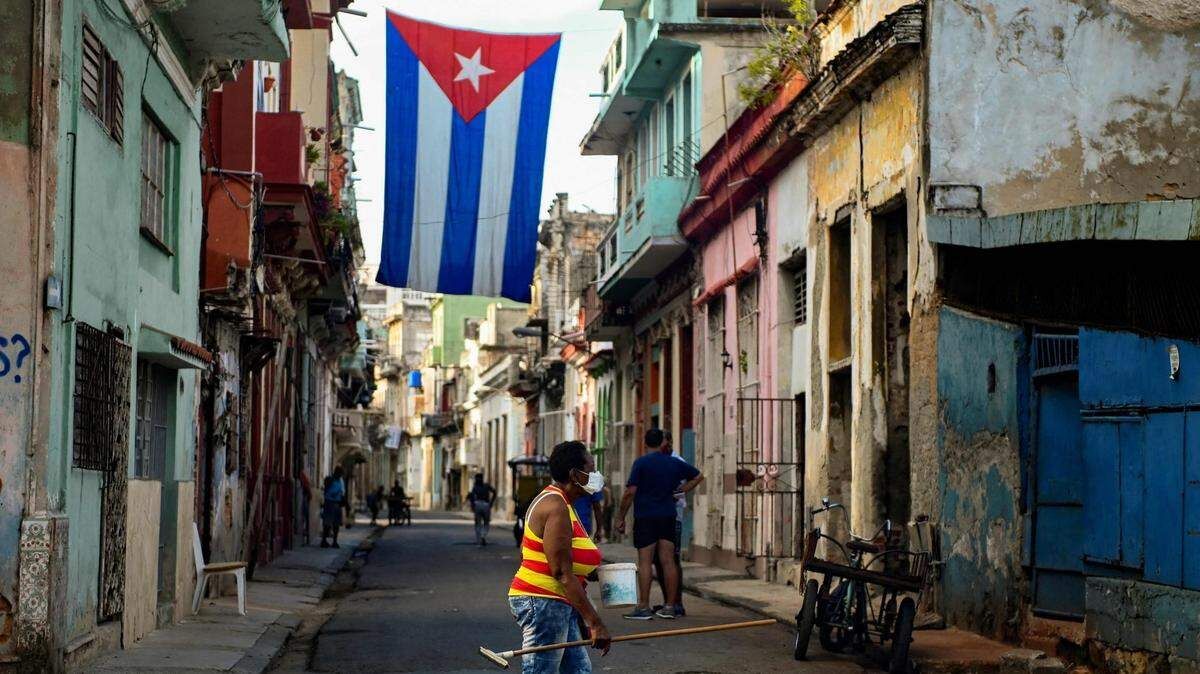
US Secretary of State Marco Rubio announced on Thursday a new package of sanctions against the Grupo de Administración Empresarial S.A. (GAESA), the conglomerate linked to the Cuban Armed Forces that controls approximately 40% of the island's economy, in a fresh escalation of the economic pressure deployed by the Trump administration against the Havana regime. The measure is part of the implementation of Executive Order 14404, signed by President Donald Trump on May 1, which authorizes sanctions against those responsible for political repression and threats to US national security.
The designations reach three main targets. GAESA itself is described by the State Department as “the heart of Cuba's kleptocratic system,” allegedly controlling some $20 billion in “illicit assets” diverted to overseas bank accounts. Its executive president, Ania Guillermina Lastres Morera, was individually sanctioned for the international management of those assets, which entails the freezing of her assets on US territory and a ban on transactions with US citizens or entities. The third designation falls on Moa Nickel S.A., a joint venture between the Cuban state and Canada's Sherritt International, accused of “exploiting Cuba's natural resources for the benefit of the regime” and of operating assets originally expropriated from US persons and corporations following the 1959 revolution.
“Cuba is a tragic and unique case in the Western Hemisphere given the long-term subjugation of its people under a totalitarian Communist regime,” Rubio said in an official statement. The Secretary of State, son of Cuban immigrants and a Miami resident, anticipated that “additional designations” would be announced “in the coming days and weeks.” The new measures add to the more than 240 sanctions imposed since January and include a June 5 deadline for foreign companies and financial institutions to cease operations with GAESA or face secondary sanctions under US law.
The Cuban response was immediate and firm. President Miguel Díaz-Canel described the measures as “unilateral aggression” and “pernicious interference from American imperialism” in posts on his social media accounts, asserting that the Cuban people “understand, as does the rest of the world, that the island only wishes to live in peace, masters of their own destiny.” Foreign Minister Bruno Rodríguez Parrilla described Rubio's remarks as “cynical, hypocritical, and arrogant” and denounced what he characterized as a violation of international law. Days earlier, Díaz-Canel had warned of the possibility of “imminent military aggression” during an International Solidarity Meeting with Cuba.
The announcement coincided with the visit of Brazilian President Luiz Inácio Lula da Silva to the White House, in which Trump reportedly assured his South American counterpart that he is not planning to invade the island, according to Lula himself in a subsequent press conference. The question of Cuba's immediate future arises amid a severe economic crisis: blackouts reach up to 25 hours a day in 55% of the national territory, and the Economic Commission for Latin America and the Caribbean (CEPAL) and the Economist Intelligence Unit project a contraction of Cuban GDP of between 6.5% and 7.2% for 2026. Since January, the United States has intercepted at least seven oil tankers bound for Cuba, reducing the island's energy imports by between 80% and 90%.


Top Comments
Disclaimer & comment rulesCommenting for this story is now closed.
If you have a Facebook account, become a fan and comment on our Facebook Page!