MercoPress. South Atlantic News Agency


Uruguay to deploy army armored vehicles to patrol high-crime Montevideo neighborhoods
 The initiative drew controversy and reopened the discussion about the role of the Armed Forces in internal security
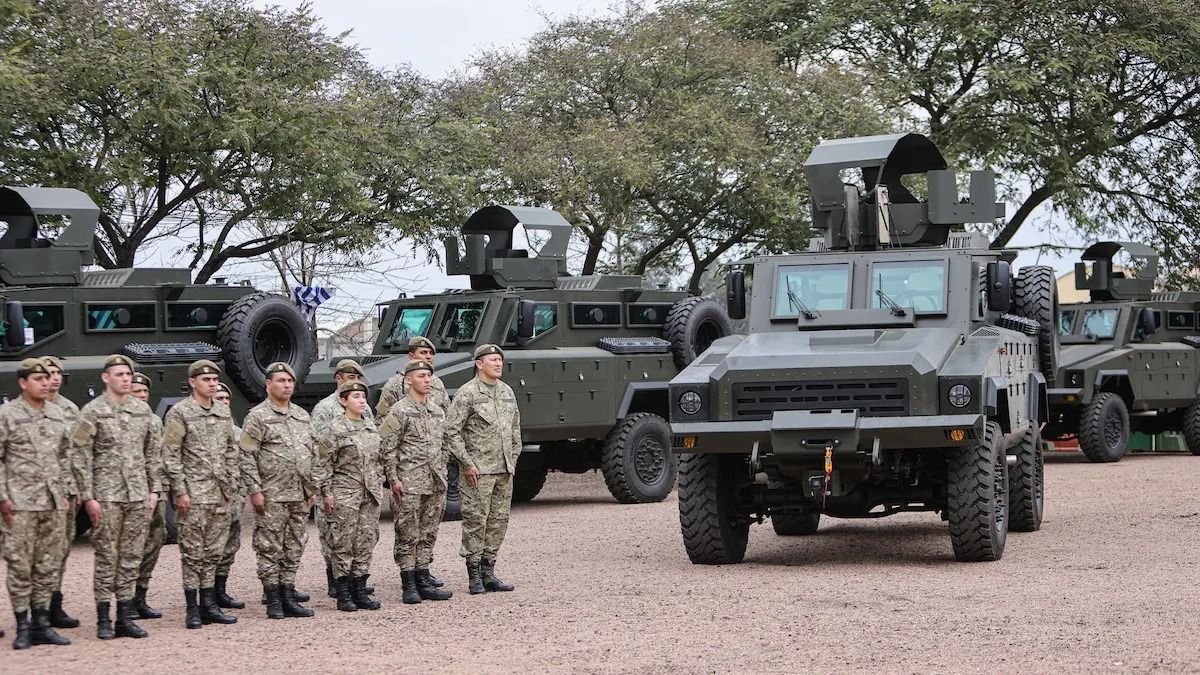
 Uruguay's government announced that twelve Mamba MK-7 armored vehicles from the National Army will begin to patrol, under police command, the Montevideo neighborhoods with the highest crime rates, a measure to reinforce the fight against organized crime that has opened debate in the political system. Interior Minister Carlos Negro confirmed that his ministry is working on a “very advanced” agreement with the Defense Ministry to carry out the deployment in the coming days.
Negro made the announcement on June 18 before the Chamber of Deputies' Special Committee on Security, and the measure became public after it was reported by the weekly Búsqueda. According to the minister, the twelve vehicles “will be in the charge of, as collaboration and under the command of, the National Police,” and will be assigned to the “strict patrolling” of the most affected areas, within the framework of the “Dominio” operation —a focused territorial intervention, like the one carried out in the Marconi neighborhood— and “Atenea,” based on intelligence to prevent homicides. President Yamandú Orsi confirmed the decision on the social network X and explained that it was adopted together with the interior, defense and economy ministers to “redouble the fight against organized crime.”
The initiative drew controversy and reopened the discussion about the role of the Armed Forces in internal security. Orsi defended it with the argument of making use of Defense Ministry infrastructure that the Interior Ministry “would be lacking,” and held that “Uruguay cannot have idle resources that it has.” Defense Minister Sandra Lazo stressed that the measure “is not the military in the street,” but rather “cooperation with vehicles so that the police can fulfill their role in public security in those places where it is more complex to enter.” The secretary of the Presidency, Alejandro Sánchez, recalled that the Defense Ministry already assists in prison perimeters and on the borders, and said the armored vehicles can be “very useful” in neighborhoods where “there are serious problems,” noting that drug trafficking “does not throw stones, it fires bullets.”
Among the points still to be resolved is who will drive the vehicles. According to official sources cited by local media, it would be military personnel, owing to the complexity of their operation and the need for specialized training; Orsi specified that, if so, the troops would receive an “incentive” or a “secondment.” The legal framework of the cooperation is also under study, since Uruguayan law reserves patrol duties for the police and assigns the military limited functions, such as the perimeter surveillance of prisons and border control. The government itself indicated that the scope of the agreement will be discussed in the Council of Ministers.
The Mamba MK-7s are part of a batch of fourteen armored vehicles donated by the United States to the Uruguayan Army, valued at some eleven million dollars and delivered under a cooperation program announced in July 2024. Designed to withstand mines and improvised explosive devices, they were originally conceived for hostile scenarios and UN peacekeeping missions. The deployment falls within the National Public Security Plan, presented in March, in a context in which the Interior Ministry reports a drop in homicides over the past year.


Top Comments
Disclaimer & comment rulesCommenting for this story is now closed.
If you have a Facebook account, become a fan and comment on our Facebook Page!