MercoPress. South Atlantic News Agency



Law of the sea tribunal rejects Argentina's bid to halt Sea Lion, citing lack of jurisdiction over sovereignty
 The tribunal recorded UK assurances: no drilling before March 21, 2027, no extraction before March 2028 and no new licences, as the licensing regime is suspended.
The International Tribunal for the Law of the Sea on Saturday rejected, by 18 votes to 3, Argentina's request for provisional measures to halt the Sea Lion oil project north of the Falklands, concluding that it lacked prima facie jurisdiction because Argentina's claims would require determining which state holds sovereignty over the islands, a question outside the United Nations Convention on the Law of the Sea.
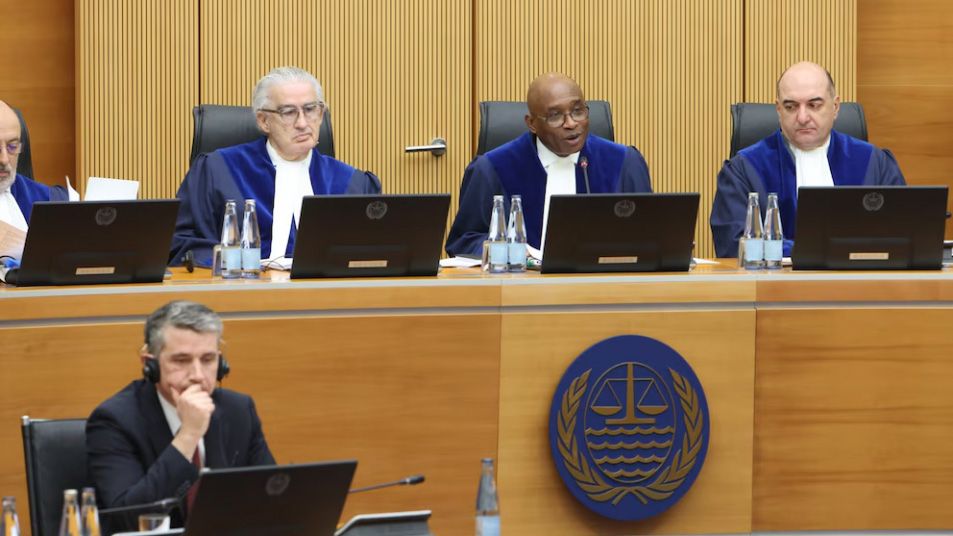
The order, read in Hamburg by the tribunal's president, Judge Maurice Kamga, examines Argentina's four claims separately. On the first, based on the rights of the coastal state, the tribunal held that ruling on it ”requires the identification of the coastal State that has sovereignty over the Falkland Islands (Malvinas), and presupposes the determination of a question of territorial sovereignty“, which would mean applying ”not the Convention but other rules of international law“. It applied the same reasoning to the second claim, on the obligation to refrain from unilateral measures, and to the third, on protecting the marine environment. On the fourth, it concluded that the obligation to settle disputes peacefully and in good faith cannot by itself provide a basis for jurisdiction. Having found no jurisdiction, the tribunal did not examine urgency.
Judges Horinouchi, of Japan, and Patel, of India, and Argentina's judge ad hoc, Raúl Vinuesa, voted against the order. The 18 votes in favour included those of the UK's judge ad hoc, Vaughan Lowe, and Chilean judge María Teresa Infante Caffi.
The tribunal placed on record the assurances the United Kingdom gave at the hearing: drilling will not begin before March 21, 2027, extraction will not begin before March 2028, and ”no further licenses will be granted as the licensing regime is suspended“. It also stressed that ”the Convention is applicable in the maritime areas in dispute“ and that it expects the parties to act accordingly, and encouraged them to swiftly establish the arbitral tribunal that will rule on the merits. The order states that it does not prejudge that tribunal's jurisdiction or the merits of the case.
The Casa Rosada responded with a statement signed by Milei, saying the tribunal ”has recognised (in a non-unanimous vote) the existence of a sovereignty dispute“ and welcoming that ”recognition in the face of the United Kingdom's position“. It added that it does not share the conclusion on jurisdiction, that the decision does not ”legitimise“ hydrocarbon exploitation and that Argentina will move ”without delay” to constitute the arbitral tribunal, before which it will seek new measures.
https://t.co/M8LHss6CeT
— Oficina del Presidente (@OPRArgentina) November 28, 2026
The British government, according to Clarín, welcomed the decision, which “confirms the strength of the UK's legal defence and strategy”. It said Argentina had tried “to prevent the Falkland Islanders from making their own sovereign decisions and failed”, and urged Buenos Aires to “end its wider policy of economic pressure against the islands”. “A good day for the Falklands,” said Stacy Bragger, a member of the islands' Legislative Assembly.
Sea Lion, operated by Israel's Navitas Petroleum, with 65%, and Britain's Rockhopper Exploration, with 35%, has estimated reserves of 1.7 billion barrels. The companies took the final investment decision in December 2025 and expect first oil in the first quarter of 2028.


Top Comments
Disclaimer & comment rulesNo comments for this story
Please log in or register (it’s free!) to comment. Login with Facebook