MercoPress. South Atlantic News Agency
Brazil
-
Monday, September 2nd 2013 - 19:49 UTC
Argentine officials admit inflation is higher than the official release from Indec
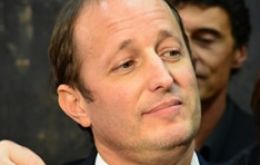
President Cristina Fernandez Victory Front’s parliamentary candidate for next October mid-term election, Martín Insaurralde admitted on Monday that inflation rate is higher than the one released by INDEC statistics agency although the agency is “transparent” and “must readjust to times and realities.”
-
Monday, September 2nd 2013 - 19:41 UTC
Argentina and Brazil pointed out by Europe for protectionist practices

Global efforts to battle trade protectionism need to be reinforced to help shield the fragile economic recovery across the world said a report released on Monday by the European Commission in which it claims Brazil and Argentina are among the main offenders when it comes to import duties hikes and government procurement limitations.
-
Monday, September 2nd 2013 - 12:00 UTC
Maduro apologizes to Paraguay for any ‘pain’ caused and promises ‘to repair the error’
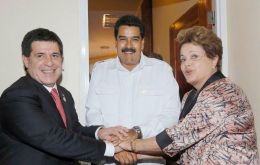
Venezuelan president Nicolas Maduro apologized to his peer Paraguayan peer Horacio Cartes for any ‘pain’ caused to Paraguay and promised a ‘sacrifice’ to repair the ‘error’, according to sources from both presidents and from Brazilian leader Dilma Rousseff who sponsored the meeting between the two heads of state in the framework of the recent Unasur VII summit in Suriname.
-
Monday, September 2nd 2013 - 02:29 UTC
TAM and South African Airways sign codeshare agreement

South African Airways (SAA) and Brazilian carrier TAM Airlines have signed a codeshare agreement to increase access to destinations in both countries for both leisure and business travellers.
-
Saturday, August 31st 2013 - 15:30 UTC
Falklands’ lawmaker arrives in Uruguay to inform on business opportunities in the Islands
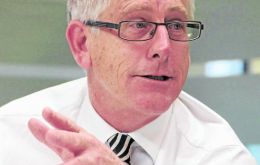
Falkland Islands member of the Legislative Assembly Dick Sawle will be in Montevideo 2-6 September, after spending a week in Brazil involved in business, academia and informal political contacts sponsored by the Foreign Office. In Uruguay according to the official release MLA Sawle will inform about business opportunities with the Falklands and to strengthen the historical ties with Uruguay.
-
Saturday, August 31st 2013 - 02:01 UTC
Sigh of relief for Mantega: Brazilian economy expands 1.5% in second quarter

Brazil’s economy expanded 1.5% in the second quarter of 2013 compared with the previous three month, exceeding the most optimistic market expectations, official statistics showed Friday. The farm sector fared best, growing 3.9%, followed by industry with 2% and services 0.8% according to the Brazilian Institute of Geography and Statistics (IBGE) website.
-
Thursday, August 29th 2013 - 02:48 UTC
IMF encouragement for Brazil’s economy gradual upturn

The Brazilian economy is on a gradual upturn from the slowdown begun in mid-2011, the IMF says while urging Brasilia to continue efforts to rein in inflation. The country's 12-month inflation reached 6.27% in July, close to the upper limit of the government target of 6.5%.
-
Wednesday, August 28th 2013 - 21:56 UTC
Brazil raises benchmark interest to 9% hoping to rein in inflation
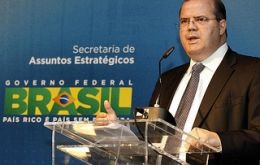
Brazil raised on Wednesday its Selic benchmark interest rate to 9% from 8.5% in a further attempt to rein in inflation. The central bank's monetary policy committee, the Copom, voted unanimously for a third straight half percentage point rate rise.
-
Wednesday, August 28th 2013 - 14:13 UTC
Falklands’ lawmaker invites Brazilian companies to join Islands oil industry development
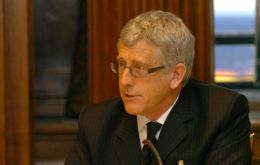
The sovereignty issue should be left aside and talks should concentrate on the business opportunities offered by the oil industry in the Falkland Islands, said lawmaker Dick Sawle during an interview with AP in Brazil where he is on a week long visit of business and political contacts.
-
Tuesday, August 27th 2013 - 22:06 UTC
Brazil’s Mantega admits ‘mini-crisis’; blames the US Fed confusing messages
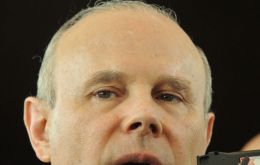
Brazil's economy is going through a “mini crisis” stemming from global markets turbulence made worse by confusing messages from the US Federal Reserve, complained Finance Minister Guido Mantega.

