MercoPress. South Atlantic News Agency
Current Edition
-
Thursday, September 10th 2026 - 12:00 UTC
Iceland Foods to open first UK high street store in the Falklands in December

British frozen food chain Iceland Foods announced Thursday that it has completed a deal to open a store in Stanley, the capital of the Falklands, in what the company describes as the first UK high street retail brand to establish itself in the archipelago.
Add your comment! -
Thursday, September 10th 2026 - 09:26 UTC
UK prime minister vows to be 'relentless' in defending the Falkland Islanders' choice

British Prime Minister Andy Burnham told the House of Commons on Wednesday that his government would be “relentless” in defending the right of Falkland Islanders to choose to be British, in a session dominated by defense spending and the sovereignty of overseas territories.
Add your comment! -
Thursday, September 10th 2026 - 08:25 UTC
Argentina claims Chile is committed to no logistic support for Falklands’ oil industry
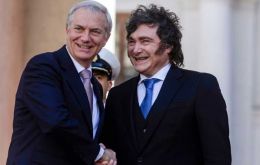
The Argentine government has insisted, following the recent presidential Summit between Javie Milei and Chilean leaded Jose Antonio Kast, that their Andean neighbor will continue to strongly support Argentina’s claim over the Falkland Islands and will render no logistic support related to any hydrocarbons extraction in the Islands”.
Add your comment! -
Thursday, September 10th 2026 - 07:22 UTC
Friends of BOTs describe President Milei’s announcement as ‘political theatre’

The organization Friends of British Overseas Territories has also published a strong statement in support of the Falkland Islands, its right to self-determination, to manage their natural resources, and thus oil development.
Add your comment! -
Thursday, September 10th 2026 - 06:58 UTC
Argentina to raise defense budget two years after seeking NATO global partner status
Argentina's government will increase defense allocations in its 2027 budget, two years after formally requesting global partner status with the North Atlantic Treaty Organization, a standing held in Latin America only by Colombia.
Add your comment! -
Thursday, September 10th 2026 - 06:55 UTC
UK air traffic control failure leaves close to a thousand flights canceled in two days
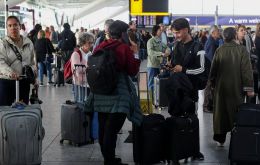
A technical failure in the flight data processing system of Britain's air traffic control provider forced the cancellation of close to a thousand flights on Tuesday and triggered a further wave of cancellations on Wednesday, in the biggest disruption to UK air traffic since 2023.
Add your comment! -
Thursday, September 10th 2026 - 03:13 UTC
BRICS at 20, successes and failures of the world’s largest economic
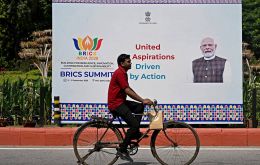
By Brahma Chellaney
Add your comment!
If the promise of the BRICS was to establish a monetary union, a single market, or a tightly integrated political alliance, it has not been fulfilled. But if it was to build a platform for emerging economies to cooperate while advancing their own strategic autonomy, the BRICS has exceeded expectations. -
Thursday, September 10th 2026 - 01:11 UTC
What to Expect from the NFL in Brazil in September

It's no secret that the National Football League has designs on global expansion. This season, the NFL will host a record nine regular-season games abroad, returning to Europe for six games, Mexico for one, and hosting a first-ever game in Australia.
-
Wednesday, September 9th 2026 - 20:28 UTC
Anthropic researcher resigns, warning that AI “could kill us all” before the decade ends

Jacob Coxon, a model pretraining researcher at Anthropic, announced his resignation on Tuesday, accusing the company and OpenAI, where he also worked, of “not acting responsibly” and of “gambling with our lives” in the race to build artificial intelligence systems capable of improving themselves.
Add your comment! -
Wednesday, September 9th 2026 - 10:14 UTC
Argentina probes 60 people and companies over Falklands oil without disclosing new names

Argentina's government has raised to 60 the number of individuals and companies subject to administrative proceedings over oil activity in waters near the Falklands, after opening case files against 15 more parties whose identities it did not disclose.
3 comments