MercoPress. South Atlantic News Agency
Economy
-
Friday, May 3rd 2013 - 02:31 UTC
Brazil with trade deficit for third month running; government blames change in fuel tax accounting

Brazil recorded in April its third trade deficit in four months, trade ministry data showed on Thursday, another weak result that reflects the deterioration of the country's trade balance due to a sluggish global economy and struggling local industry.
-
Friday, May 3rd 2013 - 02:27 UTC
Bank of Canada names long term bureaucrat and economist as new head
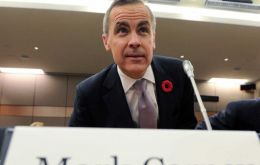
The Bank of Canada has named long-term bureaucrat and economist Stephen Poloz as its new head, replacing Mark Carney who is going to run the Bank of England. Mr Poloz was a surprise choice as many observers expected Mr Carney's senior deputy, Tiff Macklem, to succeed him.
-
Friday, May 3rd 2013 - 02:24 UTC
EU “nightmare of unemployment” debate reaches ECB, which cuts rates to record low 0.5%

The European Central Bank cut interest rates to a new record low on Thursday amid a chorus of calls for the Euro zone to focus on growth to end a “nightmare of unemployment” in the bloc. It was the first cut in ten months.
-
Thursday, May 2nd 2013 - 08:03 UTC
Where is Uruguay’s economy headed?

Fitch Ratings in March joined two other major ratings agencies in giving Uruguay its coveted investment grade, a move that lowers the nation’s borrowing costs and opens up opportunities for new investors.
-
Thursday, May 2nd 2013 - 07:56 UTC
British tax havens will have to open their banking systems to UK and EU scrutiny

Tax havens such as Bermuda and the Cayman Islands will work more closely with Britain and other European countries to fight tax evasion, British finance minister George Osborne said.
-
Thursday, May 2nd 2013 - 07:37 UTC
Falkland Islands’ economy ‘strangling’ and intimidation by Argentina reported in British media

Argentina’s ongoing attempts to strangle the Falkland Islands economy by intimidating cruise vessels from calling at Stanley and other islands has been picked up by the Daily Mail in an article written by Ian Drury.
-
Thursday, May 2nd 2013 - 07:29 UTC
Brazil’s primary surplus well below target because of ‘government efforts to prop the economy’

Brazil posted a budget primary surplus of 3.5 billion Reais (1.75bn dollars) in March, recovering after a deficit in February, but still the worst performance in the first quarter of the last four years, according to central bank data released this week.
-
Thursday, May 2nd 2013 - 07:06 UTC
YPF admits ‘inflation in Argentina is a problem” and could be higher by next year

Argentine nationalized energy company YPF warned on Tuesday that inflation in the country may keep rising and affect its results, a rare admission considering the company is controlled by a government known for playing down the problem.
-
Thursday, May 2nd 2013 - 06:33 UTC
Fire in Argentina knocks out main refinery and imports of gasoline and diesel trebled

Almost four million barrels of diesel and gasoline were shipped from Europe and the US to Argentina where a recent major fire in the country’s main refinery significantly diminished the supply of refined produce. The situation could extend for another two years, according to private estimates from the oil industry.
-
Thursday, May 2nd 2013 - 06:25 UTC
Argentina natural gas imports in March soar 74% compared to a year ago

Argentina's natural gas imports rose 74% to 28.4 million cubic meters/d in March, compared with 16.3 million cu m/d in the year-earlier period, the country’s Energy Secretariat said Monday. Imports were up 16% compared with 24.5 million cu m/d in February, according to a monthly data report.