MercoPress. South Atlantic News Agency
Economy
-
Monday, March 16th 2026 - 16:00 UTC
Fed and ECB face a pivotal week as the oil shock revives inflation risk
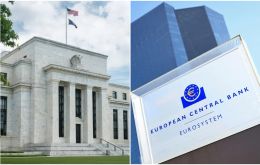
The U.S. Federal Reserve and the European Central Bank head into this week’s policy meetings in a far more uncertain environment than they faced just two weeks ago. The Fed meets on March 17-18, and the ECB on March 18-19, just after the Middle East war pushed oil prices above US$100 a barrel and forced markets to rethink the expected path of interest rates. Even so, neither institution is expected to change borrowing costs at these meetings.
-
Monday, March 16th 2026 - 01:10 UTC
Oil tops US$100 a barrel as Middle East war and Hormuz disruption rattle markets
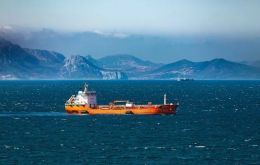
Oil prices moved back above US$100 a barrel on Monday as the conflict involving the United States, Israel and Iran intensified and shipping disruption in the Strait of Hormuz hit one of the world’s most critical energy chokepoints. Brent crude rose to US$105.15 a barrel and U.S. West Texas Intermediate climbed to US$100.32 in early Asian trading, according to market data.
-
Saturday, March 14th 2026 - 16:03 UTC
U.S. again backs Argentina in YPF case, urging halt to “intrusive” discovery

The U.S. government has filed a new memorandum before the Second Circuit Court of Appeals in New York backing Argentina’s request to suspend post-judgment discovery in the YPF expropriation case. Argentina’s Treasury Solicitor’s Office said the filing supports the emergency motion submitted on March 6 seeking to pause document production, a sanctions request and an evidentiary hearing scheduled for April.
-
Saturday, March 14th 2026 - 01:54 UTC
Global volatility hits Argentine assets as country risk edges back toward 600 points

Argentine assets ended the week under pressure, pulled lower by international volatility linked to the Middle East war, in a session marked by falling stocks and bonds, a higher country risk index and renewed oil-driven pressure on inflation and financial expectations. Brent crude settled at $103.14 a barrel, while Wall Street extended its weekly losses amid concern over global energy supply.
-
Thursday, March 12th 2026 - 10:40 UTC
Argentina: Fuel price rises complicate March inflation and tighten the government’s peso strategy

Rising fuel prices have added new pressure to Argentina’s March inflation outlook, in a month already burdened by the start of the school year, utility adjustments and seasonal pressure on food prices. In the local market, gasoline prices have risen by roughly 7% to 8% so far in March, increasing the risk that monthly inflation could move back toward the 3% range.
-
Wednesday, March 11th 2026 - 22:33 UTC
Uruguayans see security as top national concern, cost of living as main personal problem

Uruguayans continue to identify security and crime as the country’s main problem, but when the question shifts to everyday life, the dominant concern becomes the cost of living, according to a new survey by University of the Republic academics analysed in a report by El Observador. The poll also found that about one-third of respondents believe such problems stem from “longer inheritances” or broader trends that no government has managed to solve.
-
Monday, March 9th 2026 - 17:04 UTC
UK warns of higher inflation and backs oil reserve release amid Middle East war

British finance minister Rachel Reeves said on Monday that the United Kingdom was ready to support a coordinated release of international oil reserves if the Middle East crisis keeps pushing up energy prices, though no formal G7 decision has yet been taken. Reeves made the statement after joining a virtual meeting of G7 finance ministers, as oil prices remained elevated because of disruption to shipping through the Strait of Hormuz. Reuters reported that the option under discussion is a joint emergency stock release under the International Energy Agency framework.
-
Monday, March 9th 2026 - 10:59 UTC
Oil rises above US$100 a barrel as Middle East war and Hormuz disruption hit supply
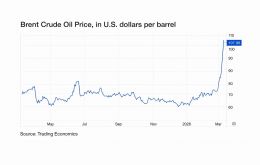
Oil prices climbed above US$100 a barrel on Sunday in futures trading, reaching their highest levels since 2022 as the war in the Middle East, the effective closure of the Strait of Hormuz and fresh production cuts among Gulf producers tightened supply expectations. Reuters reported Brent rose as high as US$111.04 a barrel while West Texas Intermediate (WTI) touched US$111.24 in early trading. AP later put Brent at US$107.97 and WTI at US$106.22, both more than 16% above the previous close.
-
Friday, March 6th 2026 - 15:41 UTC
Oil posts its biggest weekly jump since 2020 as the Iran war disrupts Hormuz

Oil became this week’s clearest barometer of the Middle East crisis, with Brent hovering near US$90 a barrel and WTI around US$87.5, putting both contracts on track for their biggest weekly advance since 2020. The same factor sits behind the surge: the de facto blockage of the Strait of Hormuz, through which roughly one-fifth of the world’s oil normally passes.
-
Wednesday, March 4th 2026 - 22:50 UTC
Brazil completes its legislative process and ratifies the EU–Mercosur deal
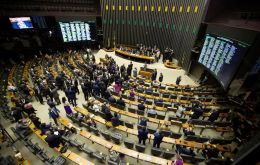
Brazil’s Congress on Wednesday ratified the trade agreement between Mercosur and the European Union, completing the legislative step in the South American bloc’s largest economy. The Senate approved the treaty unanimously, after the lower house cleared the text last week, according to local reporting and wire-service coverage.

