MercoPress. South Atlantic News Agency
Economy
-
Thursday, March 26th 2026 - 18:37 UTC
Uruguay: Economy Minister reveals daily U.S. pressure to break commercial ties with China
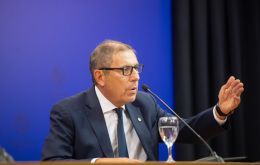
Uruguay's Economy Minister Gabriel Oddone disclosed to business leaders that the United States is exerting “unimaginable” and “unsustainable” pressure on the country to “break” its trade relationship with China, according to the weekly newspaper Búsqueda, citing several attendees at a private meeting with the Confederation of Business Chambers (CCE) held on Tuesday, March 24.
-
Wednesday, March 25th 2026 - 19:52 UTC
Uruguay's economy grew 1.8% in 2025, falling short of official forecasts
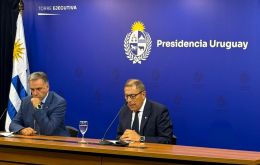
Uruguay's economy grew 1.8% in 2025, according to national accounts data published by the Central Bank of Uruguay (BCU). The result fell nearly a full percentage point below the 2.6% forecast included in the government's budget law and was also lower than the 2.5% estimated by the International Monetary Fund.
-
Tuesday, March 24th 2026 - 01:58 UTC
Dollar falls and São Paulo stock exchange surges after Trump's truce signal with Iran
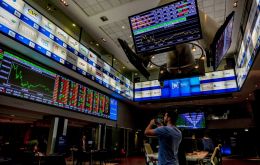
Brazilian financial markets posted one of their best sessions of the year on Monday after President Donald Trump announced a five-day postponement of strikes against Iran's energy infrastructure, citing “productive conversations” with Tehran.
-
Tuesday, March 24th 2026 - 01:09 UTC
Milei willing to send troops to the Middle East if requested by Trump

Argentine President Javier Milei's willingness to send troops to the Middle East if requested by the United States has fuelled growing concern in Argentina, a country that has historically maintained an equidistant stance on international conflicts and where fears of possible reprisals are emerging.
-
Monday, March 23rd 2026 - 01:00 UTC
Paraguay and Germany seek to deepen trade ties under EU-Mercosur agreement
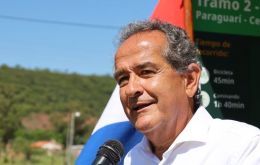
Relations between Paraguay and Germany are at a positive juncture, with prospects for growth in trade, investment and tourism, according to German Deputy Ambassador in Asunción Jörg Herrera, in an interview with state broadcaster Paraguay TV.
-
Sunday, March 22nd 2026 - 21:32 UTC
Peña promotes Paraguay as investment destination at meeting with Brazilian business leaders
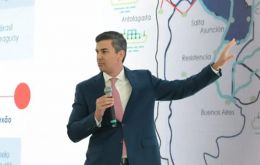
Paraguay's President Santiago Peña met on Sunday in Campo Grande, the capital of Brazil's Mato Grosso do Sul state, with business leaders from the state's Federation of Industries (FIEMS) to promote investment opportunities in his country. The meeting, organized at the association's request, brought together representatives from sectors including bioenergy, food, construction and logistics.
-
Wednesday, March 18th 2026 - 22:56 UTC
Argentina unemployment rises to 7.5% at end-2025, Indec says
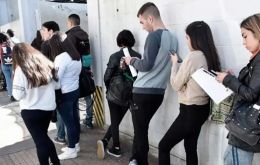
Argentina’s unemployment rate stood at 7.5% in the fourth quarter of 2025, up from 6.4% in the same period of 2024 and from 6.6% in the previous quarter, according to data released on Wednesday by the national statistics agency, Indec. The employment rate was 45.0%, while the activity rate reached 48.6% across the 31 urban areas covered by the Permanent Household Survey.
-
Wednesday, March 18th 2026 - 22:44 UTC
Brazil’s central bank starts easing cycle, cuts Selic rate to 14.75%
Brazil’s central bank on Wednesday cut the Selic benchmark rate from 15% to 14.75% a year, marking the first reduction since May 2024 and the formal start of an easing cycle that policymakers had already flagged. In its statement, the Monetary Policy Committee, or Copom, said the move was consistent with its strategy to bring inflation back to target and noted that the external environment had become “more uncertain” because of the intensification of geopolitical conflicts in the Middle East.
-
Wednesday, March 18th 2026 - 11:12 UTC
Government targets faster state processes with new economic reform package
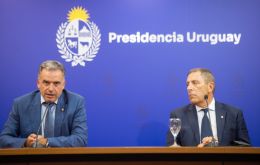
Uruguayan President Yamandú Orsi and Economy Minister Gabriel Oddone said the government will send a competitiveness and innovation bill to Congress on May 31, focused on foreign trade, competition policy, innovation and administrative simplification. The initiative was launched alongside a call for unions, business chambers and academia to submit proposals by April 24.
-
Tuesday, March 17th 2026 - 03:00 UTC
Noboa imposes curfew in four provinces of Ecuador deploys 75,000 personnel in new anti-crime offensive
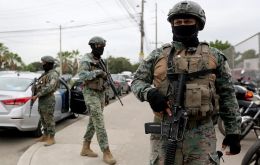
Ecuador’s President Daniel Noboa has launched a new security offensive with a nightly curfew in four violence-hit provinces and the deployment of 75,000 soldiers and police officers. The restriction runs from 11 p.m. to 5 a.m. in Guayas, El Oro, Los Ríos and Santo Domingo de los Tsáchilas, began on Sunday night and is expected to remain in force for two weeks. In the first hours of the operation, authorities reported 253 arrests for violating the measure.

