MercoPress. South Atlantic News Agency
Economy
-
Wednesday, August 14th 2013 - 19:36 UTC
After inflation hits 42%, Maduro names a more pragmatic president to the Central bank

Venezuela President Nicolas Maduro appointed the third central bank president this year as Latin America’s biggest oil exporter seeks to rein in the fastest inflation among the world’s major economies.
-
Monday, August 12th 2013 - 18:06 UTC
EU confirms no block-to-individual Mercosur member trade negotiation has been requested

The 28-country European Union underscored the potential benefits of a free trade agreement with Mercosur and revealed that so far no country member of the group has requested to a bilateral negotiation.
-
Monday, August 12th 2013 - 18:03 UTC
Brazil urged for agreement with EU, since next year it will lose trade preferences

Brazil, Latin America‘s biggest economy, is planning to try to negotiate a separate trade deal with the European Union, Foreign Minister Antonio Patriota said in remarks published Monday.
-
Sunday, August 11th 2013 - 22:06 UTC
Port facilities in Santos and the state of Para will be auctioned next November

Brazil's government is expecting 3 billion Brazilian Reais (1.3 billion dollars) in new investments with the leasing of facilities at its ports in the states of Para and Santos, Sao Paulo, said government officials.
-
Sunday, August 11th 2013 - 21:53 UTC
Changes ahead for Brazil’s benchmark Bovespa stock index BVSP

Brazil's 45-year-old benchmark Bovespa stock index BVSP could be subject to changes in its structure for the first time to better reflect new trends facing the country's economy, financial bourse BM&FBovespa SA announced last week.
-
Sunday, August 11th 2013 - 21:36 UTC
Honda to build a second assembly plant in Sao Paulo operational by 2015

Japanese automaker Honda plans to build a new assembly plant in the Brazilian state of Sao Paulo with an annual capacity of 120,000 units, the company said.
-
Sunday, August 11th 2013 - 04:32 UTC
Chinese economy could be stabilizing shows latest set of economic figures

China's economy could be stabilising, the latest set of economic figures from the country has suggested. Factory output in July rose 9.7% compared with a year ago, ahead of expectations and up from the previous month's figure of 8.9%. Consumer prices held steady in July, rising 2.7% from a year earlier, matching the rate seen in June.
-
Saturday, August 10th 2013 - 01:58 UTC
UK opens second largest offshore wind farm in the world
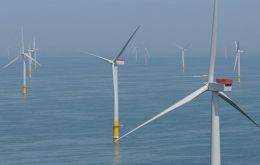
Greater Gabbard wind farm, which is reportedly the second largest offshore wind farm in the world, costing £1.3 billion and generating enough clean electricity to power over half a million homes, was officially opened off the British coast of Suffolk by the Energy and Business Minister Michael Fallon.
-
Friday, August 9th 2013 - 04:30 UTC
Confederations Cup boosted international tourist income in Brazil to record levels

The recent Confederations Cup football tournament helped boost international tourist income to Brazil to record levels in the first half of the year, according to the latest stats from the Brazilian Tourist Board, Embratur.
-
Friday, August 9th 2013 - 04:23 UTC
Paraguay meat industry exports recovering and could reach 1.5bn dollars this year

Paraguay meat industry exports in the first seven months of the year reached 839 million dollars, which is 45% higher than the same period a year ago (577m) according to official data from the National Livestock quality and health services, Senacsa.

