MercoPress. South Atlantic News Agency
Economy
-
Monday, May 14th 2012 - 18:29 UTC
China opens its market to Chilean beef and lamb plus avocados and berries
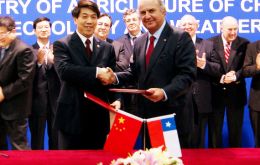
China has opened its market to Chilean meat, avocados and blueberries following the visit of Agriculture minister Luis Mayol who anticipated further discussions for the sale of live cattle and dairy produce.
-
Monday, May 14th 2012 - 05:38 UTC
“Interest rate has been falling not to please Dilma”, says Brazil Central bank chief

The central bank remains independent and the current interest-rate cutting cycle is driven by specific economic factors, not pressure from President Dilma Rousseff, Brazil’s central bank President Alexandre Tombini said in an interview in the Sunday edition of O Estado de S. Paulo.
-
Monday, May 14th 2012 - 05:34 UTC
EC brighter outlook for 2013: UK expands 1.7% and Euro zone 1.3%
The slow economic recovery is in sight across Europe, the European Commission said on Saturday, with the UK in line for 1.7% growth next year compared with an EU average of 1.3%.
-
Monday, May 14th 2012 - 05:31 UTC
Fuel costs and Spanish recession hit British Airways-Iberia with mounting losses
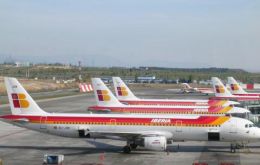
Rising fuel costs and the impact of Spain’s economic crisis left the owner of British Airways and Iberia nursing big quarterly losses. International Airlines Group was also hit by industrial action by pilots at Iberia as it recorded losses of 263 million Euros for the three months to March 31, against a deficit of 47 million Euros a year earlier.
-
Monday, May 14th 2012 - 05:21 UTC
HSBC reports sale of affiliates in four countries to GNB Colombia for US 400m

HSBC reported the sale of its affiliates in Uruguay, Colombia, Peru and Paraguay to the Colombian group Gilinski, an operation involving 400 million dollars, of which 80 million for the Montevideo assets.
-
Monday, May 14th 2012 - 04:20 UTC
Unasur defence spending one of the lowest in the world: average 0.91% of GDP

Union of South American Nations (Unasur) member states released a report detailing each country’s military spending. Ministers and diplomats from the twelve nation regional bloc also pledged further military integration, proposing the creation of a Citizen Security Council.
-
Monday, May 14th 2012 - 03:49 UTC
Latam and Asia-Pacific plan closer; bilateral trade expanding 20% annually

Fast-growing trade and investment between the Asia-Pacific area and Latin America and the Caribbean have transformed the two regions into powerful motors for the world economy, with two-way trade hitting 442 billion dollars last year. The time is right to deepen cooperation so as to ensure future growth and prosperity, according to a new study.
-
Sunday, May 13th 2012 - 09:10 UTC
Argentina doesn’t want to start a trade war

By Jorge Argüello (*) - What defines a protectionist country nowadays? Is it when a developing country takes precautions against a flood of products with plummeting prices due to an international crisis? Or, is it when an export powerhouse delivers large subsidies exclusively for domestic production? In a world economy like today’s can protectionism be measured solely by Customs measures or those targeting imports?
-
Saturday, May 12th 2012 - 09:21 UTC
Argentina/Spain dispute moves from oil corporation to too quality hams
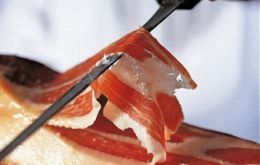
Just days after finalizing the hostile takeover of Spanish-owned oil and gas company YPF, the Argentine government got even more hostile, freezing imports of Spain’s signature delicacy: ham.
-
Saturday, May 12th 2012 - 09:19 UTC
Poor year for Argentine exports of apples and pears: lesser volumes and lower prices
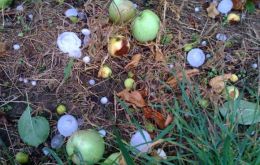
The Argentine Chamber of Integrated Fruit Exporters, CAFI reported that apple and pear exports continued a sharp decline in terms of exported volume, with a downfall of 30% (about 90.000 tons in total) compared to the previous year and 15% less in relation to 2010.

