MercoPress. South Atlantic News Agency
Economy
-
Thursday, September 29th 2011 - 06:09 UTC
Brazilian judge orders halt to construction of third largest dam in the world
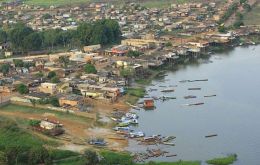
A judge in Brazil has ordered a halt to construction of a multi-billion-dollar dam project in the Amazon region. Judge Carlos Castro Martins barred any work that would interfere with the natural flow of the Xingu river.
-
Thursday, September 29th 2011 - 00:48 UTC
Raul Castro drops 50-year ban: Cubans allowed buying and selling cars

Cuba authorized auto sales among individuals Wednesday, easing a 50-year-old ban that has helped make the Castro brothers-ruled island a living museum of vintage cars.
-
Thursday, September 29th 2011 - 00:40 UTC
‘Why support Argentina financially when the country threatens Falklands?’

Why should the UK support Argentina financially when the country is acting against British interests particularly in issues such as the Falkland Islands, asks an article in the Mail-online.
-
Thursday, September 29th 2011 - 00:12 UTC
US will vote against loans to Argentina in World Bank and IDB

The US State Department said on Wednesday that Argentina must normalize relations with creditors. The statement follows an announcement last week from the Treasury Department warning that the US will vote against granting loans to Argentina in multilateral organizations.
-
Wednesday, September 28th 2011 - 06:24 UTC
Brazil adapts to weaker Real: cuts fuel tax to prop Petrobrás and contain inflation

Brazil cut a tax on fuel sold by Petrobras by 16% helping prevent surging import costs from squeezing profit margins at the state-run company and reducing the need for price increases as inflation quickens.
-
Wednesday, September 28th 2011 - 01:17 UTC
Germany promises help to rebuild confidence in debt-stricken Greece

Germany will do all it can to rebuild confidence in debt-stricken Greece as it implements reforms to meet the conditions of its international bailout package, Chancellor Angela Merkel said on Tuesday.
-
Wednesday, September 28th 2011 - 00:58 UTC
Argentine 2010/11 crop a “historic record” breaks 100 million tons benchmark

Argentina 2010/2011 crop reached 102.082 million tons of grains and oil seeds, a ‘historic record’, according to an official release from the Ministry of Agriculture.
-
Tuesday, September 27th 2011 - 22:45 UTC
Inflation picking up and lower interest rates, forecasts Brazil central bank survey

Brazil’s central bank will miss its inflation target this year for the first time since 2003 according to a central bank survey of economists. Consumer prices will rise 6.52% this year, according to the median forecast in a Sept. 23 central bank survey of about 100 analysts published Monday.
-
Tuesday, September 27th 2011 - 22:42 UTC
Latam currencies weakness ‘transitory’ says Mexican central bank

Mexican central bank Governor Agustin Carstens said the Peso’s weakness is “transitory” and the currency is likely to resume its upward trend, along with other Latin American currencies.
-
Tuesday, September 27th 2011 - 22:35 UTC
Argentina’s bumpy ride (and hopefully smooth landing)

The following piece was written by Andrés Velasco, a former Minister of Finance of Chile, and visiting professor at Columbia University for 2011-2012. As a neighbour of Argentina, first, and then as an economist he is well entitled to give an accurate briefing.

