MercoPress. South Atlantic News Agency
Economy
-
Friday, April 10th 2020 - 08:57 UTC
US, Russia and Saudis hammer out a tentative accord to cut oil supply and help boost prices
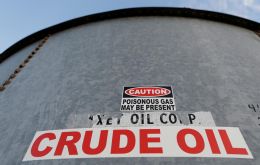
OPEC, Russia and other allies outlined plans on Thursday to cut their oil output by more than a fifth and said they expected the United States and other producers to join in their effort to prop up prices hammered by the coronavirus crisis.
-
Friday, April 10th 2020 - 08:56 UTC
Falklands' survey: 84% of businesses report negative impact from the pandemic

The Falkland Islands Government, FIG, recently carried out a business survey in conjunction with the Chamber of Commerce that resulted in 283 responses.
-
Friday, April 10th 2020 - 08:48 UTC
Falklands' wool farmers bashed with lack of demand and falling prices

Falkland Islands farmers are deeply concerned because wool prices have crashed to 40-50% below levels of early 2019, and as much as 70% of the Falklands 2019/20 wool clip is as yet unsold.
-
Thursday, April 9th 2020 - 14:57 UTC
Chilean consumer prices rose 0.3% in March, and 3.7% in twelve months

Chile consumer prices rose 0.3% in March, the government's statistics agency said on Wednesday, pushed upwards by a rise in food and education costs but counterbalanced by a fall in transportation prices.
-
Thursday, April 9th 2020 - 13:30 UTC
Bolsonaro thanks Indian PM Modi for allowing export of hydroxychloroquine raw materials

Brazil's president Jair Bolsonaro has thanked Indian Prime Minister Narendra Modi for allowing the export of raw materials to continue production of hydroxychloroquine, an anti-malarial drug believed effective in the treatment of the novel coronavirus. In his address to the nation on Wednesday, Mr. Bolsonaro said he thanked the Prime Modi and the people of India for “timely help to the people of Brazil”.
-
Thursday, April 9th 2020 - 09:47 UTC
Peru launches economic stimulus plan equivalent to 12% of its GDP

While Latin America’s two largest economies, Brazil and Mexico, fret over the wisdom of pursuing large economic stimulus packages that could erode fiscal targets, Peru is going big and getting rewarded.
-
Thursday, April 9th 2020 - 09:46 UTC
Argentine food exports face a drop in demand and prices
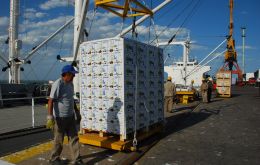
The United Nations has warned of an impending food shortage due to the coronavirus pandemic as major exporters such as Argentina find it increasingly difficult to sell their produce.
-
Thursday, April 9th 2020 - 09:17 UTC
Global trade expected to plummet this year, says World Trade Organization
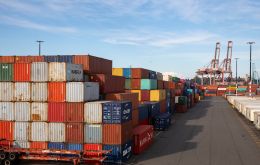
Global trade growth is expected to plummet by up to a third in 2020 due to the coronavirus pandemic, the World Trade Organization said on Wednesday, warning that the numbers would be “ugly”.
-
Thursday, April 9th 2020 - 09:08 UTC
Boris Johnson remains in intensive care with his condition “improving”
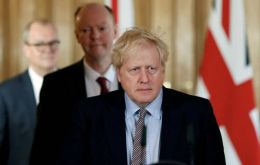
British Prime Minister Boris Johnson's condition was said to be “improving” on Wednesday, as he spent a third day in intensive care battling COVID-19. The disease has struck at the heart of the British government, infected more than 60,000 people across nationwide and killed more than 7,000.
-
Thursday, April 9th 2020 - 09:04 UTC
UN Security Council meets to discuss pandemic, urged by non permanent members
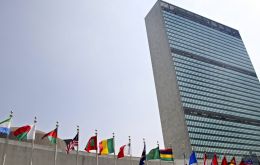
After weeks of disagreement - especially between the United States and China - the UN Security Council will meet on Thursday to discuss the coronavirus pandemic for the first time.

