MercoPress. South Atlantic News Agency
Economy
-
Thursday, September 26th 2019 - 07:53 UTC
Johnson asks how come Thomas Cook directors paid themselves large sums when a business goes down the tube

After the collapse of Thomas Cook left hundreds of thousands of passengers reliant on the British state to repatriate them, Prime Minister Boris Johnson questioned whether bosses should have paid themselves so much ahead of its demise.
-
Thursday, September 26th 2019 - 07:42 UTC
Bulgaria's Georgieva is the new IMF Managing Director; second woman in the post, takes office October first
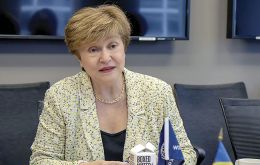
The International Monetary Fund on Wednesday formally selected Kristalina Georgieva of Bulgaria to be only the second woman ever to lead the 189-member institution. The selection had been all but guaranteed after the global crisis lender said earlier this month that Georgieva, a former World Bank CEO, was the sole candidate.
-
Wednesday, September 25th 2019 - 09:54 UTC
Macri holds a 'constructive meeting' with IMF, but no news about the pending tranche of a major loan
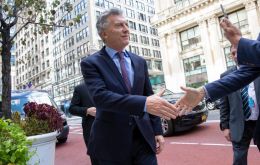
Argentine President Mauricio Macri met with his International Monetary Fund backers in New York on Tuesday, but there was little light shed on whether the body was likely to approve a key US$ 5.4 billion tranche of funds to the indebted country.
-
Wednesday, September 25th 2019 - 09:49 UTC
Moody's urges Brazil to implement economic reform and balance public finances
An improvement in Brazil’s sovereign credit rating hinges more on stronger economic growth than lower interest rates, rating agency Moody’s said on Tuesday, urging economic reform and the shoring up of public finances.
-
Wednesday, September 25th 2019 - 09:45 UTC
US provides US$ 52 million in support funds for Venezuelan opposition

The United States said on Tuesday it will provide US$52 million in funding to Venezuelan opposition leader Juan Guaido, an escalation of support even as his push to oust socialist President Nicolas Maduro stalls.
-
Wednesday, September 25th 2019 - 09:38 UTC
Persistently low inflation in Brazil anticipates further cut in interest rate

Gradual economic growth and persistently low inflation in Brazil are likely to pave the way for a further reduction in interest rates, the country’s central bank indicated on Tuesday, warning that global economic conditions appear to be deteriorating.
-
Wednesday, September 25th 2019 - 09:04 UTC
Brazilian farmers face the challenge of African Swine Fever impact in China
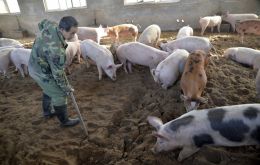
Chinese commodities trader COFCO said it expects a sharp drop in the number of soybeans it will source for export from Brazil this year due to an outbreak of African Swine Fever (ASF) in China that has hurt demand for animal feed.
-
Tuesday, September 24th 2019 - 09:53 UTC
Argentine biggest bondholders to meet with Treasury Secretary Lacunza
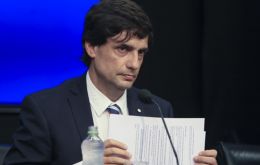
A group of Argentina’s biggest bondholders will meet with the country’s treasury minister in New York this Monday to hear how Latin America’s third-largest economy plans to dig itself out of its latest debt crisis.
-
Tuesday, September 24th 2019 - 09:26 UTC
Argentina Needs Intensive Care

By Anne Krueger (*) - Argentina's President Mauricio Macri knew that he had inherited a sick economy when he took office in 2015, but failed to take his medicine. As a result, the country now has no choice but to face up to a period of painful structural adjustment.
-
Tuesday, September 24th 2019 - 09:08 UTC
Argentine private sector workers given extra payment to compensate for inflation
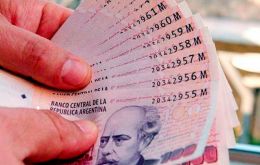
Argentina's private-sector workers will see their wages topped off by 5,000 pesos (US$ 88) in a one-time non-taxable payment aimed at boosting their buying power amid surging inflation, the Production Ministry said on Monday.