MercoPress. South Atlantic News Agency
Environment
-
Thursday, November 15th 2018 - 08:19 UTC
Climate change: UK report suggests drastic reduction of sheep and cattle numbers
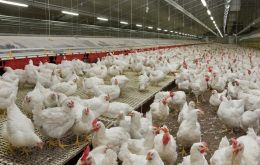
The number of sheep and cattle in the UK should be reduced by between a fifth and a half to help combat climate change, a report says. The shift is needed, the government’s advisory Committee on Climate Change (CCC) maintains, because beef and lamb produce most greenhouse gases.
-
Wednesday, November 14th 2018 - 08:44 UTC
California fire fighters manage containment lines; official death toll is 48 and dozens remain missing

Crews battling a deadly wildfire in northern California have managed to hold their containment lines, the state fire service says. They have contained 30% of the fire, stretching over 125,000 acres (50,500 ha), but do not expect to contain it fully until the end of the month.
-
Wednesday, November 14th 2018 - 08:09 UTC
First global multi-agency operation against marine pollution crimes
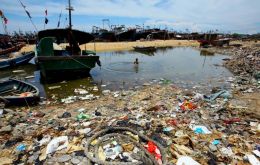
An international law enforcement operation against maritime pollution has revealed hundreds of violations and exposed serious cases of contamination worldwide. Codenamed 30 Days at Sea, the month-long (1 to 31 October) operation saw some 276 law enforcement and environmental agencies across 58 countries detect over 500 offences, including illegal discharges of oil and garbage from vessels, ship-breaking, breaches of ship emissions regulations, and pollution on rivers and land-based runoff to the sea.
-
Monday, November 12th 2018 - 07:24 UTC
Mudslide in Rio do Janeiro killed at least ten people: rescue teams search for missing neighbors
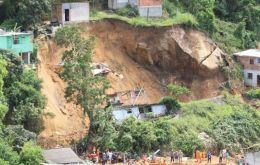
At least ten people were killed on Saturday when a hillside collapsed in a poor neighborhood near Rio de Janeiro in Brazil. The mudslide buried six homes in the municipality of Niteroi following days of heavy rains in the area. Among those killed were a 3-year-old child and a 10-month-old baby.
-
Saturday, November 10th 2018 - 08:55 UTC
New Caledonia committed to protect 400.000sq km of the Coral Sea Natural Park
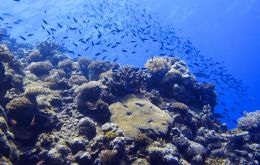
President Philippe Germain of New Caledonia committed to protecting 200,000 to 400,000 square kilometers of marine waters within the Coral Sea Natural Park, which the government established in 2014.
-
Wednesday, November 7th 2018 - 08:34 UTC
Ozone layer recovering, says the latest UN report: new threat from East Asia
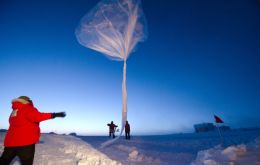
The earth's protective ozone layer is finally healing from damage caused by aerosol sprays and coolants, a new United Nations report said. The ozone layer had been thinning since the late 1970s. Scientist raised the alarm and ozone-depleting chemicals were phased out worldwide.
-
Monday, November 5th 2018 - 18:25 UTC
Microscopic parasite could be affecting food chain near Antarctica
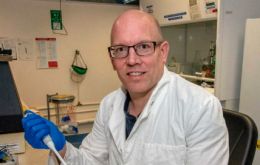
A tiny parasite is leading Australian scientists to rethink how they view Antarctic food chains, after a research showed these microscopic organisms were present in quantities far larger than previously thought, it was reported Monday.
-
Monday, November 5th 2018 - 08:22 UTC
CCAMLR fails to protect Southern Ocean

The Commission for the Conservation of Antarctic Marine Living Resources (CCAMLR) has again failed to take action to protect the Southern Ocean, with no progress made on the critical issues of marine protected areas, climate change, and transshipment.
-
Saturday, November 3rd 2018 - 08:24 UTC
Fracking shale gas flows in UK, but controversy over earth tremors intensifies
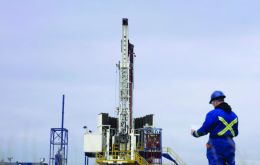
Shale gas has flowed for the first time at the UK's only fracking site currently in operation, energy firm Cuadrilla says. Operations began at the Lancashire site in October for the first time since 2011 when it was suspended because of earth tremors. There have been suspensions of the renewed underground drilling operations after further tremors in the area.
-
Thursday, November 1st 2018 - 08:36 UTC
Ocean temperatures have been warming faster than estimated, shows latest scientific report
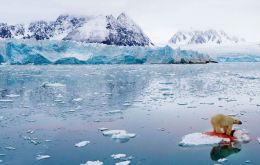
The world’s oceans may be heating up faster than previously thought — meaning the planet could have even less time to avoid catastrophic global warming than predicted just weeks ago by the United Nation’s Intergovernmental Panel on Climate Change.