MercoPress. South Atlantic News Agency
Environment
-
Tuesday, October 1st 2013 - 20:40 UTC
Argentina’s squid fisheries policy “inconsistent and unsustainable” says expert

Argentina’s latest government’s decisions on squid fishing show that the country’s fisheries policy is “inconsistent and unsustainable,” according to the president of Assistance Food Argentina SA and director of Assistance Food America Inc., Dr. Cesar Augusto Lerena.
-
Tuesday, October 1st 2013 - 06:46 UTC
Cristina Fernandez and Mujica in a prudent silence over the pulp mill controversy

Argentine President Cristina Fernández met on Monday with her Uruguayan counterpart José Mujica after the pair inaugurated a new vessel belonging to the ferry company Buquebús, (which joins Montevideo with Buenos Aires), in order to discuss matters related to the controversial UPM pulp plant formerly known as Botnia.
-
Monday, September 30th 2013 - 22:06 UTC
Barrick Gold Pascua-Lama project again running after court ruling

Chile's Supreme Court confirmed a freeze on Barrick Gold Corp's suspended Pascua-Lama gold mine but the Toronto-based miner escaped having the project's environmental permit revoked. The ruling dispels a significant uncertainty surrounding the controversial project, which now essentially has to complete a water management system issued by the environmental regulator to likely be re-activated.
-
Monday, September 30th 2013 - 21:40 UTC
The Shale Boom, Just Getting Started: Interview with Tyler Cowen

Thanks to the shale boom, markets already perceive the trade balance optimizing, energy prices are cheaper than they would otherwise be and we've even cut carbon emissions. And we are only getting started, according Tyler Cowen, New York Times best-selling author and one of the most influential economists of the decade.
-
Friday, September 27th 2013 - 22:01 UTC
Mujica inclined to support UPM pulp production expansion but conditioned to environment improvements

Uruguay’s president Jose Mujica anticipated that his intention is to authorize the UPM pulp mill to expand production, as the Finnish company had requested, but conditioned to certain additional environmental measures, which will not be made public until talks with Argentine president Cristina Fernandez on Monday.
-
Friday, September 27th 2013 - 21:33 UTC
South Georgia krill could suffer most global warming according to BAS
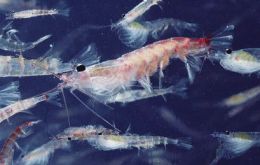
Modelling of the effects of sea temperature rises in the Southern Oceans indicates that krill in the seas around South Georgia may be the hardest hit of the region by the effects of global warming, reports the August edition of the South Georgia Newsletter.
-
Thursday, September 26th 2013 - 21:19 UTC
FAO believes livestock greenhouse gas emissions could be reduced as much as 30%
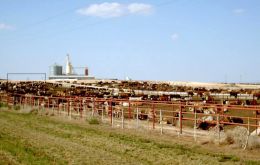
Wider use of available best practices and technologies could help reduce greenhouse gas emissions from the livestock sector by as much as 30%, according to a new study released on Thursday by the United Nations Food and Agriculture Organization, FAO.
-
Thursday, September 26th 2013 - 21:04 UTC
A sugar rush that could fuel the economy
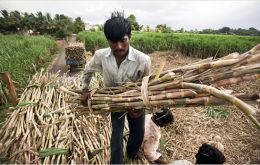
By R. Viswanathan (*) - India should take its cue from Brazil and invest in ethanol as a viable commercial substitute for costly petrol.
-
Thursday, September 26th 2013 - 06:34 UTC
Storm death toll of recently sheared sheep in Uruguay climbs to 54.200, not counting lambs

The recent rain, wind and cold storm that severely punished Uruguayan farmers last week caused the death of 54.200 adult sheep. The sum from a survey conducted by the Uruguayan Wool Secretariat, SUL, almost doubles the original 30.000 estimate and does not include the recently born lambs.
-
Wednesday, September 25th 2013 - 07:46 UTC
UK at Amazon biodiversity, sustainability and innovation seminar in Brazil
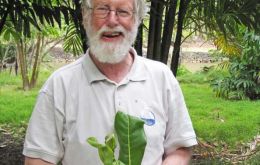
The year 2013 is a special one for researches in the northern region of Brazil: the Ferreira Penna Scientific Station, research base of the Emílio Goeldi museum and research unit of the Brazilian Ministry of Science and Technology, completes 20 years of existence.

