MercoPress. South Atlantic News Agency
Environment
-
Thursday, March 26th 2026 - 11:58 UTC
FAO marked Days of Forests and World Water, and their intricate connection

Food and Agriculture Organization of the United Nations (FAO) marked International Day of Forests 2026 and World Water Day 2026 last week with a series of high level and technical events at its headquarters in Rome.
-
Thursday, March 26th 2026 - 11:24 UTC
Falklands, Darwin Plus funds to restore ecosystem of ravaged New Island by invasive mammals
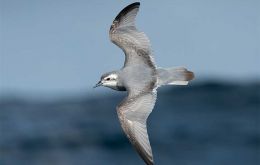
Falklands Conservation recently secured a £3m fund to help restore the natural ecosystem on New Island. The funding came through the Darwin Plus scheme, run by the UK Government to support biodiversity in British Overseas Territories. The ambitious restoration project on New Island, one of the region’s wildest western outposts is to remove invasive predators that have put the island’s native species at risk.
-
Thursday, March 26th 2026 - 09:27 UTC
Patagonian pumas add penguins to their diet in unprecedented predator-seabird interaction
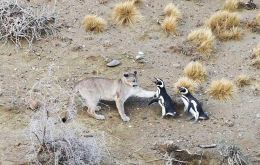
A group of pumas in Monte León National Park, in Argentina's Santa Cruz province, has incorporated penguins as a regular part of its diet — an unprecedented phenomenon being studied by a National Geographic-funded scientific team, according to a report published by Argentine newspaper La Nación.
-
Thursday, March 26th 2026 - 01:48 UTC
International project validates renewable hydrogen energy systems in Antarctica
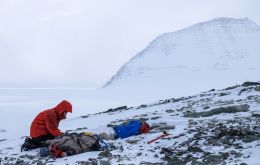
A delegation of Chilean and European authorities and institutions completed a technical visit to the “Profesor Julio Escudero” research station operated by the Chilean Antarctic Institute (INACH) on King George Island, where progress was presented on a pilot renewable hydrogen and energy infrastructure project designed to validate hybrid energy systems in one of the planet's most demanding environments.
-
Wednesday, March 18th 2026 - 01:07 UTC
Magnitude 6 quake strikes eastern Cuba as island remained under nationwide blackout

A magnitude 6.0 earthquake struck eastern Cuba early on Tuesday while the island was still dealing with a nationwide blackout caused hours earlier by the collapse of the power grid. The quake was recorded by the European Mediterranean Seismological Centre at a depth of about 15 km, while reports from Cuba’s seismological service placed the epicenter 37 km southeast of Imías, in Guantánamo province, and said it was felt across several eastern provinces.
-
Monday, March 9th 2026 - 16:53 UTC
Falklands, Uruguayan scientists join UK project to study biodiversity on the Islands’ sandy beaches
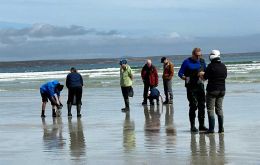
A team of researchers from the Marine Sciences Laboratory at the Faculty of Sciences of the Uruguayan national university (Universidad de la República) is working in the Falkland Islands on the UK sponsored project “Biodiversity Assessment of Sandy Beaches in the Falkland Islands”.
-
Monday, March 2nd 2026 - 02:27 UTC
Ecuador’s rainy season: 21,089 affected as regional emergency remains in force across eight provinces
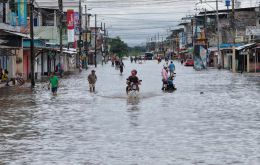
Ecuador’s rainy season has left 21,089 people affected since January 1, 2026, with three deaths and 14 injured, according to the latest assessment by the National Secretariat for Risk Management (SNGR).
-
Saturday, February 28th 2026 - 01:29 UTC
Uruguay approves offshore 3D seismic survey for oil exploration, sets marine safeguards

Uruguay’s Environment Ministry on Friday granted operational authorization for a 3D seismic survey in its jurisdictional waters, in an offshore block operated by Chevron, with a specialized vessel already in position and work planned through the end of April.
-
Wednesday, February 25th 2026 - 03:37 UTC
Heavy rains leave at least 28 dead and dozens missing in Brazil’s Minas Gerais
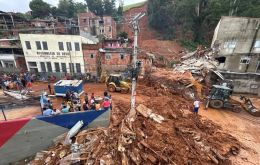
Heavy rains and landslides in southeastern Brazil have killed at least 28 people and left more than 40 missing, with the worst impact reported in the state of Minas Gerais, according to local authorities and rescue teams.
-
Tuesday, February 24th 2026 - 12:05 UTC
Colombia brings 12 Mexican Mennonites to trial over deforestation
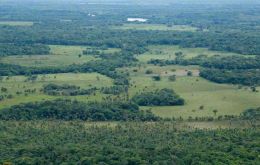
Colombia’s prosecutor’s office is taking 12 Mexican Mennonites to trial over alleged deforestation of more than 100 hectares in rural Puerto Gaitán, Meta province, tied to agricultural land development carried out between 2016 and 2021.