MercoPress. South Atlantic News Agency
Health & Science
-
Saturday, April 7th 2018 - 07:59 UTC
WHO marks 70th birthday: “Universal health coverage, everyone, everywhere”
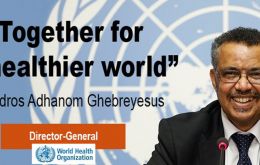
On 7 April, World Health Day, the World Health Organization marks its 70th anniversary. Over the past 7 decades, WHO has spearheaded efforts to rid the world of killer diseases like smallpox and to fight against deadly habits like tobacco use.
-
Monday, April 2nd 2018 - 08:35 UTC
Chinese space station remains dumps into the South Pacific
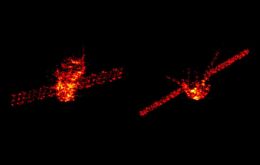
China's Tiangong-1 space station re-entered the earth’s atmosphere and burnt up over the middle of the South Pacific on Monday, the Chinese space authority said. The craft re-entered the atmosphere around 8:15 a.m. Beijing time (0015GMT) and the “vast majority” of it had burnt up upon re-entry, the authority said in a brief statement on its website.
-
Sunday, April 1st 2018 - 03:31 UTC
Stephen Hawking laid to rest alongside Newton and Darwin

People gathered by the hundreds in the English city of Cambridge Saturday to pay their last respects to famed British scientist Stephen Hawking as his remains arrived at St. Mary the Great church where some 500 guests had been invited to the private funeral.
-
Wednesday, March 28th 2018 - 22:08 UTC
Remains of ancient sloth unearthed by landslide in Mar del Plata
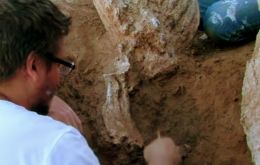
Local natural science museum handles yet a new finding of bones from the Chapadmalalense Age in the area.
-
Wednesday, March 28th 2018 - 14:18 UTC
Measles spreads again in the Americas

After being the first continent in the world declared free of measles in 2016, nine countries in the region have registered cases last year. With almost 900 cases, Venezuela was the most affected. The Pan American Health Organization (PAHO) warns that the countries of the region should intensify their efforts to immunize the population and stop the spread of the disease.
-
Friday, March 23rd 2018 - 14:00 UTC
Heatwaves, hurricanes, floods: 2017 costliest year ever for extreme weather and climate events, says UN
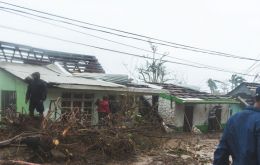
Hurricanes, monsoon floods and continuing severe drought made 2017 the costliest year ever for severe weather and climate events, according to a new report by the United Nations weather agency launched on the eve of World Meteorological Day.
-
Wednesday, March 21st 2018 - 07:29 UTC
Ashes of Professor Hawking will rest next to the grave or Newton at Westminster Abbey

The ashes of Professor Stephen Hawking will be interred next to the grave of Sir Isaac Newton at Westminster Abbey, it has been revealed. The renowned theoretical physicist final resting place will also be near that of Charles Darwin, who was buried there in 1882. Prof Hawking, who had motor neuronal disease, died on 14 March, aged 76, at his home in Cambridge.
-
Monday, March 19th 2018 - 09:09 UTC
Falklands’ Communications Regulator launches spectrum management project
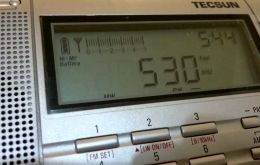
The Falkland Islands Communications Regulator, Susannah Nightingale, has announced the launch of a spectrum management project. ‘Radio spectrum’ often abbreviated to ‘spectrum’ is the part of the electromagnetic spectrum which is used for radio transmissions. Frequencies in this range can be used for many different types of communications such as television, radio, mobile phone and broadband services.
-
Monday, March 19th 2018 - 08:41 UTC
If visiting Brazil get yellow fever shots, recommends CDC, outbreak has spread to urban areas
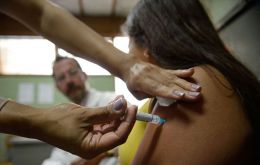
Travelers to Brazil are being warned to vaccinate themselves against yellow fever due to an outbreak of the disease in urban areas, the US Centers for Disease Control (CDC) warned in a press release on Friday.
-
Wednesday, March 14th 2018 - 08:48 UTC
Stephen Hawking, a brilliant mind across time and space, has died

Stephen Hawking, whose brilliant mind ranged across time and space though his body was paralyzed by disease, died early Wednesday, a University of Cambridge spokesman said. He was 76 years old. Hawking died peacefully at his home in Cambridge, England.
