MercoPress. South Atlantic News Agency
Health & Science
-
Monday, June 4th 2018 - 08:42 UTC
New blood test could detect different types of cancer even in early stages
A new blood test shows promise for detecting many types of cancer, even in the early stages of the disease, according to a new study. In the study, researchers found that the test could detect 10 types of cancer and that it was 80 to 90% accurate for some cancer types. However, much more research is needed before doctors will be able to use the test on their patients, experts say.
-
Thursday, May 31st 2018 - 20:16 UTC
World No Tobacco Day: Tobacco and Heart Disease
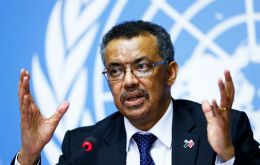
Tobacco use has declined markedly since 2000, according to a new WHO report, but the reduction is insufficient to meet globally agreed targets aimed at protecting people from death and suffering from cardiovascular and other non-communicable diseases (NCDs).
-
Wednesday, May 30th 2018 - 09:37 UTC
State of the Nation: “incredibly exciting time for the Falkland Islands and its people”

On Tuesday May 29, Governor Nigel Phillips CBE addressed the elected Legislative Assembly of the Falkland Islands with a message on the State of the Nation.
-
Tuesday, May 29th 2018 - 08:51 UTC
Ireland's abortion vote adds to PM May woes and strains relations with Ulster coalition ally

Britain's leaders are facing increasing calls to take action to loosen abortion restrictions in Northern Ireland after the Republic of Ireland's landmark referendum in favor of doing so, but complex political realities may make quick action difficult.
-
Friday, May 25th 2018 - 08:27 UTC
UK/Argentina agree to work together against antimicrobial resistance
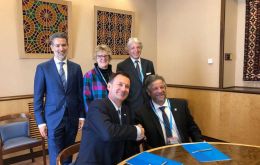
United Kingdom's Health and Social Care Secretary Jeremy Hunt has signed a Memorandum of Understanding with the Argentine Government to work together against antimicrobial resistance (AMR) in the environment.
-
Friday, May 18th 2018 - 08:42 UTC
Ebola outbreak in Congo's jungle and in urban area of a 1.2m city
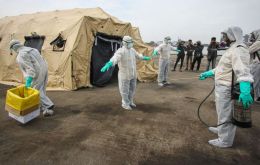
One new case of Ebola virus disease (EVD) has been confirmed in Wangata, one of the three health zones of Mbandaka, a city of nearly 1.2 million people in Equateur Province in northwestern Democratic Republic of the Congo. United Nations troops are stationed in the area as part of the peacekeeping effort.
-
Thursday, May 17th 2018 - 08:13 UTC
New evidence from genetic data links obesity with increased risk of smoking

A study by the International Agency for Research on Cancer (IARC) provides new evidence that increased weight and obesity may result in increased smoking. The study, published in the British Medical Journal (BMJ) and funded by Cancer Research UK (CRUK), found that increased body mass index (BMI), body fat percentage, and waist circumference were associated both with a higher risk of being a smoker and with greater smoking intensity, measured by the number of cigarettes smoked per day. These results were consistent in both men and women.
-
Wednesday, May 16th 2018 - 17:15 UTC
US scientists successfully transfer memory among marine snails

Scientists from the University of California have successfully transferred a memory from one marine snail to another, but there's still a long way to go until you can pay someone to wipe unpleasant memories or implant new ones.
-
Wednesday, May 16th 2018 - 17:10 UTC
Plan to eliminate industrially-produced trans-fatty acids from global food supply
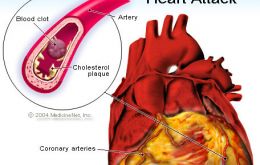
The World Health Organization (WHO) has released REPLACE, a step-by-step guide for the elimination of industrially-produced trans-fatty acids from the global food supply. Eliminating trans fats is key to protecting health and saving lives: WHO estimates that every year, trans fat intake leads to more than 500,000 deaths of people from cardiovascular disease.
-
Monday, May 14th 2018 - 20:04 UTC
Argentina/UK: Agreement to enhance Antarctic scientific co-operation
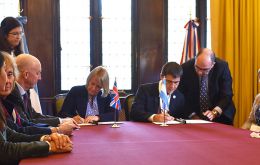
The British Antarctic Survey (BAS) and the Instituto Antártico Argentino (IAA) today signed a memorandum of understanding.The agreement will enable the implementation of joint science and technology research projects as well as enhanced training and exchange of personnel. .
