MercoPress. South Atlantic News Agency
Health & Science
-
Thursday, May 10th 2018 - 07:28 UTC
Falklands caught in the post Brexit Galileo space controversy
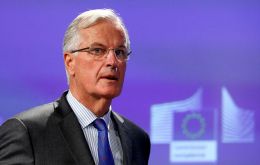
United Kingdom ministers are unilaterally considering stopping EU access to the Galileo satellite earth station in the Falklands and Ascension, according to reports in the UK press. The move comes after Brussels chief Brexit negotiator, Michael Barnier, stated that UK companies would have to be excluded from the development of sensitive Galileo infrastructure following Brexit due to security concerns.
-
Wednesday, May 9th 2018 - 08:24 UTC
South Georgia declared rat-free: four year successful program to eradicate invasive rodents
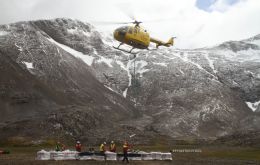
A Dundee-based charity has succeeded in its epic mission to declare a sub-Antarctic island rodent-free for the first time since humans arrived more than 200 years ago. In 2011, the South Georgia Heritage Trust started the world’s largest project to remove the invasive rats and mice to save South Georgia’s wildlife, including threatened pipits and pintails.
-
Monday, May 7th 2018 - 08:20 UTC
WHO claims 9 out of 10 people breathe air containing high levels of pollutants
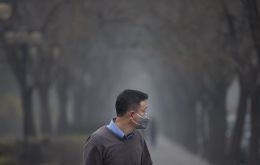
Air pollution levels remain dangerously high in many parts of the world. New data from the World Health Organization (WHO) shows that 9 out of 10 people breathe air containing high levels of pollutants. Updated estimations reveal an alarming death toll of 7 million people every year caused by ambient (outdoor) and household air pollution.
-
Wednesday, May 2nd 2018 - 08:13 UTC
UK-US launch Antarctica research program to predict sea-level rise
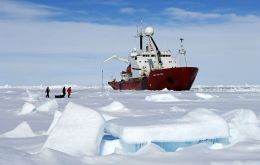
A new UK-U.S. Antarctic research program to improve the prediction of future sea-level rise was launched on Monday at British Antarctic Survey (BAS), Cambridge. The £20 million 5-year research collaboration, funded jointly by the UK Natural Environment Research Council (NERC) and the U.S. National Science Foundation (NSF), brings together over 100 polar scientists from leading UK and U.S. research organizations.
-
Thursday, April 26th 2018 - 09:09 UTC
UK may have to start new satellite system post-Brexit

The UK might have to set up its own satellite navigation system if it is thrown out of the Galileo project after Brexit, according to British officials. Galileo is a €10 billion program that was launched by the EU to rival the US global positioning system.
-
Thursday, April 26th 2018 - 08:26 UTC
“World Penguin Day”: funny on land and graceful and rapid in the sea
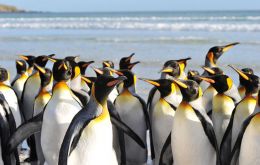
April 25th is “World Penguin Day”, undoubtedly the world’s most popular bird – think of Happy Feet, March of the Penguins, Pingu just to name a few uses in popular culture. These charismatic flightless birds are funny to watch on land but are graceful and rapid in water. They occur only in the seas of the Southern hemisphere; there are seventeen species of penguin ranging from the Galapagos to Antarctica.
-
Tuesday, April 24th 2018 - 08:15 UTC
First ever genital transplant performed at John Hopkins University in Maryland
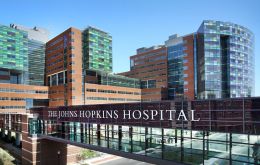
A team of US doctors has successfully carried out the world's first total transplant of a penis and scrotum. Surgeons at Johns Hopkins University in Baltimore, Maryland, performed the operation on a soldier who had been wounded by a bomb in Afghanistan.
-
Thursday, April 12th 2018 - 09:04 UTC
WHO and UNICEF issue new guidance to promote breastfeeding in health facilities
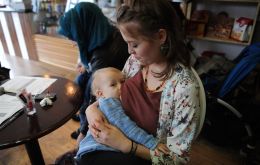
WHO and UNICEF today issued new ten-step guidance to increase support for breastfeeding in health facilities that provide maternity and newborn services. Breastfeeding all babies for the first 2 years would save the lives of more than 820 000 children under age 5 annually.
-
Sunday, April 8th 2018 - 21:16 UTC
What does the new Falklands ‘Islands Plan’ mean for South America?

Over the past decade it is has become customary for a newly elected Legislative Assembly in the Falkland Islands to publish an ‘Islands Plan’. As there are no political parties in the Falkland Islands, all eight members of the Assembly are independents. Therefore there is no collective manifesto when elected to office. This has traditionally been addressed via a consensus-based Islands Plan.
-
Saturday, April 7th 2018 - 10:19 UTC
Falkland Islands establishes Obesity Orientation Day next Monday 9 April
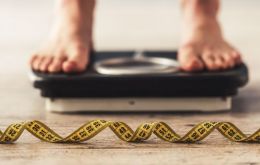
To help people in the Falkland Islands to get fitter and healthier, the local hospital will be running a ‘Falklands Obesity Orientation Day’ on Monday 9 April, it was announced by Gilbert House.
