MercoPress. South Atlantic News Agency
Health & Science
-
Friday, March 13th 2015 - 13:15 UTC
Scientists in China announce genetically engineered cows resistant to bovine TB
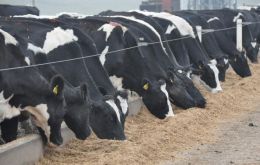
Scientists in China have said they produced a herd of genetically engineered cows that are better able to ward off bovine TB infection. The long-term goal of the research is to avoid the need to cull livestock by breeding disease resistant cattle.
-
Saturday, March 7th 2015 - 08:22 UTC
Several cups of coffee a day help combat clogged arteries, say Korean scientists

Drinking a few cups of coffee a day may help people avoid clogged arteries - a known risk factor for heart disease - Korean researchers believe. They studied more than 25,000 male and female employees who underwent routine health checks at their workplace.
-
Thursday, March 5th 2015 - 11:05 UTC
WHO calls on countries to reduce sugars intake among adults and children
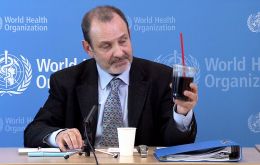
A new WHO guideline recommends adults and children reduce their daily intake of free sugars to less than 10% of their total energy intake. A further reduction to below 5% or roughly 25 grams (6 teaspoons) per day would provide additional health benefits.
-
Monday, March 2nd 2015 - 00:56 UTC
Bachelet visits 14-year-old girl who pled for euthanasia since she is suffering cystic fibrosis

Chile’s president went to a hospital on Saturday to meet with a 14-year-old girl who shocked the country by going on YouTube to plead for the leader to let doctors euthanize her because she is tired of her struggle with cystic fibrosis. The government quickly said no after the video began spreading on social media Thursday.
-
Tuesday, February 24th 2015 - 17:29 UTC
WHO calls for worldwide use of 'smart' syringes

Use of the same syringe or needle to give injections to more than one person is driving the spread of a number of deadly infectious diseases worldwide. Millions of people could be protected from infections acquired through unsafe injections if all health-care programs switched to syringes that cannot be used more than once.
-
Friday, February 20th 2015 - 17:15 UTC
Drug-resistant 'superbug' scare in Los Angeles following several infections
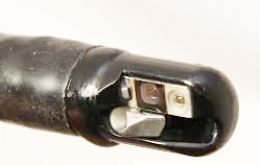
A large Los Angeles public hospital has notified scores of patients they were possibly exposed to a drug-resistant bacteria “superbug” during endoscopy procedures that infected seven patients and may have contributed to two deaths.
-
Monday, February 16th 2015 - 08:17 UTC
Desperate struggle in New Zealand to save tens of stranded pilot whales
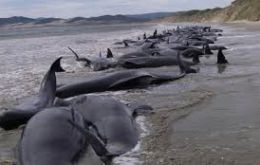
About 140 pilot whales that stranded themselves on a remote stretch of New Zealand beach have died, but conservation workers and volunteers are hoping the remaining 60 or so will survive after they managed to get them refloated, an official said over the weekend.
-
Monday, February 9th 2015 - 13:26 UTC
Researchers fear Ebola virus has mutated and are studying contagion degree

More than 22,000 people have been infected and about 9,000 are known to have died in Guinea, Liberia and Sierra Leone since what evolved into the worst-ever outbreak of Ebola was identified last March.
-
Monday, February 9th 2015 - 12:43 UTC
Dengue cases 'explode' by 57% in Brazil during January

Dengue cases in Brazil rose by 57% in January, an increase that the Brazilian government partially attributed to the water crisis in the country's southeastern region. In the first four weeks of the year, Brazil registered 40,196 cases of dengue, compared with 26,017 in the same period of 2014, the Brazilian Health Ministry said.
-
Monday, January 26th 2015 - 21:39 UTC
State of the art polar vessel for BAS to be delivered in 2019

A new polar research vessel is currently being designed for the British Antarctic Survey (BAS). The new vessel will be an ice-capable, multi-role polar research and logistics ship which will be used to conduct science and to resupply the BAS stations such as the two in South Georgia, according to the latest South Georgia Newsletter.
