MercoPress. South Atlantic News Agency
Health & Science
-
Thursday, November 13th 2014 - 07:46 UTC
Europe makes history successfully landing spacecraft on a comet, a ten year precision cosmic chase

A European spacecraft made history Wednesday by successfully landing on the icy, dusty surface of a speeding comet, an audacious cosmic first designed to answer big questions about the origin of the universe. The landing on comet 67P/Churyumov-Gerasimenko required immense precision, as even the slightest error could have resulted in cosmic calamity.
-
Tuesday, November 11th 2014 - 07:12 UTC
”Ageing well”, says WHO: in 2020 over 60 will outnumber children under 5
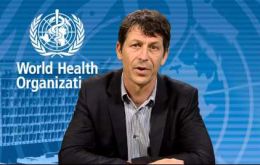
A major new Series on health and ageing, published in “The Lancet”, warns that unless health systems find effective strategies to address the problems faced by an ageing world population, the growing burden of chronic disease will greatly affect the quality of life of older people.
-
Thursday, November 6th 2014 - 06:28 UTC
Cannabis debate in US rages with legalization claiming more states

Residents of Oregon, Alaska, and the US capital Washington voted on Tuesday to legalize marijuana in key victories that could fuel the legalization movement as cannabis usage is increasingly recognized by the American mainstream.
-
Wednesday, November 5th 2014 - 22:43 UTC
Uruguay, “a role model for the region and the world” in tobacco policies
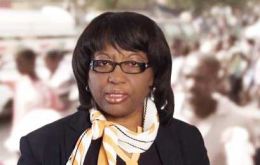
The Pan American Health Organization/World Health Organization (PAHO/WHO) is supporting the Government of Uruguay as it defends its tobacco control policies against claims brought by the Philip Morris tobacco company.
-
Saturday, October 25th 2014 - 10:53 UTC
Trekker technology captures imagery of Shackleton's South Georgia
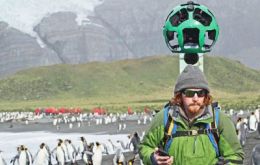
Trekker technology captures imagery of one of the most rarely-visited places on earth, South Georgia and the Falkland Islands, made famous by Sir Ernest Shackleton, one of the bravest and most remarkable explorers. It offers end users the literal experience of being an explorer by traveling to places where traditional vehicles – or they - cannot go.
-
Friday, October 24th 2014 - 20:17 UTC
France reports four cases of chikungunya locally acquired infections
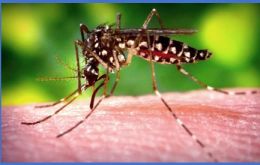
On 21 October 2014, WHO was notified by the National IHR Focal Point for France of 4 cases of chikungunya locally-acquired infection in Montpellier, France. The cases were confirmed by tests conducted by the French National Reference Laboratory for arboviruses on 20 October 2014. This is the first time that locally-acquired transmission of chikungunya has been detected in France since 2010.
-
Friday, October 24th 2014 - 19:59 UTC
Argentina's geostationary satellite reaches and stations in permanent orbit
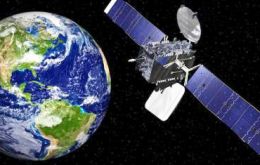
Argentina's Arsat-1 geostationary satellite launched last week finished the third and last maneuver in order to remain in orbit permanently, 36,000 km away from earth.
-
Wednesday, October 22nd 2014 - 09:52 UTC
Falklands prepares for Ebola threat situation; vessels from high risk areas will undergo 21 day clearance period
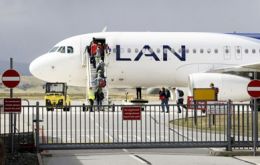
In response to a possible Ebola threat situation the Falkland Islands government is focusing on prevention at this time but with good contingency plans also being laid down as a back up to a possible outbreak.
-
Monday, October 20th 2014 - 07:54 UTC
Cruise passenger suspected of possible contact with Ebola patient tested negative

A Dallas hospital lab worker who spent much of a cruise holiday in isolation after possible exposure to Ebola has tested negative for the disease, and in Texas some of the dozens of people still being monitored were expected to be cleared by Monday.
-
Monday, October 20th 2014 - 07:30 UTC
WHO admits full-scale battle with tobacco industry, which appeals to 'devious channels'
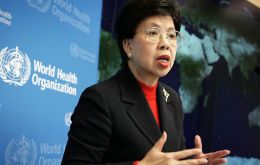
The sixth session of the Conference of the parties (COP6) to the WHO Framework Convention on Tobacco Control (FCTC) concluded in Moscow. Several landmark decisions were adopted in the course of the six-day session, regarded as one of the most successful in the WHO FCTC’s history.
